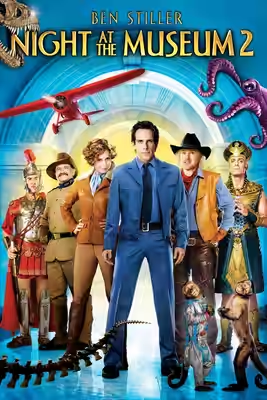
Shawn Levy’s sequel moves the toys to Washington and turns the volume up. Amy Adams’s Amelia Earhart and Hank Azaria’s lisping pharaoh are good company for an hour; around them the film is mostly things falling over. Fine for a wet afternoon, forgotten by teatime.
Larry Daley (Ben Stiller) has given up the night shift at the American Museum of Natural History and now sells gadgets on television. Back at the museum the halls are being cleared for an upgrade and the old exhibits crated for the Federal Archives beneath the Smithsonian in Washington. The tablet that brings them to life goes along by mistake. Thomas Lennon and Ben Garant’s script takes about fifteen minutes to get everyone to Washington and then has one idea, which is that the biggest museum in the world is now awake, and it spends the remaining ninety showing us the contents. Larry himself is almost beside the point.
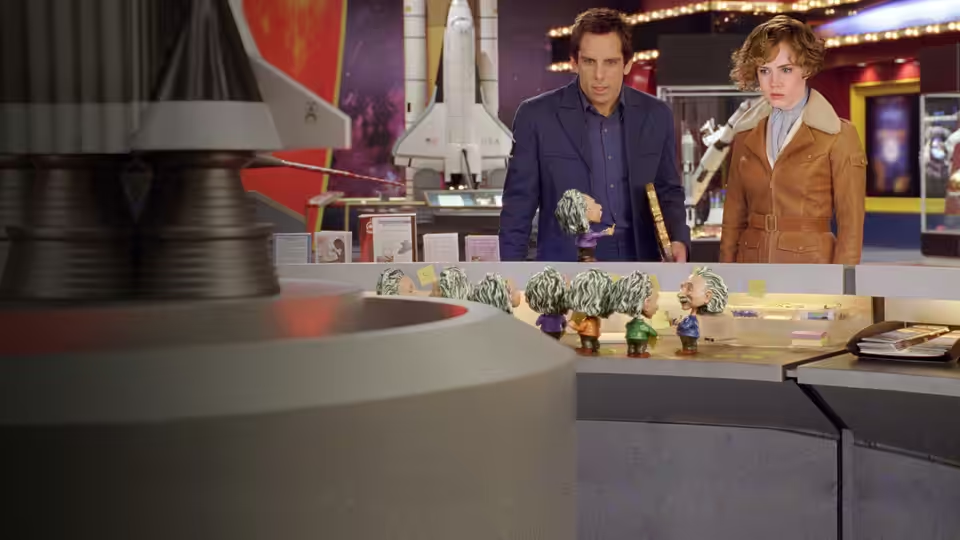
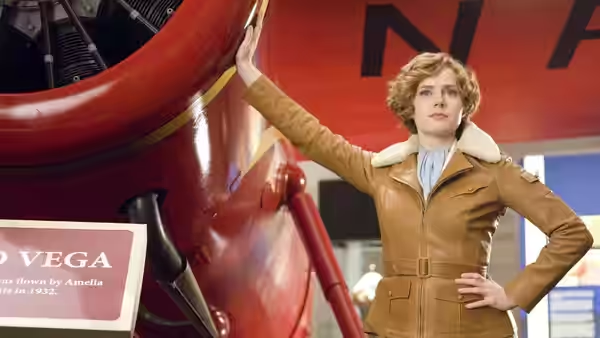
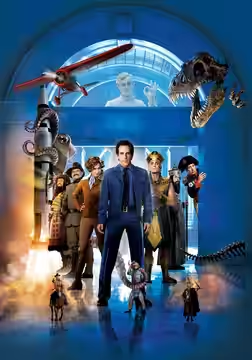
Amy Adams is the reason to stay. She plays Amelia Earhart in Marlene Stewart’s jodhpurs and leather flying jacket, talking in the clipped, breathless rhythm of a 1930s newsreel, and she is the only person on screen who appears to believe she is in an adventure. She flirts, Stiller flinches, and for stretches the film is a two-hander between a man who wants to go home and a woman who has never wanted to go home in her life. It is the warmest thing here and it costs nothing in effects.
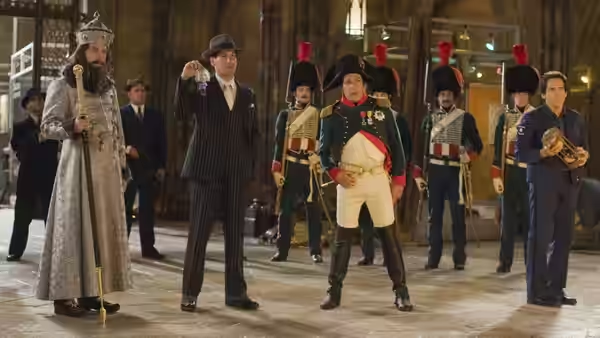
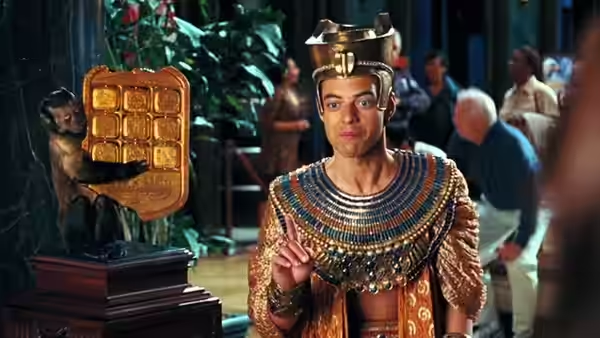
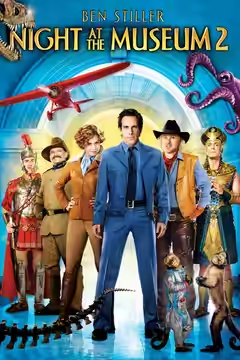
Hank Azaria’s Kahmunrah is the other one. He is the older brother of the pharaoh from the first film, he wants the tablet to open a gate and bring through an army, and he speaks with a lisp and the wounded dignity of a man passed over for promotion. We laughed, properly and more than once, at him, and the best scene in the film is just Azaria and Stiller in a doorway, bickering about the lisp while the plot waits outside. He recruits Ivan the Terrible (Christopher Guest), who objects to the translation of his name, Napoleon Bonaparte (Alain Chabat), who is touchy about his height, and Al Capone (Jon Bernthal), who arrives in black and white. Each gets one joke and is asked to tell it several times.
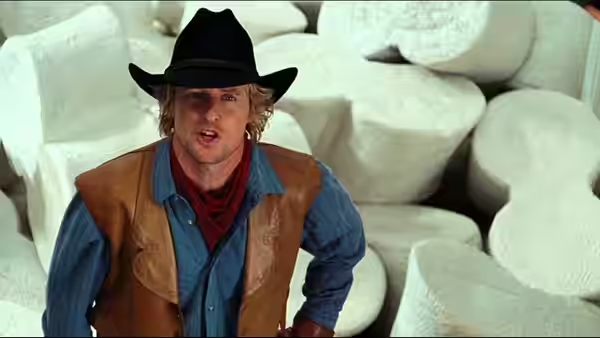
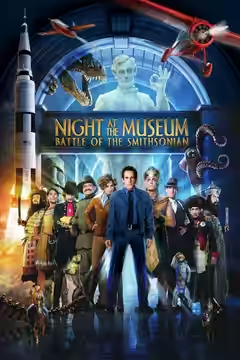
The sequence everyone remembers is the run through the galleries, and it deserves to be. Jeff Koons’s Balloon Dog bounds down a corridor; the couple from American Gothic lean out of their frame; Claude Paré’s halls are suddenly full of things that were never built to move. For ten minutes the effects and the sets do what the title promises, and we sat up. Then it is over, and we are back with Jedediah (Owen Wilson) stuck in an hourglass and Octavius (Steve Coogan) riding a squirrel across a lawn, which got a laugh from us and then went on for a while.
The fights are the problem. Dean Zimmerman and Don Zimmerman cut the big set pieces into fragments so short that nothing has weight, and Alan Silvestri’s brass marches over all of it at the same volume. John Schwartzman lights the Federal Archives as a long brown basement, which is probably accurate and not much to look at for forty minutes. Bill Hader’s George Armstrong Custer, a coward who talks like a hero, is a good idea given about four lines; Patrick Gallagher’s Attila the Hun is a running gag about hugging. We were bored during the final battle, and then mildly cross about it, because a film in which everything is alive has no excuse for a fight in which nothing seems to be.
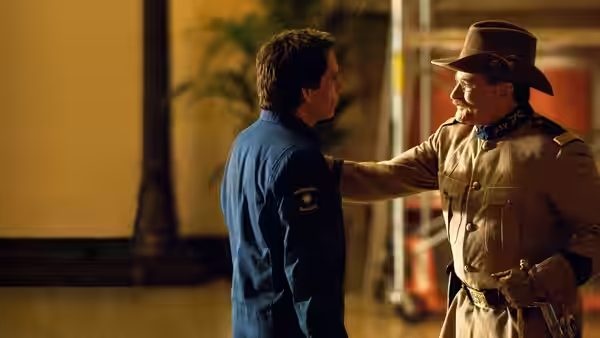
What is missing is a reason for any of it. Shawn Levy’s first Night at the Museum, from 2006, was about a divorced father trying to look competent in front of his son, and that small want gave the nonsense somewhere to land. Here the son is barely in it, Robin Williams’s Theodore Roosevelt stays behind in New York with Ricky Gervais’s Dr. McPhee and his two scenes of mumbling, and Larry wants nothing but his tablet back. Getting it back is all the film has to offer him.
Most critics have split down the middle on this one and so, in the end, do we. It is 105 minutes, it is a PG that means it, and a child will enjoy the squirrel. Watch it at home with the volume a notch down; Adams and Azaria will survive that, and the battle will not miss much.