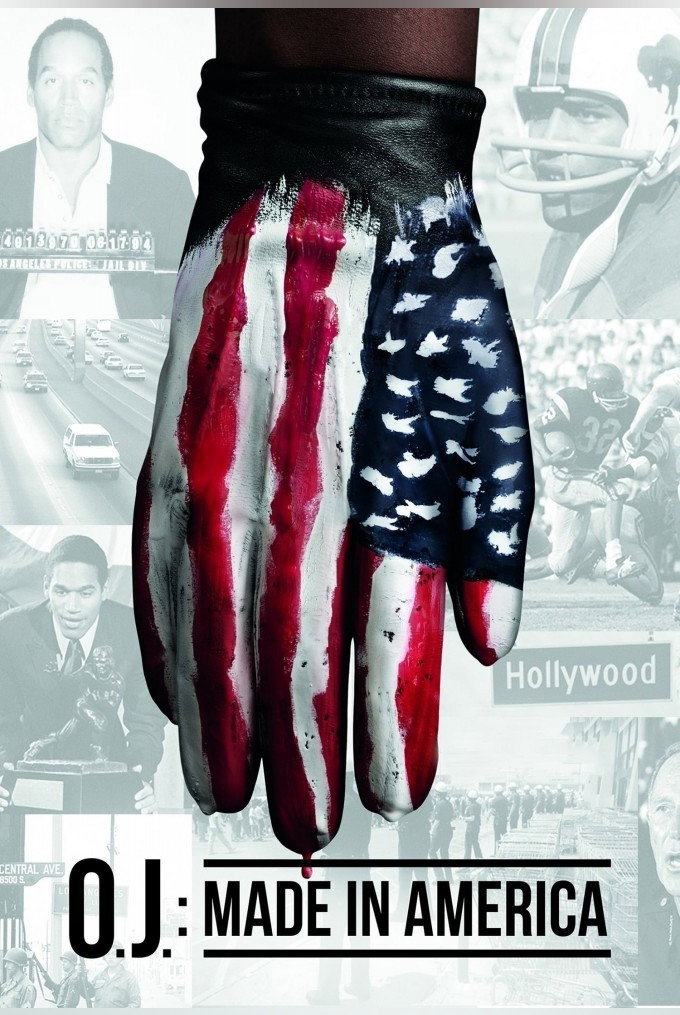
Ezra Edelman’s long account of O. J. Simpson needs every one of its 467 minutes. It is about Los Angeles as much as one man, and it is as good as documentary gets, if you give it a week rather than a night.
Ezra Edelman’s documentary runs seven hours and forty-seven minutes, was made in five parts, and does not reach the murders of Nicole Brown Simpson and Ron Goldman until it is nearly halfway through. Before that it is about football, about the Los Angeles Police Department, and about the city that produced both. Edelman’s case is that you cannot understand what happened in that courtroom in 1995 without understanding Watts in 1965 and Rodney King in 1992, and by the time he gets there he has made us believe him. It is the best long documentary we have seen in years, and it needs every part of its length.
The first two parts move on two tracks. On one, O. J. Simpson runs: for USC, for the Buffalo Bills, through an airport in a hire-car advert, always smiling. On the other, black Los Angeles is policed. Danny Bakewell Sr. describes the neighbourhoods and the men who patrolled them; Harry Edwards, who wanted black athletes of that era to speak up, explains what it meant when Simpson would not. Fred Khasigian and Steve Lehmer, who played alongside him, remember a man everyone liked. The film never says the two tracks will meet. It does not have to.
The editing is where the argument is made. Maya Mumma, Ben Sozanski and Bret Granato have several decades of archive to work with, and they let it speak against itself: a grinning Simpson selling something, then a police baton, then Simpson again. Nothing is rushed. A shot is allowed to sit a beat longer than television usually permits, and the extra beat is where you do the thinking. Nick Higgins shoots the interviews close and still, in dim rooms, so that faces fill the frame. When Ron Shipp, a police officer who was Simpson’s friend, stops talking, the camera stays on him, and what happens to his face is the interview.
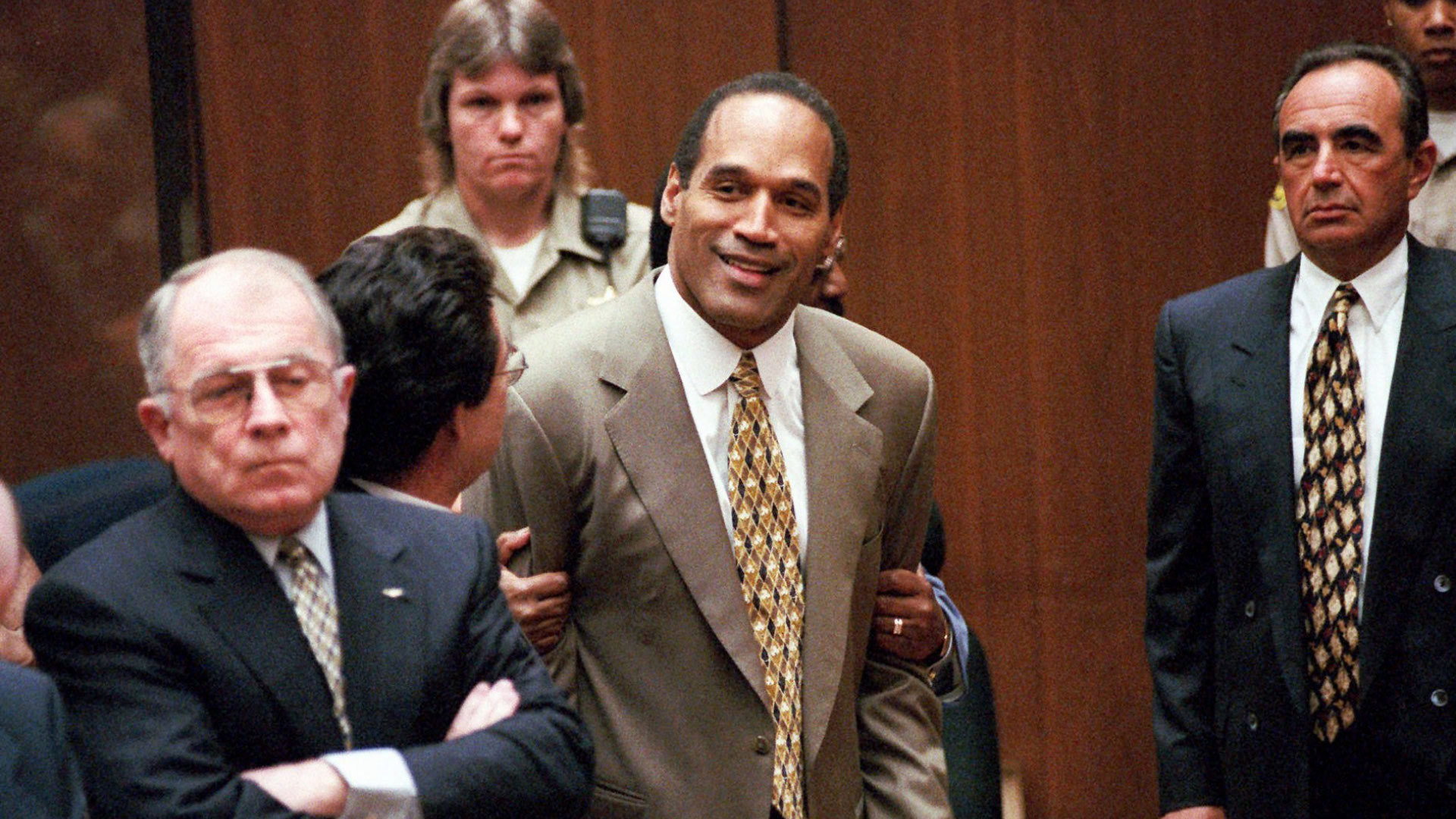
The fourth part is the trial, and it is where the film got to us. Marcia Clark, who prosecuted, and F. Lee Bailey, who defended, both sit for Edelman, and Jeffrey Toobin walks us through what each side was doing and why. But Edelman also shows the photographs from the scene, at length and in silence. We looked away, and then made ourselves look back, because the point was plain: the trial had turned two dead people into a debate about the police, and the film insists on making us look at them. We have sat through a great many true-crime hours. Few have felt that responsible.
Simpson himself is present only in archive, and the choice suits him. Peter Hyams, who directed him in Capricorn One, describes a man who was pleasant, easy and not obviously anything else, and the old footage bears him out. The film lets the footage do the work and does not add a verdict of its own. Gary Lionelli’s score is low strings and patience; it stays under the images rather than on top of them, and only occasionally tells you what to feel.
It is not faultless. The fifth part, which follows what came after the verdict and which we will not describe, has a slackness the rest avoids, and Edelman states his idea about fame more than once when once would have served. One or two of Simpson’s friends are given room to be kinder to themselves than the material warrants. And Nicole Brown Simpson, for all the tapes and photographs, stays at a distance; the film knows this and cannot quite solve it.
It was made for television, in chapters, and it feels like it, with the recaps and the part titles. That is not a complaint. It is the form the subject needed, and the long documentaries that have followed it mostly look thin beside it. Watch one part a night, with time to think between them. We took three evenings and would not have wanted it faster. It is the story of a city as much as a man, and cities take a while.