Christopher Nolan’s three-hour life of the man who built the bomb is his most disciplined film, and Cillian Murphy carries it without raising his voice. The hearings of the last hour grip less than the desert, and the sound swallows too many lines.
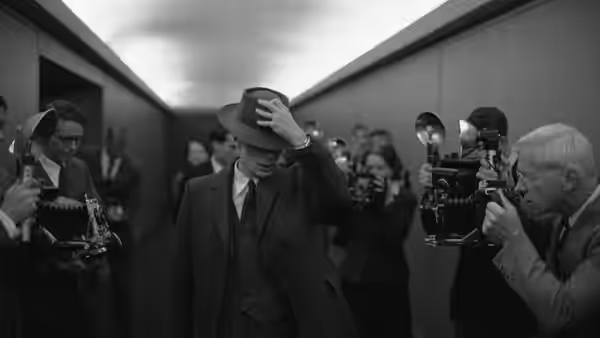
Christopher Nolan has written and directed a three-hour film about J. Robert Oppenheimer, the physicist who ran Los Alamos and built the atomic bomb, and he has told it as a pair of hearings rather than a life. In colour, Oppenheimer sits in a small room after the war while a lawyer, Jason Clarke’s Roger Robb, picks through his politics and his friendships. In black and white, Lewis Strauss faces a Senate committee and is asked about Oppenheimer too. Our verdict: this is Nolan’s most disciplined film, superbly acted and shot, and it is half an hour too long, nearly all of it in the third hour.
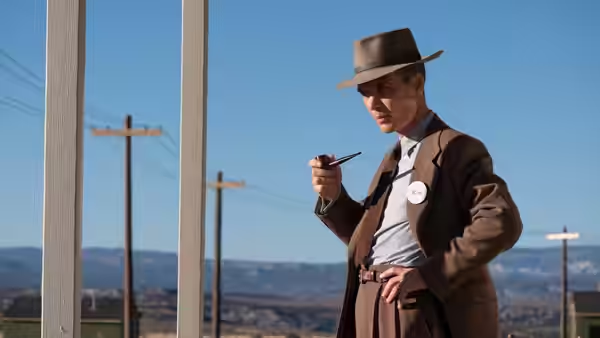
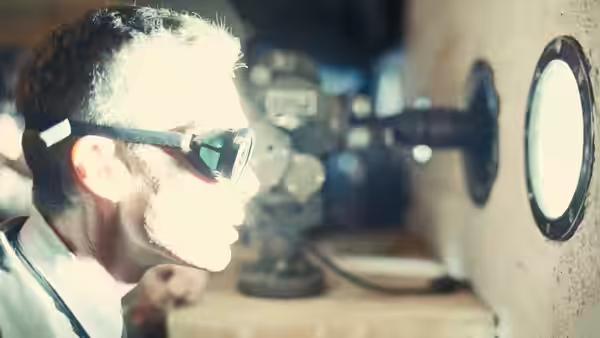
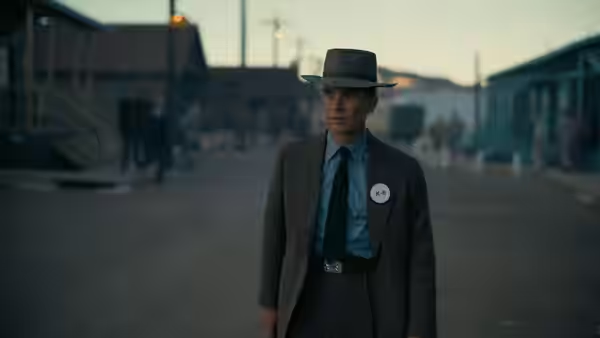
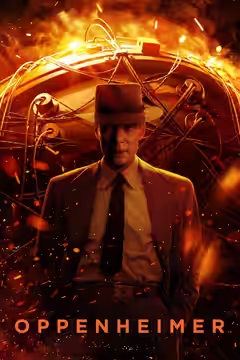
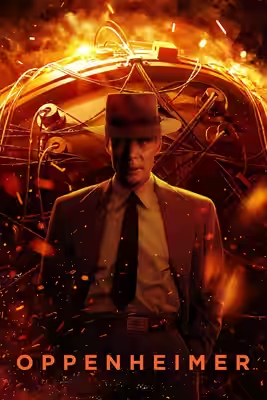
Cillian Murphy plays Oppenheimer thin, hollow-cheeked and quiet. He talks fast when the subject is physics and hardly at all when it is himself. The performance is in the eyes, pale, wide and often fixed on something that is not in the frame; when Nolan wants to show what he is imagining he gives us sparks and ripples and light, and Murphy’s stare does the job better. Ellen Mirojnick dresses him in a hat and a suit that hangs off him.
Robert Downey Jr. plays Strauss with none of his usual charm, as a small, careful, wounded man who never forgets a slight and never mentions one. Matt Damon’s General Leslie Groves is the relief, a large practical soldier who wants a bomb and does not want to hear about Marx. Emily Blunt has less to do as Kitty Oppenheimer than her billing suggests: she drinks and glares until one late scene in which the film remembers she can fight. Florence Pugh’s Jean Tatlock is a problem the film does not solve. She has a handful of scenes, mostly undressed, she is the only person Oppenheimer seems to love, and Nolan cannot find time to tell us who she was.
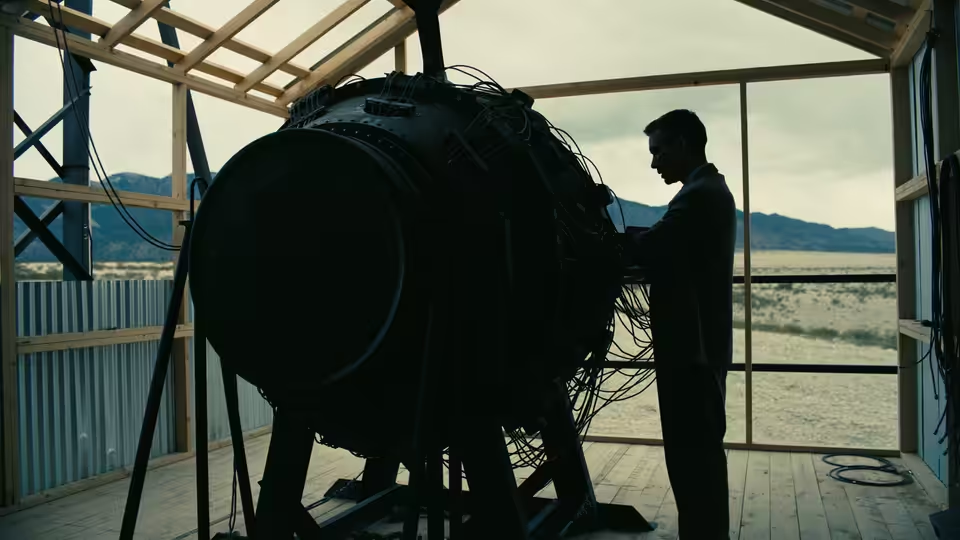
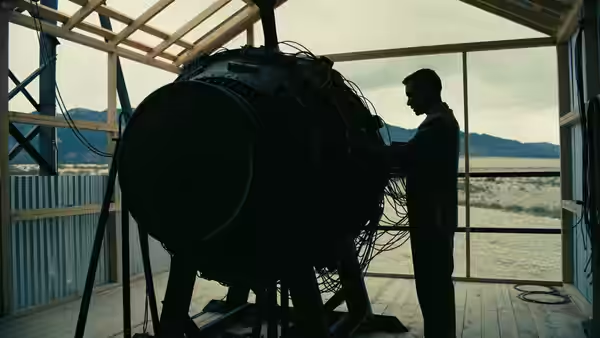
Hoyte van Hoytema shoots in colour and in black and white and spends most of both on faces: a head filling the screen while its owner is asked a question he would rather not answer. Ruth De Jong’s Los Alamos is raw timber and dust knocked together on a mesa. Jennifer Lame cuts the strands against each other at a speed that turns a story about committees into a thriller, and the first two hours go quickly because of her. Ludwig Göransson’s score is almost continuous, strings climbing over a low pulse, and with the rest of the mix it buries lines we wanted to hear.
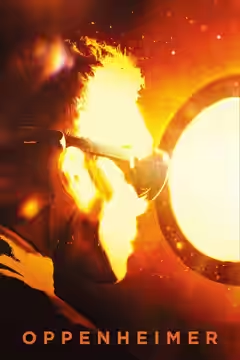
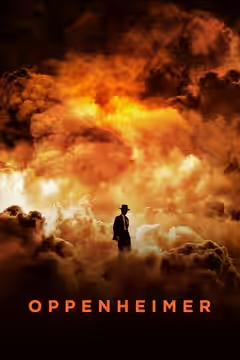
The Trinity test is the reason to see this in a cinema. We stopped breathing when the count reached zero and did not start again for what felt like a minute. Nolan and van Hoytema show the fireball and nothing else, and Lame holds it with no music and no sound at all. Then the noise arrives, late, as it did in the desert, and we jumped with everyone else.
Then the bomb is used, and the film has an hour left. A victory speech in a gymnasium, where the stamping of feet turns into something else, is the closest the film comes to showing what the weapon did. The rest is the two hearings, and they repeat. By the third hour we were tired, and then slightly cross about being tired, because we could see how much of the Strauss strand had been laid down to set up a payoff. It comes, we will not describe it, and it is smaller than the build. Nolan never leaves Oppenheimer’s head, so the film never goes to Japan. We watch his guilt at length and never see the dead.
Nolan’s earlier films, Inception (2010), Dunkirk (2017) and Tenet (2020), treated time as a puzzle. Here the same tricks are used on a real man, and the structure explains a character rather than a plot. Most critics have called it his best, and we would not argue for long.
See it on the biggest screen available and accept that a tenth of the dialogue will go missing. At home you will hear more of it, and the Trinity test will not make you jump. It carries a 15 certificate and runs 181 minutes, and you will need patience for the last forty.