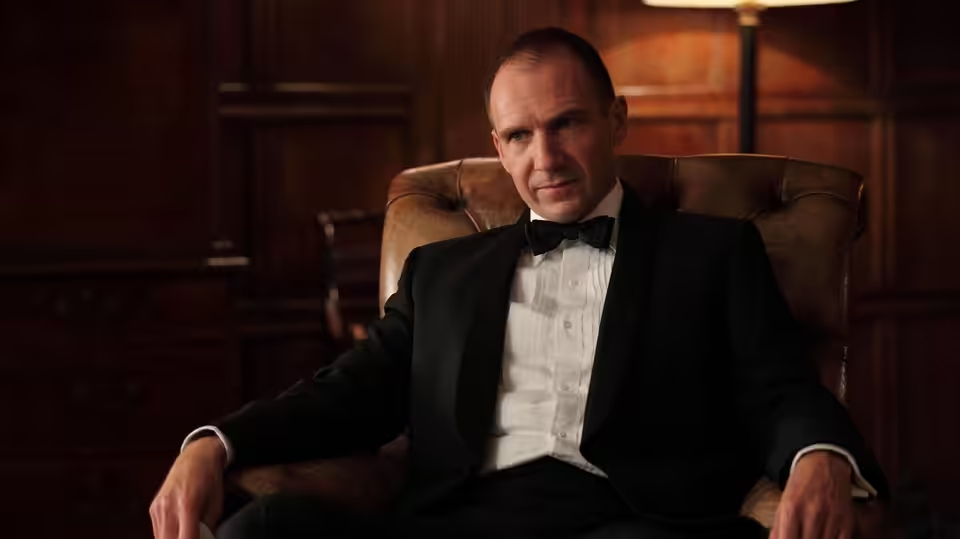
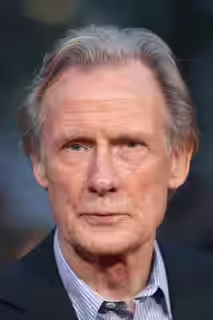
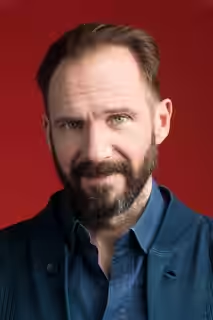
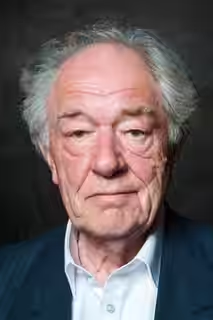
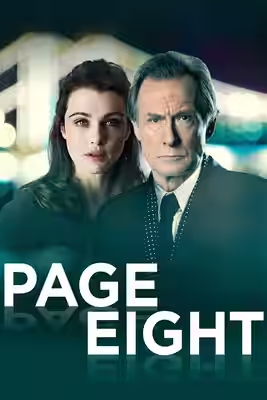
David Hare’s spy film is a chamber piece dressed as a thriller: Bill Nighy, Michael Gambon and Ralph Fiennes talking well in handsome rooms about a file nobody wants. The talk is the pleasure; the plot underneath is thin, and the ending lands softly.
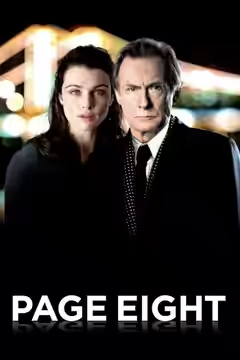
David Hare writes and directs, and he has made a spy film in which nobody runs. Page Eight is 99 minutes of clever people talking in good rooms about a document. The document is the whole plot: a file whose eighth page suggests that a man at the top of the government has known for years about things his own people were never told. The talk is good. The thriller is thin. If you can take the first without minding the second, it is a fine evening.
Bill Nighy plays Johnny Worricker, a spy of long service who collects paintings, listens to jazz and has outlasted a marriage or two. Nighy does almost nothing and it is enough. He tilts his head, waits a beat longer than anyone else in the scene, and answers a direct question with a question of his own. When a younger colleague, Ralph Wilson (Tom Hughes), asks what he actually believes, Nighy lets the pause run and then asks Wilson the same question back.
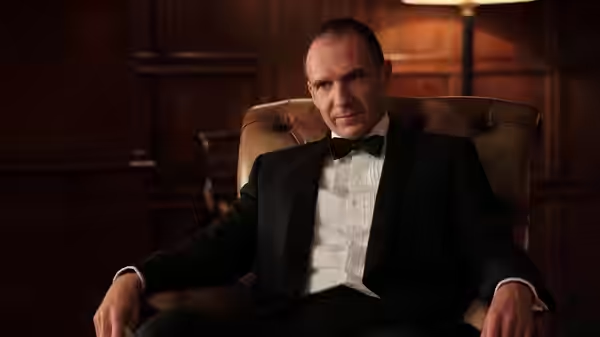
Around him Hare has gathered actors who can say a Hare sentence. Michael Gambon’s Benedict Baron, the old friend who hands Johnny the file, is the best of them: two men over a drink, each knowing how much the other is not saying, Gambon playing the weariness as affection. Ralph Fiennes gives Alec Beasley, the man the file is about, a smile that arrives before the words and leaves after them; he has perhaps three scenes and owns each. Judy Davis’s Jill Tankard is brisk, ambitious and plainly cleverer than her lines admit, and Saskia Reeves’s Anthea Catcheside has one meeting with Johnny that says more about how government is actually done than most films manage in two hours.
Martin Ruhe shoots London in autumn light, grey river and brown leaves, and keeps the camera still so that the faces do the moving. Cristina Casali gives Johnny a flat full of pictures and books, and gives the offices glass, pale wood and nothing on the walls. Julian Day puts Nighy in narrow dark suits and Rachel Weisz in long coats the colour of the Thames. Paul Englishby’s score stays low, brushed drums and a lone horn, as if it were coming from Johnny’s own record player. Jinx Godfrey cuts the conversations without hurry, holding on the listener as often as the speaker.
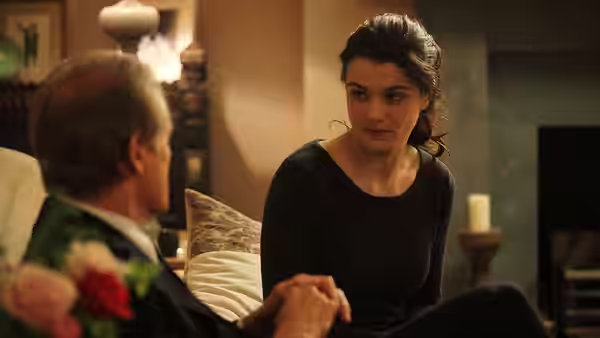
The trouble is everything that is not the file. Weisz’s Nancy Pierpan, the neighbour who knocks late at night wanting something from him, is written to stand for something, and Weisz, who can do a great deal with a little, is given little that is hers. Felicity Jones’s Julianne, the daughter who barely speaks to him, is there to tell us Johnny has failed at home as well as at work, and then she is gone. Ewen Bremner’s Rollo Maverley gets one good scene and a plot function. We felt the slackness around the hour mark, when the film leaves the offices for private lives it has not bothered to furnish, and we found ourselves waiting for Gambon or Fiennes to come back. They do not come back enough.
And yet there is a scene, early, with Johnny alone in his flat after bad news, a record on and a glass in his hand, that moved us more than we expected, and we can say why. Nothing happens in it. Nighy sits, Ruhe holds the shot, and Englishby’s horn comes in under him. For a minute and a half we are watching a man who has spent his life not saying things, and we can see him not saying this one.
The best spy films make betrayal cost lives. Here the cost is to careers and consciences, and the pressure never rises above the level of a difficult meeting. Hare wants to say something about what governments keep from their own people, and he says it mainly through people disagreeing politely over whisky.
The ending we will not describe, except that it arrives quietly and lets go of the thriller the film had been half-heartedly running. Most critics have been a little warmer than us, and we see why: it is rare to hear this many good actors given this much good talk. Watch it at home, where it was made to be watched, on a wet evening, with the sound up enough to catch the second half of Nighy’s sentences. It will not quicken your pulse.