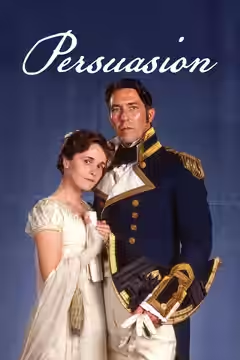
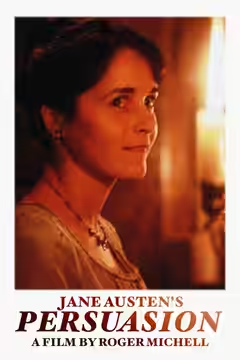
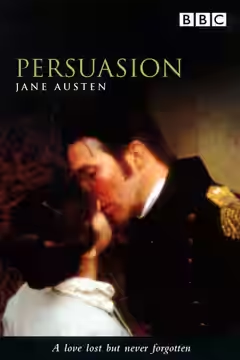
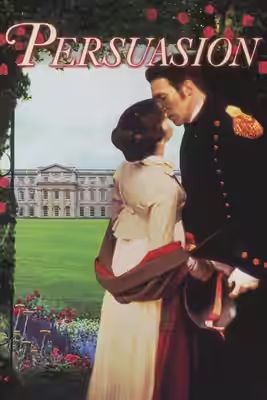
Roger Michell’s Austen is shot by candlelight and daylight with no vanity on either side of the camera, and Amanda Root’s watchful Anne is the reason to see it. The Bath stretch is busier and less sure; we recommend it warmly anyway.
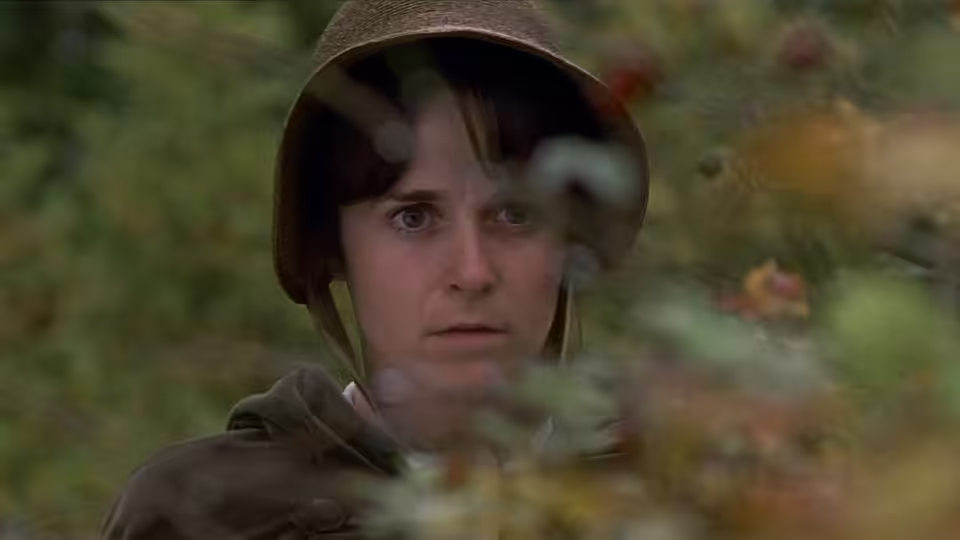
Jane Austen’s last finished novel is about a woman who said no to the right man because she was told to, and has spent eight years finding out what that costs. Roger Michell’s film, from a screenplay by Nick Dear, keeps faith with that. It does not dress Anne Elliot up, it does not give her speeches, and for most of its 107 minutes it keeps her at the edge of rooms where other people are talking. That is where Amanda Root is at her best, and the main reason to see the film.
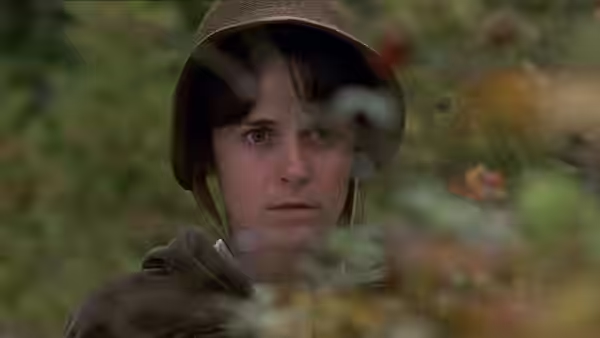
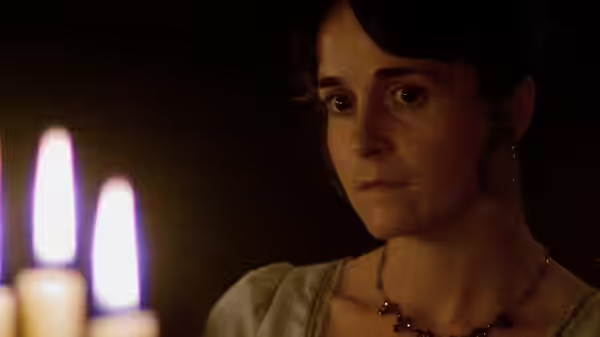
Michell and his cinematographer John Daly shoot it as if nobody had told them it was a costume drama. Interiors are lit by candles and whatever comes through the window, faces are unpowdered, and the camera moves hand-held through dinner parties as though it has wandered in from the kitchen. William Dudley’s Kellynch is grand and half under dust sheets; the Musgroves’ house at Uppercross is a muddle of dogs, children and crockery, which says more about Anne’s two families than any line could. Alexandra Byrne puts Anne in browns and dull greens and her sister Elizabeth (Phoebe Nicholls) in everything else.
Root hardly speaks for the first half hour and does not need to. Watch her at the pianoforte while the Musgrove girls dance with Wentworth, or on a country walk when he hands her into the Crofts’ carriage without a word. Her face does the work: a glance down, a glance up, a mouth that nearly says something and then does not. Ciarán Hinds plays Wentworth as a big, weathered man who has decided to be angry and keeps forgetting to be. When Mary (Sophie Thompson) cheerfully passes on his remark that Anne is so altered he would not have known her, Hinds’s unease afterwards tells us where this is going.
The scene that got us is at Uppercross. Anne is kneeling by a sick child, a second child climbs onto her back and will not be shifted, and a hand she knows lifts him off without a word and without looking at her. Michell holds on Root’s face and Kate Evans does not cut away. It moved us more than we were ready for, because nothing has been said and both of them know exactly what has been done. Jeremy Sams’s score, mostly piano, has the sense to stay out of it.
Around the lovers Michell has cast well. Corin Redgrave’s Sir Walter cannot pass a looking-glass, and Redgrave plays the vanity straight. Fiona Shaw and John Woodvine’s Crofts are the one happy marriage in the film: the Admiral steering his gig at a post while his wife quietly takes the reins is the nearest it comes to showing what Anne gave up. Sophie Thompson’s Mary, forever ill, is pitched broad, and some will find her a trial. We laughed at her every time, then felt slightly guilty, because she is the only Elliot who admits to being unhappy. Susan Fleetwood’s Lady Russell is kind and wrong and sure of herself, and Fleetwood never lets us hate her.
The film is less sure once it moves to Bath. The plot gets busier: a cousin, Mr Elliot (Samuel West), heir to the title, starts paying Anne attention, Mrs Clay (Felicity Dean) attaches herself to Sir Walter, and Dear’s screenplay has more story to get through than the first half had. West is given too little to be interesting, which matters, because we need to believe Anne might consider him. And the last few minutes reach for a flourish the rest of the film has got along without. We will not describe it, except to say that a story this quiet did not need to raise its voice at the end.
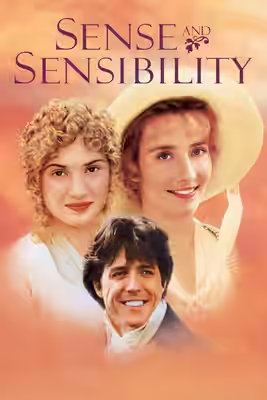
It came out in the same year as Ang Lee’s Sense and Sensibility, a bigger and prettier film, and the comparison flatters Michell. Lee’s Austen looks like a painting of a house; Michell’s looks like a house. It is a U certificate and 107 minutes. Watch it with someone who was once talked out of something and has not quite forgiven the advice.