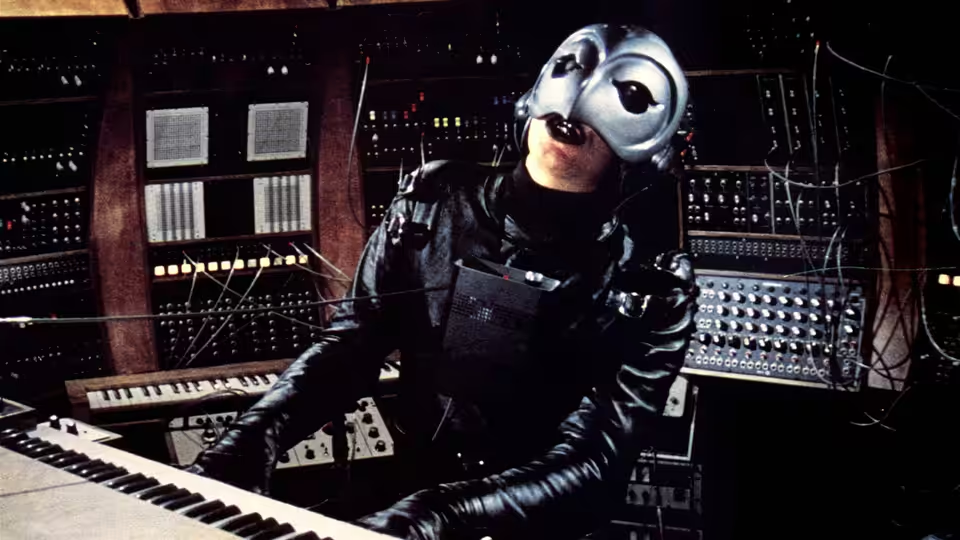
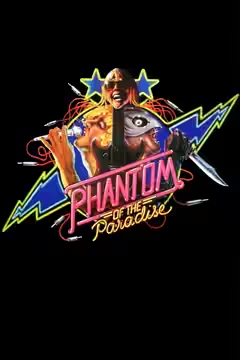
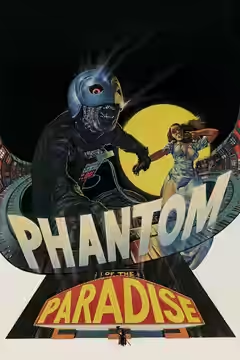
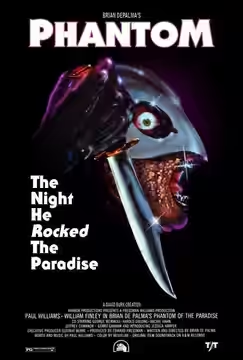
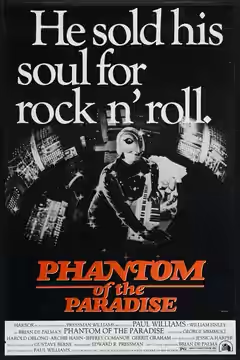
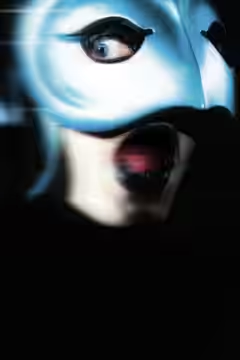
Brian De Palma’s rock-horror musical is funny, musically persuasive and crowded with visual ideas. Paul Williams supplies a memorable Swan and songs worth hearing, though the bustle sometimes leaves the other performers fighting for space.
Phantom of the Paradise is a funny, inventive rock-horror musical whose enthusiasm occasionally gets the better of its judgement. Brian De Palma directs and shares the writing credit with Louisa Rose, turning the music business into a sufficiently disreputable place for comedy and horror to coexist. The film enjoys the performers, the posturing and the songs, even while making the business look grubby. We recommend it, with a warning that the visual jokes sometimes arrive faster than they can be enjoyed.
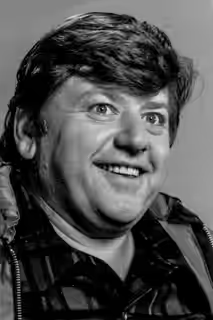
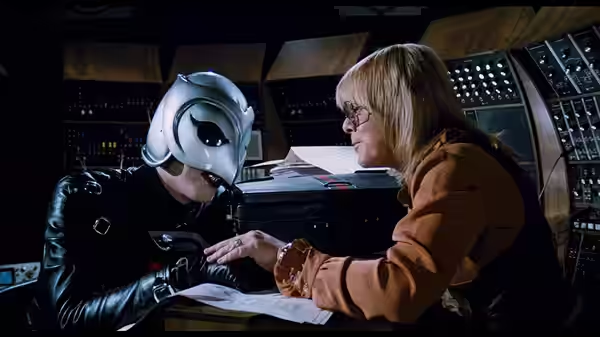
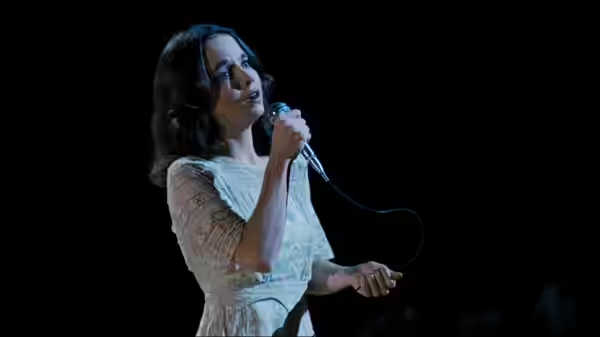
Paul Williams gives Swan a composure that is funnier, and nastier, than a more demonstrative performance would have been. William Finley brings enough feeling to Winslow Leach / The Phantom to keep him interesting amid the exaggeration. Jessica Harper makes Phoenix worth attending to even when the film seems impatient to move along. Her directness is useful in a film where almost everybody and everything demands attention.
Larry Pizer’s cinematography gives the rock spectacle a restless energy: the camera will not politely stand back and let a performance happen. That can be exhilarating, though there are moments when we would welcome somewhere quiet to look. Jack Fisk’s production design is more consistently persuasive, making the showbusiness surroundings look garish and faintly squalid. The tackiness matters, because too much polish would make this particular satire seem pleased with the wrong things.
Paul Williams’s music is the strongest reason the film holds together. The variations on the songs let us hear how much a change of musical treatment can alter our response, while leaving enough of a tune to enjoy. We laughed at the musical posturing, then felt slightly embarrassed by how much we liked the songs. The music makes that response possible: it has to be attractive for the jokes about selling it to carry any weight.
Paul Hirsch’s editing keeps the competing tones moving, but the speed becomes less helpful when an idea needs room to settle. At 92 minutes, the film is short enough; the difficulty is how much it insists on fitting into those minutes. Some of the visual jokes barely register before another demands our attention. Jessica Harper’s performance makes us particularly aware of what a little less bustle might have allowed.
The writing has a related limitation. Brian De Palma and Louisa Rose are sharp on showbusiness appetite, but the satire occasionally repeats a complaint without finding anything further to say about it. The cinematic references are enjoyable, yet recognising another borrowed horror device does not necessarily make the joke better. Against the demands of a horror musical, though, the film succeeds where it needs to: the songs remain enjoyable without requiring us to find every exaggeration funny.
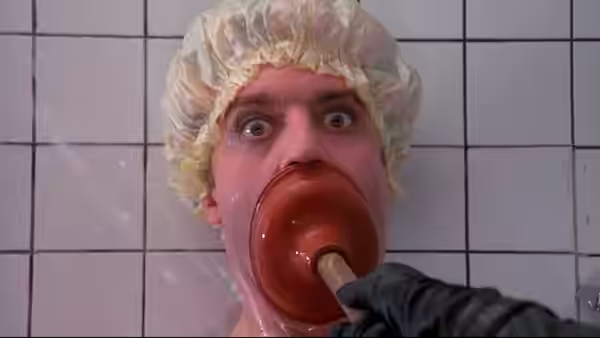
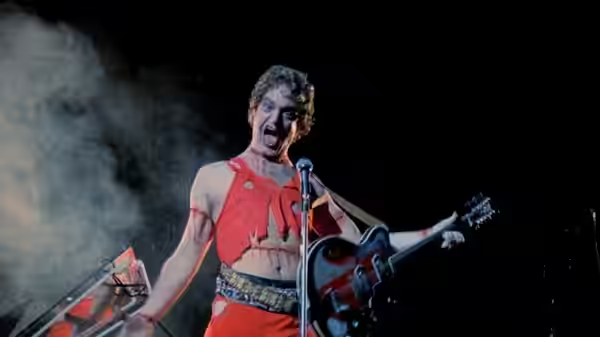
Gerrit Graham’s Beef is a further reason to forgive some of the crowding, played with an assurance that this sort of nonsense needs. There is affection for performance here, despite the sour view of the industry around it. Choose it for the songs and the disreputable humour; allow for an occasional wish that everyone would calm down.