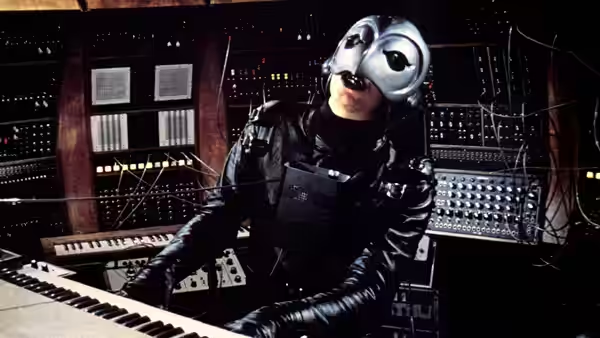
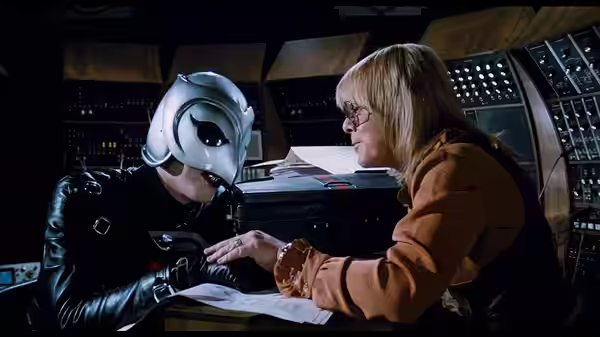
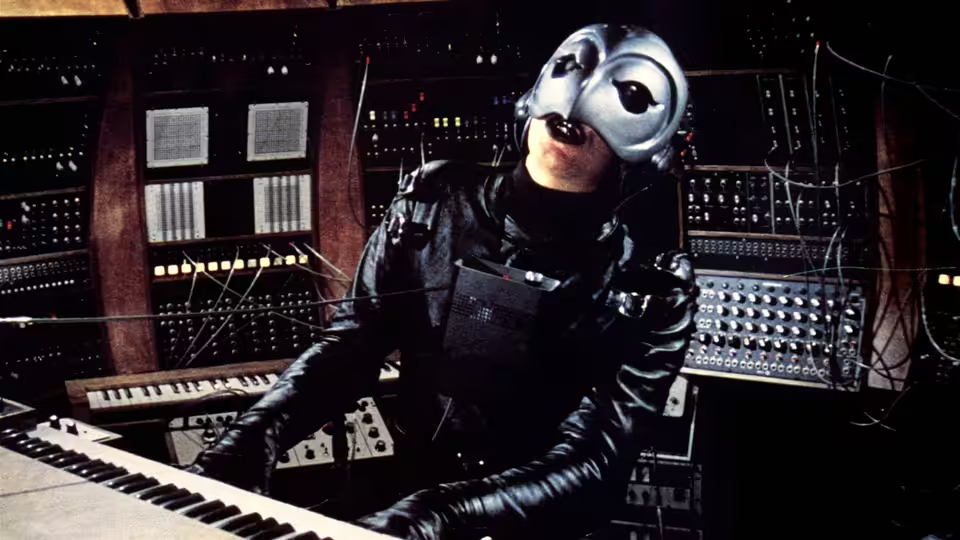
The Phantom playing keyboards in a recording studio control room
Film review

Phantom of the Paradise

1974 · Directed by Brian De Palma · 1h 32m

In a sentenceA rock musical where even the bad taste has been rehearsed

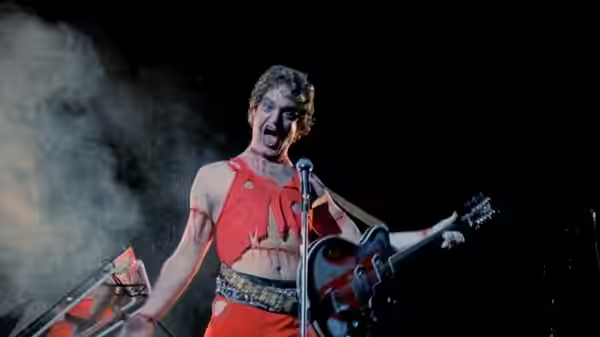
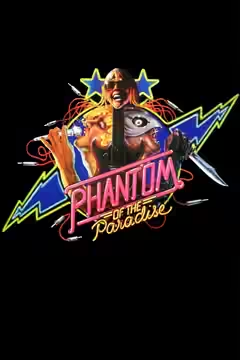
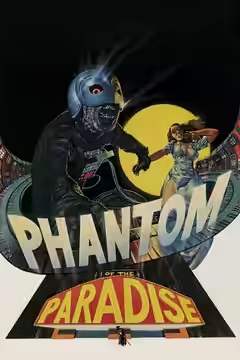
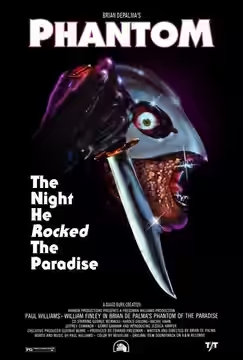
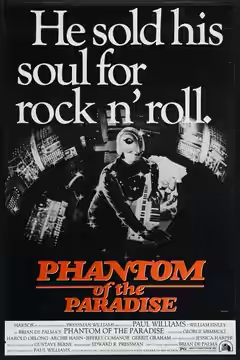
The rock business supplies the setting for a reworking of The Phantom of the Opera, with Winslow Leach / The Phantom (William Finley), Swan (Paul Williams) and Phoenix (Jessica Harper) at its centre. Philbin (George Memmoli) and Beef (Gerrit Graham) also figure in a story that brings musical performance into contact with gothic horror. The performers include The Juicy Fruits, The Beach Bums and The Undeads, all played by the same trio of actors. Comedy and drama accompany the songs as the film moves between rock spectacle and horror.

Plays from YouTube when you press play; nothing loads from them until then.

Fi1m review

Brian De Palma’s rock-horror musical is funny, musically persuasive and crowded with visual ideas. Paul Williams supplies a memorable Swan and songs worth hearing, though the bustle sometimes leaves the other performers fighting for space.

Phantom of the Paradise is a funny, inventive rock-horror musical whose enthusiasm occasionally gets the better of its judgement. Brian De Palma directs and shares the writing credit with Louisa Rose, turning the music business into a sufficiently disreputable place for comedy and horror to coexist. The film enjoys the performers, the posturing and the songs, even while making the business look grubby. We recommend it, with a warning that the visual jokes sometimes arrive faster than they can be enjoyed.

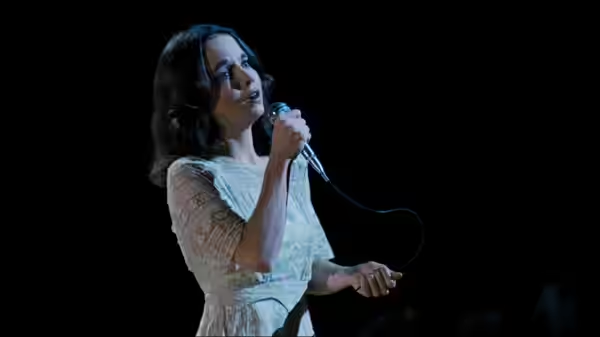
Paul Williams gives Swan a composure that is funnier, and nastier, than a more demonstrative performance would have been. William Finley brings enough feeling to Winslow Leach / The Phantom to keep him interesting amid the exaggeration. Jessica Harper makes Phoenix worth attending to even when the film seems impatient to move along. Her directness is useful in a film where almost everybody and everything demands attention.

Larry Pizer’s cinematography gives the rock spectacle a restless energy: the camera will not politely stand back and let a performance happen. That can be exhilarating, though there are moments when we would welcome somewhere quiet to look. Jack Fisk’s production design is more consistently persuasive, making the showbusiness surroundings look garish and faintly squalid. The tackiness matters, because too much polish would make this particular satire seem pleased with the wrong things.

Paul Williams’s music is the strongest reason the film holds together. The variations on the songs let us hear how much a change of musical treatment can alter our response, while leaving enough of a tune to enjoy. We laughed at the musical posturing, then felt slightly embarrassed by how much we liked the songs. The music makes that response possible: it has to be attractive for the jokes about selling it to carry any weight.

Paul Hirsch’s editing keeps the competing tones moving, but the speed becomes less helpful when an idea needs room to settle. At 92 minutes, the film is short enough; the difficulty is how much it insists on fitting into those minutes. Some of the visual jokes barely register before another demands our attention. Jessica Harper’s performance makes us particularly aware of what a little less bustle might have allowed.

The writing has a related limitation. Brian De Palma and Louisa Rose are sharp on showbusiness appetite, but the satire occasionally repeats a complaint without finding anything further to say about it. The cinematic references are enjoyable, yet recognising another borrowed horror device does not necessarily make the joke better. Against the demands of a horror musical, though, the film succeeds where it needs to: the songs remain enjoyable without requiring us to find every exaggeration funny.

Gerrit Graham’s Beef is a further reason to forgive some of the crowding, played with an assurance that this sort of nonsense needs. There is affection for performance here, despite the sour view of the industry around it. Choose it for the songs and the disreputable humour; allow for an occasional wish that everyone would calm down.

Critical consensus AI synthesised

78
Positive
7
Mixed
2
Negative
0

Most critics respond warmly to Phantom of the Paradise, with praise clustering around De Palma’s inventive direction and its satire of the rock industry. The reviews repeatedly favour its restless camerawork, garish settings and mixture of gothic storytelling, musical comedy and cinematic references. The performances also draw approval, particularly those of Jessica Harper, Paul Williams and Gerrit Graham, while several critics find wit and intelligence beneath the spectacle.

The available verdicts are broadly favourable rather than sharply divided, and the clearest reservation concerns the music: Time Out identifies a musical misstep without losing enthusiasm for the film. Den of Geek, by contrast, particularly values the variations on its songs and the references that reward repeat viewings. Two entries fall in the mixed range, but their critical verdicts cannot be verified from the supplied text, so there is no reliable basis for identifying a broader pattern of complaints.

Slant Magazine
5 September 2006 · ★★★½/4 · Fernando F. Croce
88

Croce praises the film as a delirious, visually restless triumph that fuses rock spectacle with gothic and cinematic allusions. He especially singles out De Palma’s electrifying camerawork and the climactic collision of spectacle, creator, and audience.

Read the full review →
Time Out
· GA
85*

The critic calls it arguably De Palma’s finest film, despite a musical misstep. They praise its highly inventive updating of the Phantom of the Opera story.

Read the full review →
Variety
31 December 1973 · Variety Staff
85*

Variety finds the film very good, praising its direction and script for capturing the garishness of the glitter-rock scene. It also singles out the principal performances, especially Jessica Harper and Paul Williams.

Read the full review →
Radio Times
★★★★ · Alan Jones
80

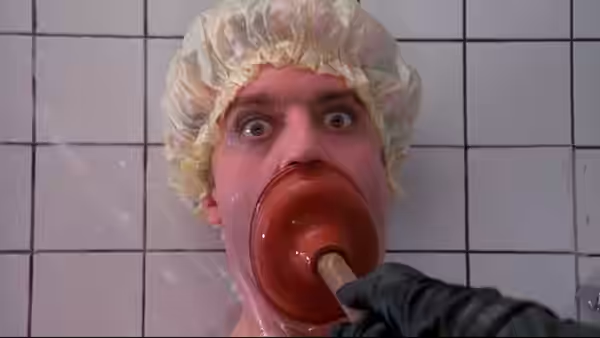
Jones calls it an exceptionally strong musical comedy fantasy and a savvy satire of the rock industry. He praises Gerrit Graham’s performance and the film’s witty send-up of Psycho’s shower scene.

Read the full review →
The Guardian
9 March 2014 · Philip French
70*

French presents the film as an inventive cult thriller that was initially misunderstood and later found an audience. He praises its energy, wit and inventiveness, along with its garish, squalid sets.

Read the full review →
RogerEbert.com
64*

The page is blocked, so the critic’s verdict cannot be verified. No praise or complaint can be reliably identified from the available text.

Read the full review →

Straight answers AI written, from our review

Is Phantom of the Paradise worth watching?
Phantom of the Paradise is worth watching for its persuasive songs, disreputable humour and inventive rock-horror spectacle; we score it 82 out of 100. We recommend it especially to those who enjoy exaggerated performances and showbusiness satire, with the caveat that its visual jokes sometimes arrive too quickly to register.
How long is Phantom of the Paradise, and what is it rated?
Phantom of the Paradise runs 1h 32m. It is a comedy and drama film.
Where can I watch Phantom of the Paradise in South Korea?
Phantom of the Paradise is not on any streaming or rental service in South Korea at the moment. It is available in 7 other countries; change your country at the top of the page to see where. Availability is checked daily.
How violent or frightening is Phantom of the Paradise, and is it suitable for children?
Phantom of the Paradise has a UK 15 certificate, so it is not suitable for children under 15, despite its comic musical elements. It mixes gothic horror with rock spectacle, but we cannot give a precise account of violence or frightening imagery from our review; the certificate is the clearest guide for families and sensitive viewers.
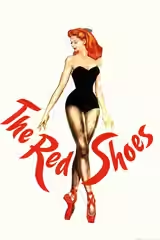
How does Phantom of the Paradise compare to The Red Shoes?
Phantom of the Paradise is the rowdier, more comic choice beside The Red Shoes, which earns our broader recommendation for making a dancer’s ambition feel urgent and dangerous. Both connect performance with dangerous devotion, but we favour Phantom of the Paradise for an evening of songs and grubby showbusiness satire, provided its crowded visual humour appeals.
What should I watch after Phantom of the Paradise?
After Phantom of the Paradise, try The Red Shoes (1948, Fi1m 92): Another performance film that understands how devotion can become a dangerous habit. Then Diva (1981, Fi1m 80): Music, obsession and criminal complications, with considerably more room to breathe; and The Rocky Horror Picture Show (1975, Fi1m 72): More musical horror and theatrical excess, with less interest in industry satire.

Cast

Awards

Academy Awards, 1975

Nominated
Best Original Song Score

If you liked this, try…

  1. The Red Shoes (1948, Fi1m 92)Another performance film that understands how devotion can become a dangerous habit.

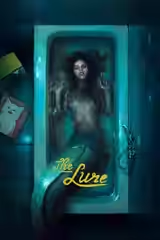
  2. The Lure (2015) · not on Fi1m yetA Polish musical whose nightclub glamour comes with an appetite for flesh.

  3. A Face in the Crowd (1957) · not on Fi1m yetFor a harsher look at entertainment, ambition and the people selling both.

  4. Diva (1981, Fi1m 80)Music, obsession and criminal complications, with considerably more room to breathe.

  5. The Rocky Horror Picture Show (1975, Fi1m 72)More musical horror and theatrical excess, with less interest in industry satire.