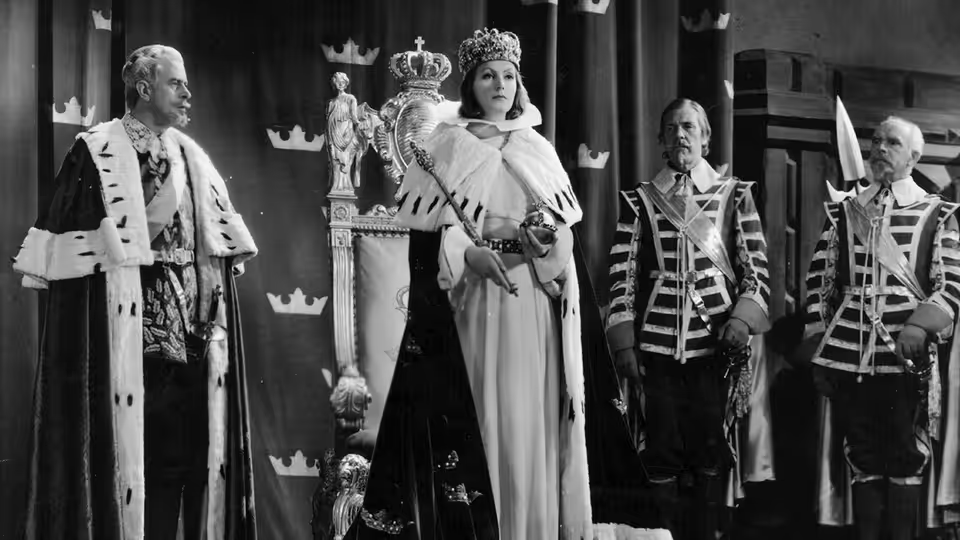
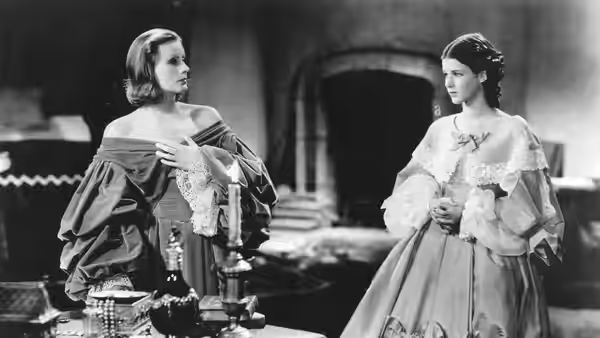
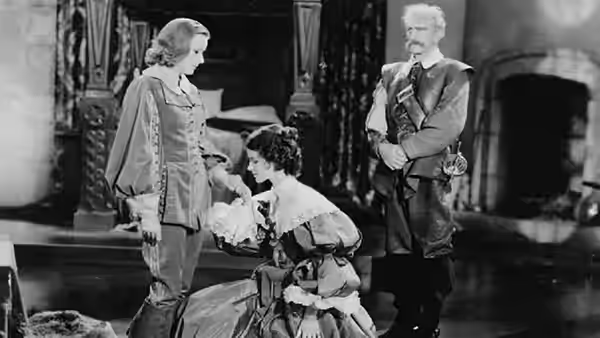
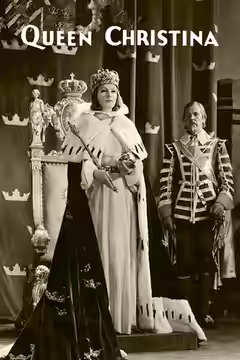
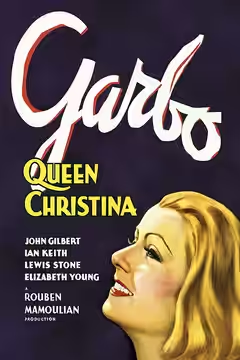
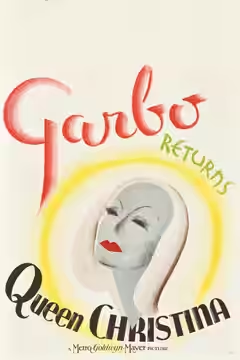
Greta Garbo gives Queen Christina enough feeling to justify the evening for her admirers. Rouben Mamoulian’s historical romance is less persuasive whenever its stately presentation takes precedence over its people.
Queen Christina is worth considering for Greta Garbo, provided that a single performance is enough to carry an evening. Rouben Mamoulian’s historical romance gives her ample prominence, but it can be ponderous about feelings she makes clear without much help. The result is a decent film that we would recommend chiefly to viewers already interested in its star. At 99 minutes, it still asks for more patience than we expected.
Greta Garbo’s Christina has a welcome capacity for irritation, which stops the performance becoming merely dignified. She can seem formidable without losing the suggestion that being formidable is tiring. We were moved by the weariness we read in her face: it makes Christina feel like someone who needs a little relief from being watched. The performance is persuasive enough that we kept wishing the surrounding drama would allow it to be simpler.
John Gilbert’s Antonio has a warmth that helps, although the performance seems too careful to be wholly convincing. We wanted a little more friction in the acting, a sense that someone might be capable of surprising the leading actress. Ian Keith’s Magnus and Lewis Stone’s Oxenstierna have a weight that suits this kind of drama. Yet too much of the supporting acting strikes us as dutiful, leaving her to provide most of the uncertainty and interest.
William H. Daniels’s cinematography gives Greta Garbo’s face the attention it deserves. The images seem most expressive when there is little to compete with her, and her expression holds our attention without much assistance. Edgar G. Ulmer’s production design is handsome, but we found its formality a little oppressive, making the people seem uncomfortably formal too. Adrian’s costumes feel better attuned to Christina, helping her seem individual without making her look out of place.
Blanche Sewell’s editing allows the acting room to settle, which is useful with Greta Garbo and less useful when the drama starts to feel ceremonious. We grew impatient with the solemnity; too often, a feeling seems clear before the film is ready to move on. Herbert Stothart’s music adds to that heaviness for us, pressing the emotion more firmly than the performances require. None of this makes the film unwatchable, but it keeps us conscious of the effort being made.
As historical romance, Queen Christina feels too cautious to make its romantic feelings fully persuasive. The genre can accommodate solemnity, but it needs some sense that private feeling might upset all the careful arrangements, and here that possibility remains too remote for us. There is nothing wrong with taking time over a performance; there is a problem when the surrounding drama feels this reluctant to get on with things. We would reserve it for an evening when the leading actress matters more than the pace.