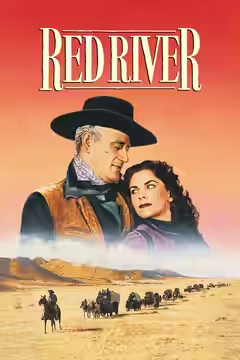
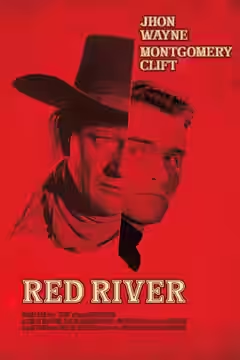
Howard Hawks makes a cattle drive tense through the friction between John Wayne and Montgomery Clift. It is an excellent Western about authority and affection, with performances sharper than the script’s occasional urge to explain them.
Red River is an excellent Western about the trouble a capable man can cause when he assumes that competence entitles him to obedience. Howard Hawks gives the cattle drive enough weight for us to understand why its leader needs authority, then watches what happens when that authority becomes personal. John Wayne and Montgomery Clift make the argument worth following even when neither speaks. The writing sometimes presses its point too hard, but the performances keep the men difficult enough to hold our attention.
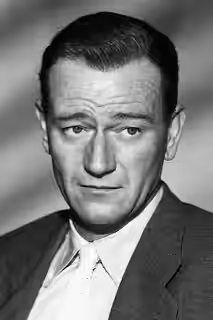
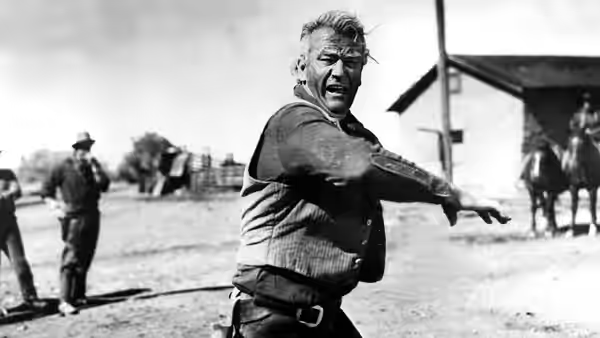
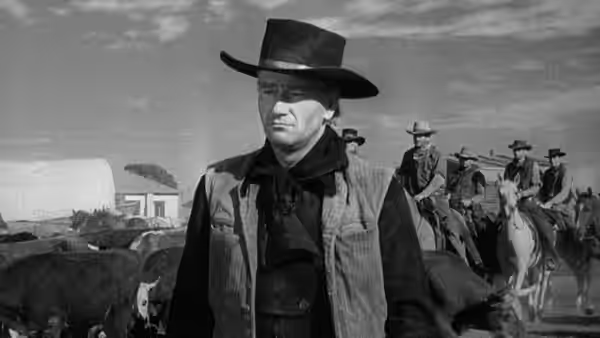
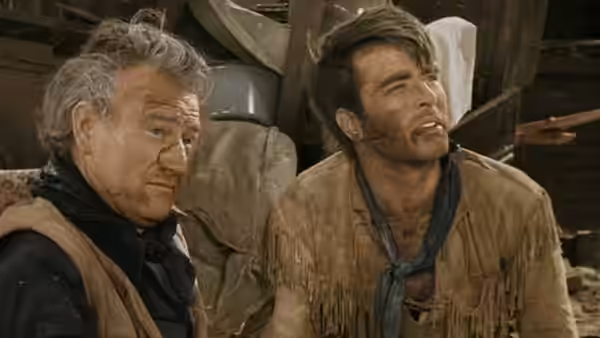
Wayne’s Thomas Dunson is persuasive because the actor gives his confidence real force. We can see why men might follow him before we begin to dread what following him involves. We found him frightening. His delivery makes an instruction sound final, and his attention to Clift can make a disagreement feel like an offence. There is enough affection in the performance to prevent Dunson becoming a convenient monster whom we can simply dismiss.
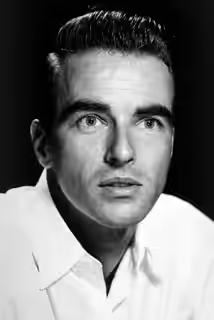
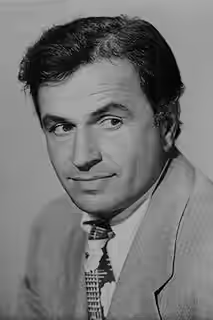
Clift’s Matthew Garth is not merely the younger man waiting for his turn to talk. He listens with a concentration that gives Wayne something to push against, and his quietness never looks like a shortage of will. The pleasure is in watching him consider what Dunson says without immediately surrendering his own judgement. Their scenes let us understand how much these men care for one another, even as we begin to wish they could spend some time apart.
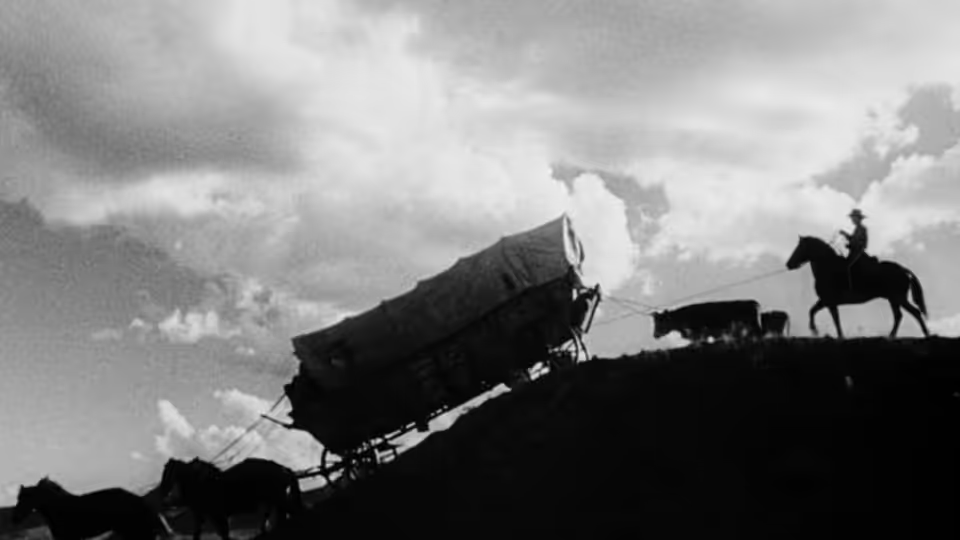
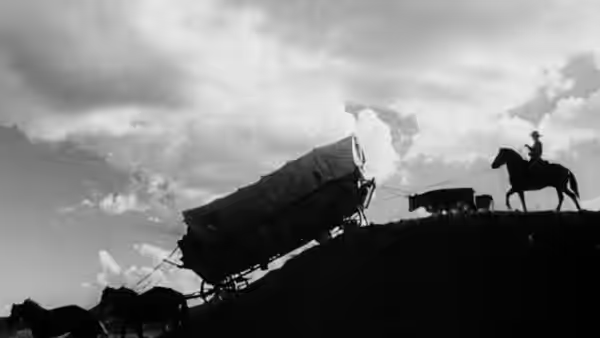
Russell Harlan’s cinematography makes the size of the herd matter. The cattle occupy enough of the frame to remind us how much work any decision entails: an order still has to move a great many animals. We can understand the labour without being given an inventory of it. The wide views are satisfying because they keep the job visible, rather than treating the country as something to admire between conversations.
The editing, credited to Jack Murray, Christian Nyby, Francis D. Lyon and Howard Hughes, gives the collective work room to register. The journey feels long enough to wear on people, without making every practical delay into a separate little crisis. Dimitri Tiomkin’s music makes the drive exciting, though we occasionally wanted it quieter beneath the dialogue. Wayne and Clift can make a conversation tense without so much assistance from the score.
Walter Brennan, as ‘Groot’ Nadine, helps the company feel like men who have spent time together. His presence gives the film an ease that matters when its central pair become difficult company. The screenplay by Charles Schnee and Borden Chase is less sure when it wants to put those men’s feelings into words. At such moments, the explanation arrives after the performances have done the work, and we find ourselves waiting for the dialogue to catch up.
At 133 minutes, this is a Western willing to spend time on the relationships that make its journey matter. Its appeal depends on enjoying capable people at work, and on noticing how easily pride can make their work harder. We would recommend it for the strain between its leads as readily as for the cattle drive, with a small allowance for the script’s insistence on spelling things out. Give it an evening when there is time to watch Clift listening.