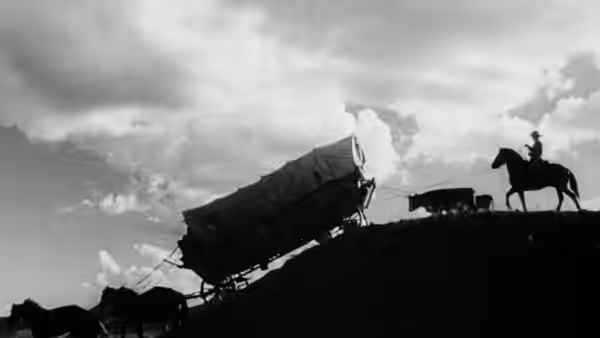
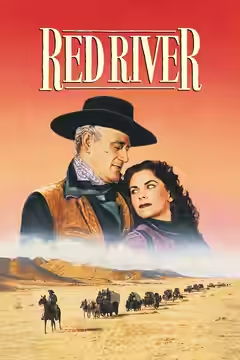
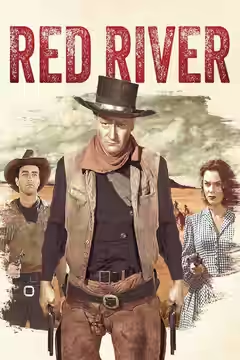
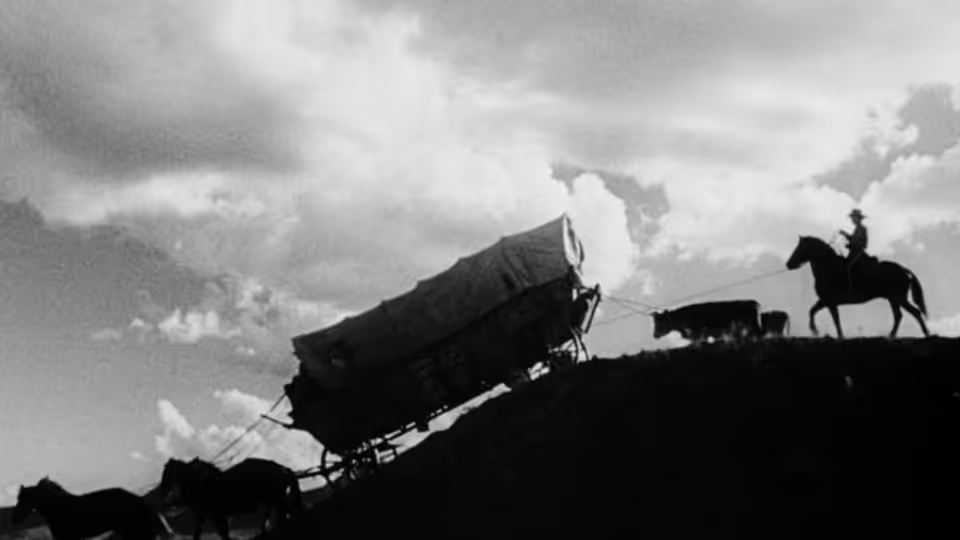
A covered wagon climbs a ridge as a rider on horseback watches from above
Film review

Red River

1948 · Directed by Howard Hawks · 2h 13m

In a sentenceMoving the cattle looks easier than persuading John Wayne that somebody else might have a point

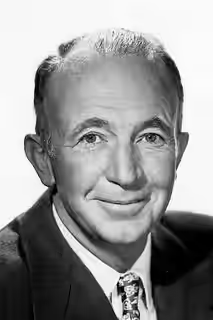
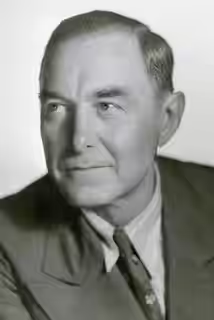
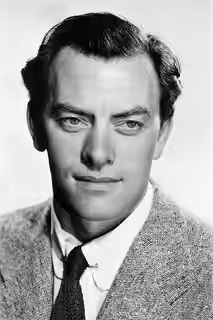
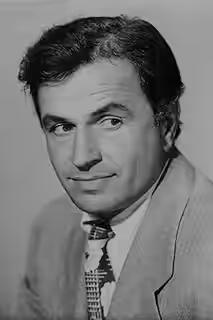
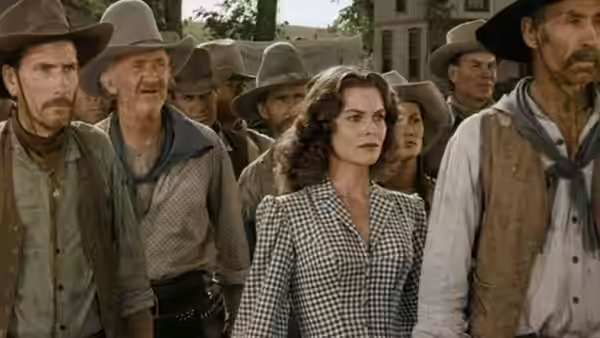
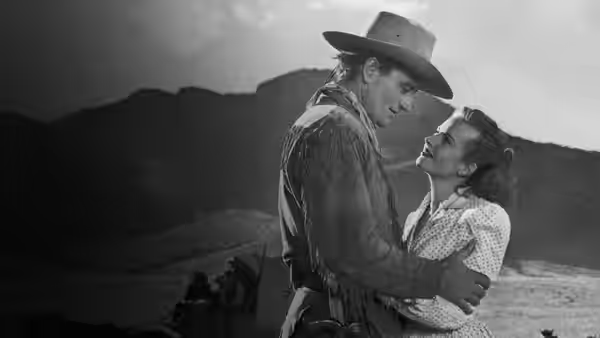
Thomas Dunson (John Wayne), Matthew Garth (Montgomery Clift) and ‘Groot’ Nadine (Walter Brennan) set out with a cattle-drive company that includes Cherry Valance (John Ireland). Their journey forms part of the establishment of the Chisholm Trail. Getting the herd to its destination is their shared task, but keeping the men working together presents difficulties of its own. Dunson and Matthew’s affection for one another complicates their disagreements. Out on the frontier, the company must manage the cattle and one another, with the bond between its two central figures placing an extra strain on the work.

Plays from YouTube when you press play; nothing loads from them until then.

Fi1m review

Howard Hawks makes a cattle drive tense through the friction between John Wayne and Montgomery Clift. It is an excellent Western about authority and affection, with performances sharper than the script’s occasional urge to explain them.

Red River is an excellent Western about the trouble a capable man can cause when he assumes that competence entitles him to obedience. Howard Hawks gives the cattle drive enough weight for us to understand why its leader needs authority, then watches what happens when that authority becomes personal. John Wayne and Montgomery Clift make the argument worth following even when neither speaks. The writing sometimes presses its point too hard, but the performances keep the men difficult enough to hold our attention.

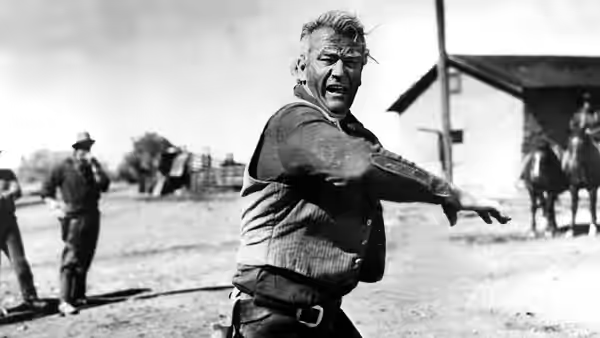
Wayne’s Thomas Dunson is persuasive because the actor gives his confidence real force. We can see why men might follow him before we begin to dread what following him involves. We found him frightening. His delivery makes an instruction sound final, and his attention to Clift can make a disagreement feel like an offence. There is enough affection in the performance to prevent Dunson becoming a convenient monster whom we can simply dismiss.

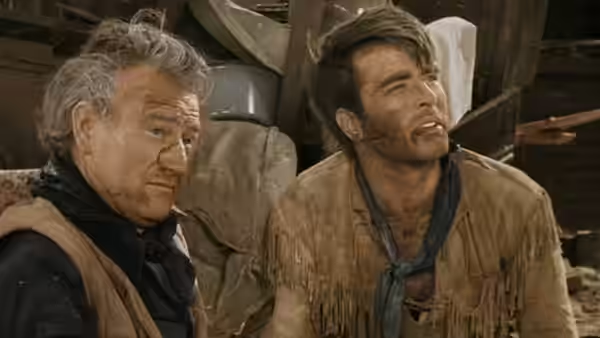
Clift’s Matthew Garth is not merely the younger man waiting for his turn to talk. He listens with a concentration that gives Wayne something to push against, and his quietness never looks like a shortage of will. The pleasure is in watching him consider what Dunson says without immediately surrendering his own judgement. Their scenes let us understand how much these men care for one another, even as we begin to wish they could spend some time apart.

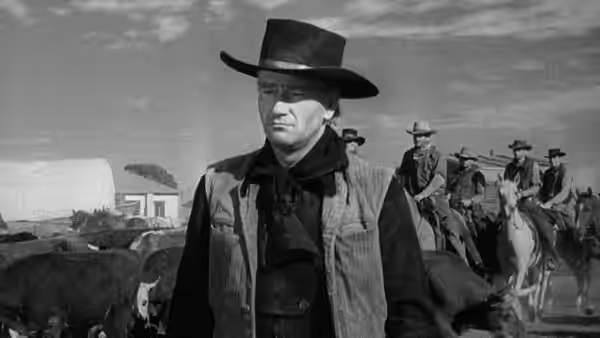
Russell Harlan’s cinematography makes the size of the herd matter. The cattle occupy enough of the frame to remind us how much work any decision entails: an order still has to move a great many animals. We can understand the labour without being given an inventory of it. The wide views are satisfying because they keep the job visible, rather than treating the country as something to admire between conversations.

The editing, credited to Jack Murray, Christian Nyby, Francis D. Lyon and Howard Hughes, gives the collective work room to register. The journey feels long enough to wear on people, without making every practical delay into a separate little crisis. Dimitri Tiomkin’s music makes the drive exciting, though we occasionally wanted it quieter beneath the dialogue. Wayne and Clift can make a conversation tense without so much assistance from the score.

Walter Brennan, as ‘Groot’ Nadine, helps the company feel like men who have spent time together. His presence gives the film an ease that matters when its central pair become difficult company. The screenplay by Charles Schnee and Borden Chase is less sure when it wants to put those men’s feelings into words. At such moments, the explanation arrives after the performances have done the work, and we find ourselves waiting for the dialogue to catch up.

At 133 minutes, this is a Western willing to spend time on the relationships that make its journey matter. Its appeal depends on enjoying capable people at work, and on noticing how easily pride can make their work harder. We would recommend it for the strain between its leads as readily as for the cattle drive, with a small allowance for the script’s insistence on spelling things out. Give it an evening when there is time to watch Clift listening.
Critical consensus AI synthesised

83
Positive
9
Mixed
1
Negative
0

Most critics respond warmly to Red River, with praise clustering around Hawks’s direction and the tension between John Wayne and Montgomery Clift. The reviews repeatedly find psychological depth in the Western, singling out Wayne’s challenging performance, Clift’s charisma and the affection beneath the central conflict. Hawks’s staging also draws praise, alongside his patient development of the cattle-drive ensemble and his attention to the journey rather than simply its destination.

The differences are chiefly in the degree of enthusiasm, with most assessments grouped towards the favourable end of the scale. The AV Club gives particular weight to the emotional force of the ending, while other reviews emphasise the film’s humane treatment of its characters. Specific reservations are harder to establish: the two lowest-scored entries have no verifiable review text, so neither supplies a reliable account of where the praise gives way to doubt.

Radio Times
★★★★★ · Tony Sloman
100

Sloman calls the film one of American cinema’s finest achievements and praises Hawks’s filmmaking. He singles out John Wayne’s performance and Montgomery Clift’s star-making turn.

Read the full review →
Empire
1 January 2000 · Kim Newman
90*

Newman praises the film as a deeper, emotionally powerful Western, with a particularly strong climax. He singles out Hawks’s lyrical staging and the leads’ performances as highlights.

Read the full review →
The AV Club
4 June 2014 · Mike D'Angelo
90*

D’Angelo regards Red River as one of the most revered Westerns and praises its emotionally potent, thoroughly Hawksian ending. He also singles out Montgomery Clift’s charismatic performance and the gradual emergence of the central conflict from deep affection.

Read the full review →
Time Out
· GA
85*

The review describes Hawks’ adaptation as a sheer delight. It particularly praises the film’s engaging portrayal of the establishing of the Chisholm Trail.

Read the full review →
IndieWire
18 June 2014 · Matt Brennan
82*

Brennan regards Red River as a humane, inventive frontier classic. He praises Hawks’ focus on the journey and the unsettled spaces between destinations, rather than on a fixed endpoint.

Read the full review →
Variety
31 December 1947 · Variety Staff
82*

The review is strongly positive, calling the film a masterful interpretation of its western story. It especially praises Hawks's direction and Montgomery Clift's sympathetic performance.

Read the full review →

Straight answers AI written, from our review

Is Red River worth watching?
Red River is an excellent Western that we score 88 out of 100, especially rewarding for those who enjoy watching capable people work and clash. John Wayne and Montgomery Clift make its struggle over authority tense and affecting, though the script sometimes explains feelings their performances have already made clear.
How long is Red River, and what is it rated?
Red River runs 2h 13m. It is a western film.
Where can I watch Red River in Italy?
Red River is streaming on Amazon Prime Video in Italy. Availability is checked daily; the links above go straight to each service.
How does Red River compare to The Wages of Fear?
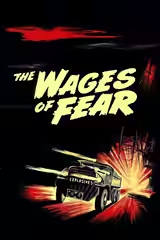
Red River is our choice for the strain between men who care for one another, while The Wages of Fear suits those seeking suspense from dangerous work. We recommend both: the cattle drive gives Wayne and Clift room to make affection complicate authority, while the nitroglycerine journey makes every cautious mile frightening, after a long opening wait in town.
What should I watch after Red River?
After Red River, try The Wages of Fear (1953, Fi1m 90): Dangerous work tests the loyalties of men who badly need the wages. Then Harakiri (1962, Fi1m 91): An austere challenge to male honour, built around the cruelty it excuses.

Cast

Awards

Academy Awards, 1949

Nominated
Best Film Editing
Nominated
Best Story

If you liked this, try…

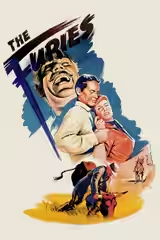
  1. The Furies (1950) · not on Fi1m yetFamily resentment and cattle-country power, with a father nobody should have to manage.

  2. The Wages of Fear (1953, Fi1m 90)Dangerous work tests the loyalties of men who badly need the wages.

  3. Harakiri (1962, Fi1m 91)An austere challenge to male honour, built around the cruelty it excuses.

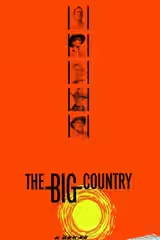
  4. The Big Country (1958) · not on Fi1m yetPatient staging and clashing temperaments make the Western’s swagger look distinctly questionable.

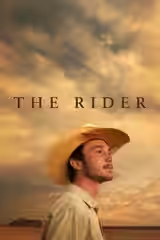
  5. The Rider (2017) · not on Fi1m yetA quieter account of cowboy pride, with physical vulnerability kept painfully close.