Ridley Scott has made a serious, muddy, well-built film about how a soldier became an outlaw, and run out of time before the outlaw turned up. Blanchett and von Sydow give it a heart it does not quite know what to do with.
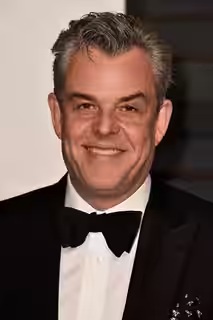
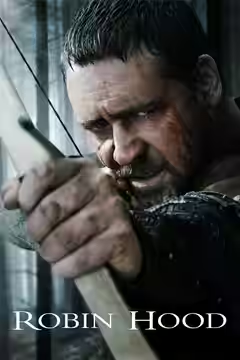
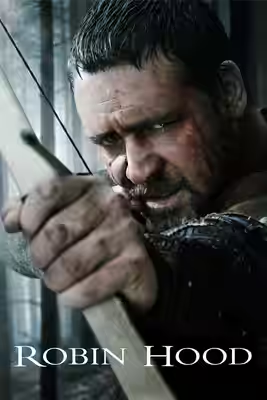
Ridley Scott and Brian Helgeland have set out to explain Robin Hood before he was Robin Hood: who the man was and how a soldier ended up in a forest with a price on his head. It opens in France in 1199, with Richard the Lionheart (Danny Huston) besieging a castle on the way home from the Crusade, and it runs 140 minutes. The idea is reasonable. The trouble is that the film is so taken with the before that it leaves almost no room for the outlaw.
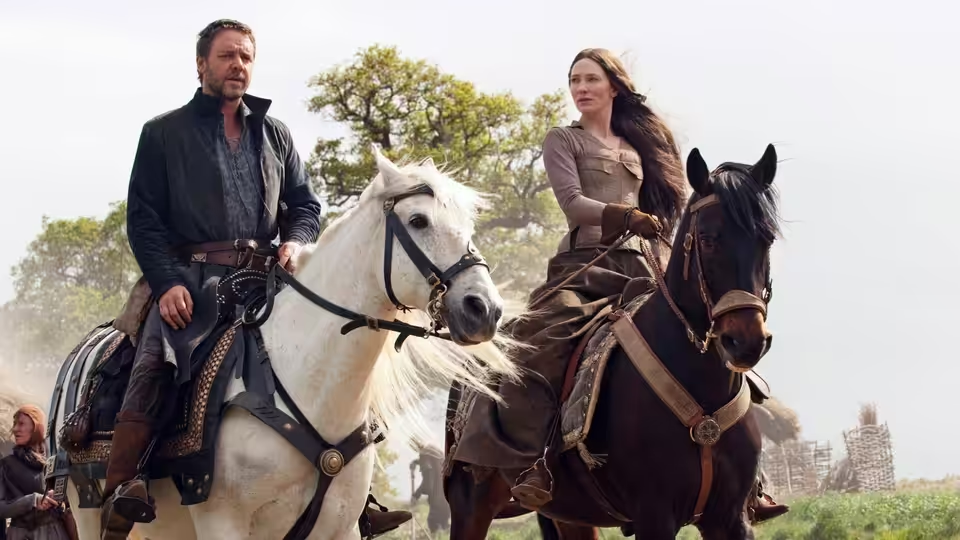
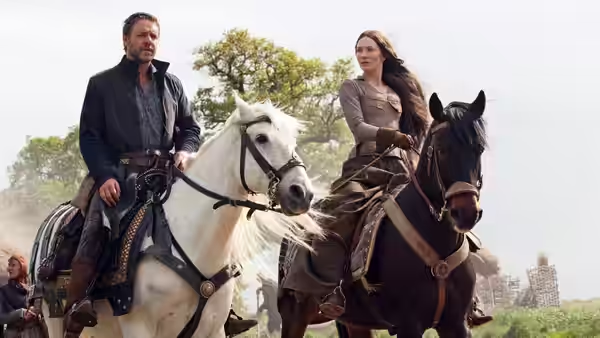
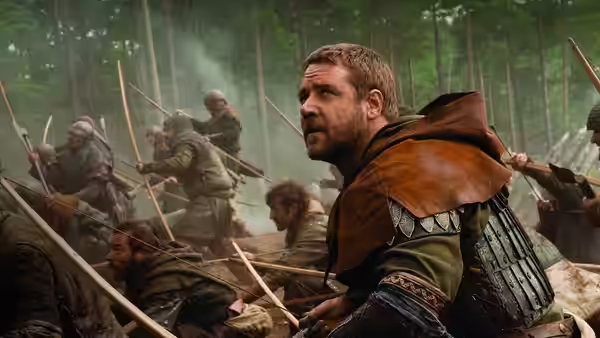
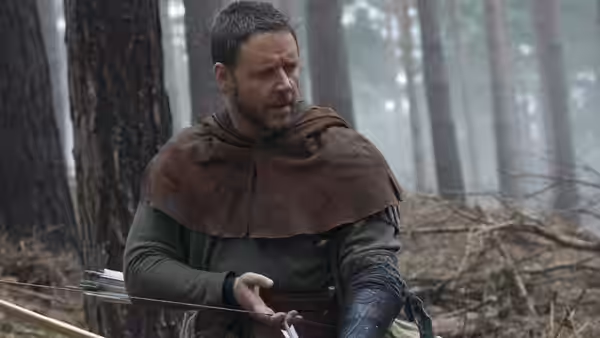
Russell Crowe plays Robin Longstride as a tired, decent soldier with a barrel chest and an accent that tours the British Isles without settling. What he does not do, at any point, is enjoy himself. Little John (Kevin Durand), Will Scarlet (Scott Grimes) and Friar Tuck (Mark Addy) get a drinking song and some business with bees, and are then stood at the back of scenes about taxes. We missed the grin, and were surprised by how much.
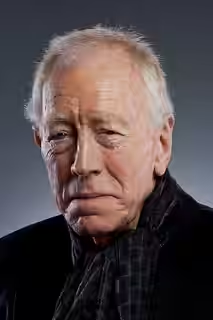
The Nottingham scenes are the best, because the film slows down and lets two old hands talk. Max von Sydow plays Sir Walter Loxley, blind and nearly broke, who knows within a minute that the man carrying his son’s sword is not his son and asks him to pretend anyway, so the land stays in the family. The moment he runs his hands over Crowe’s face took us by surprise: von Sydow does nothing but listen with his fingers, and it is the one place in the picture where we felt something was at stake. Cate Blanchett’s Marion is a widow running a farm with no husband, no seed corn and a village of hungry tenants, and she plays her as too busy to be charmed. Helgeland builds the romance out of arguments about who sleeps where, which is the right way to do it.
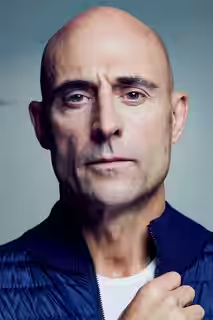
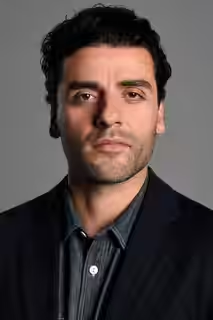
The villains are a mixed bag. Mark Strong’s Godfrey rides about burning villages with a scar down one cheek and a fixed scowl he never varies. Oscar Isaac’s Prince John is the liveliest thing on screen: petulant, vain, forever in bed or in a sulk, and funny in a way the film badly needs. Matthew Macfadyen’s Sheriff of Nottingham has about four scenes and one failed pass at Marion. The one antagonist the legend requires is an afterthought.
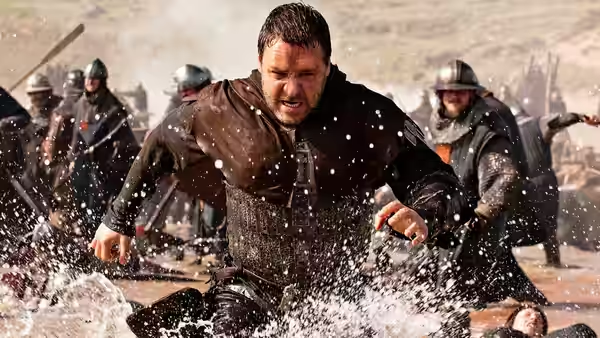
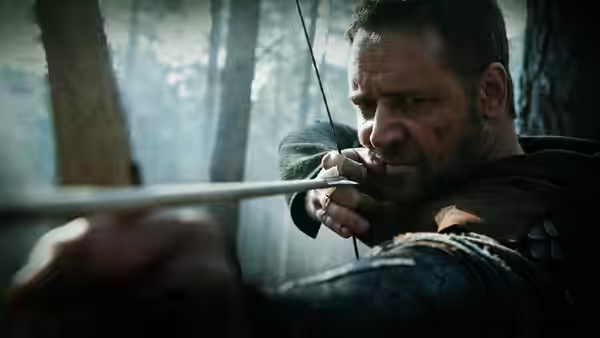
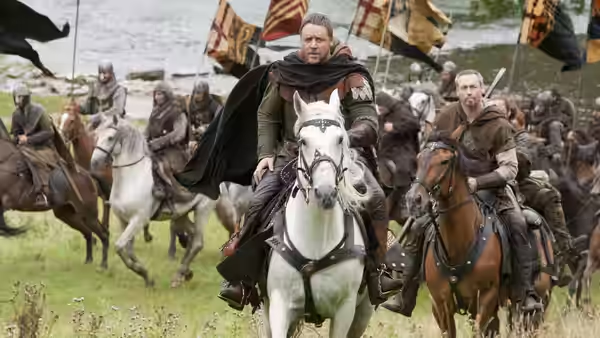
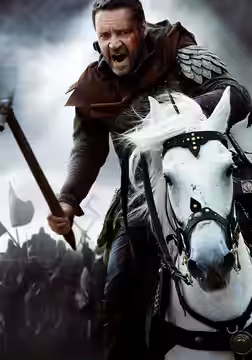
It is handsomely built. John Mathieson shoots England under a lid of grey cloud, so the fields are the colour of wet slate and the firelight indoors looks warm by contrast. Pietro Scalia cuts those early fights so you can follow who is where, which is more than can be said for the large battle late on, which we will not describe except to say that it is shot from a great many angles and that the 12A certificate keeps every blade clean.
The script is the problem. Helgeland, from a story he shares with Cyrus Voris and Ethan Reiff, has a French invasion plot, a tax plot, a charter plot, a plot about a father Robin cannot remember and a band of orphans in the woods, and the film keeps all of them in the air and lands none of them cleanly. Somewhere in the middle hour, during a long stretch about barley, tithes and a mislaid document, we were bored, and we checked the time twice, which we do not often do in a Ridley Scott film. Gladiator told you what its hero wanted inside ten minutes; here we were still unsure at the two-hour mark.
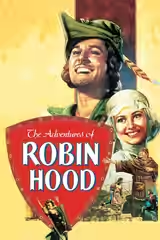
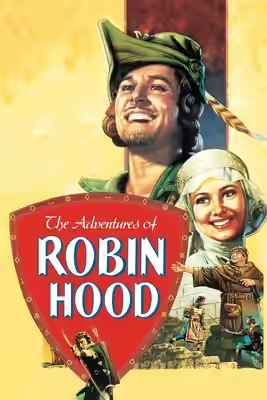
Most critics landed close to where we have, and the split is easy to understand: it is a serious, well-made film about the years before the story everyone came for. If you want Robin Hood, the 1938 one is still there and has a great deal more fun. If you want Ridley Scott marching men through mud to a good score, this does that, and does it better at home, where the mud looks less like money. The tagline promises that lambs will become lions. By the end they have mostly become a sequel nobody made.