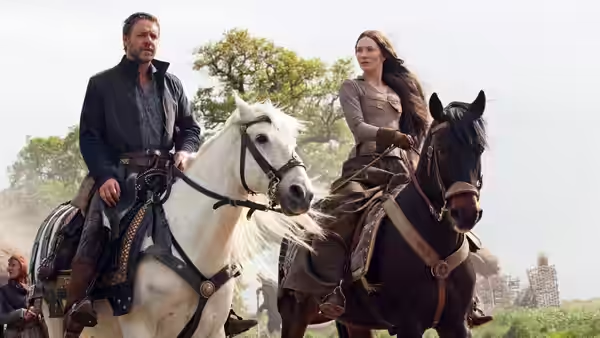
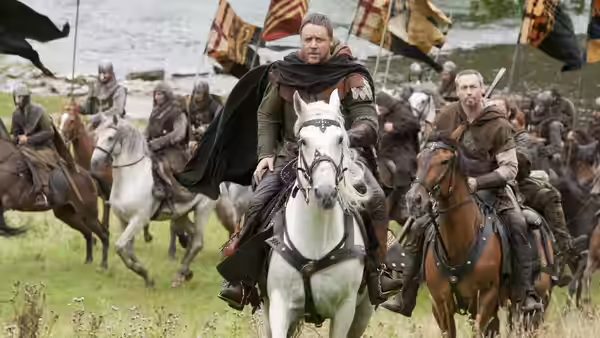
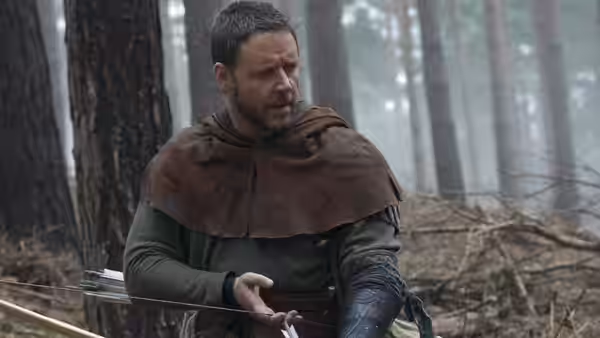
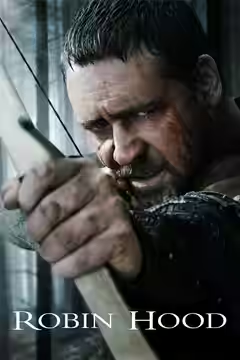
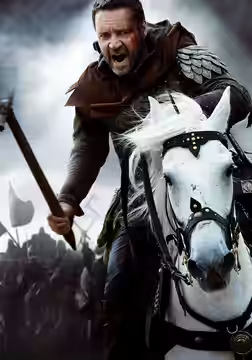
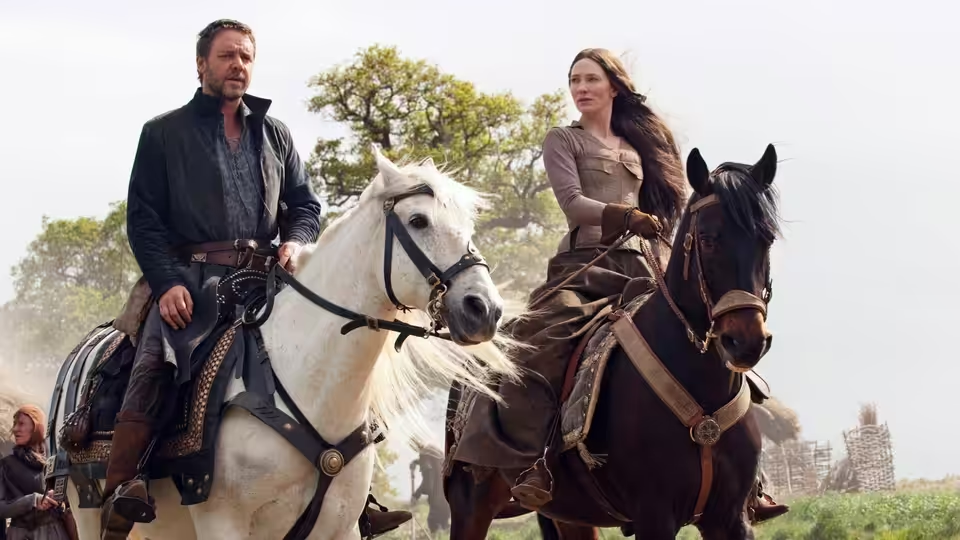
Robin Longstride (Russell Crowe) and Marion Loxley (Cate Blanchett) ride horses across the countryside
Film review

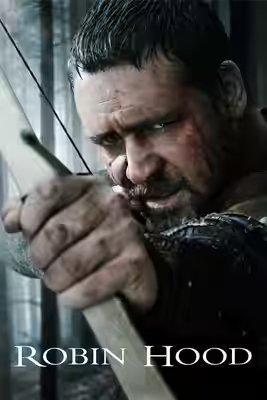
Robin Hood

2010 · Directed by Ridley Scott · 2h 20m

In a sentenceRobin Hood as a 140-minute job interview for the part of Robin Hood

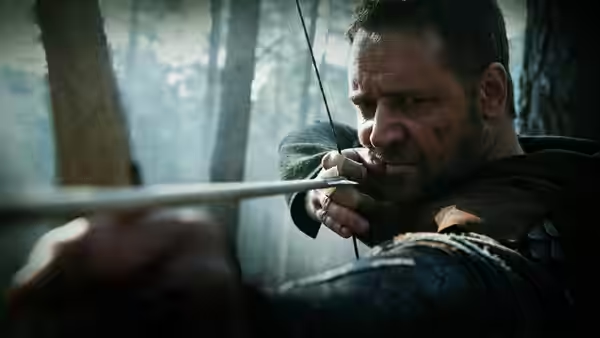
France, 1199. Robin Longstride (Russell Crowe), an archer in the army of King Richard the Lionheart (Danny Huston), is helping to besiege a castle on the long road home from the Crusade, alongside Little John (Kevin Durand) and Will Scarlet (Scott Grimes). When the king is killed, Robin and his friends desert, and on the way to the coast they stumble on an ambush led by Godfrey (Mark Strong), who has French paymasters and a plan for England. A dying knight asks Robin to carry his sword home to his father, Sir Walter Loxley (Max von Sydow), in Nottingham. Robin takes the sword, the knight’s name and his passage to England, where Prince John (Oscar Isaac) is about to be crowned and the knight’s widow, Marion Loxley (Cate Blanchett), is not expecting a stranger at her gate.

Plays from YouTube when you press play; nothing loads from them until then.

Fi1m review

Ridley Scott has made a serious, muddy, well-built film about how a soldier became an outlaw, and run out of time before the outlaw turned up. Blanchett and von Sydow give it a heart it does not quite know what to do with.

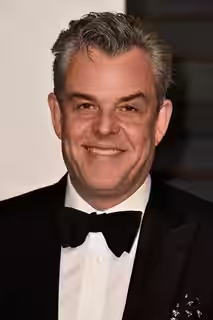
Ridley Scott and Brian Helgeland have set out to explain Robin Hood before he was Robin Hood: who the man was and how a soldier ended up in a forest with a price on his head. It opens in France in 1199, with Richard the Lionheart (Danny Huston) besieging a castle on the way home from the Crusade, and it runs 140 minutes. The idea is reasonable. The trouble is that the film is so taken with the before that it leaves almost no room for the outlaw.

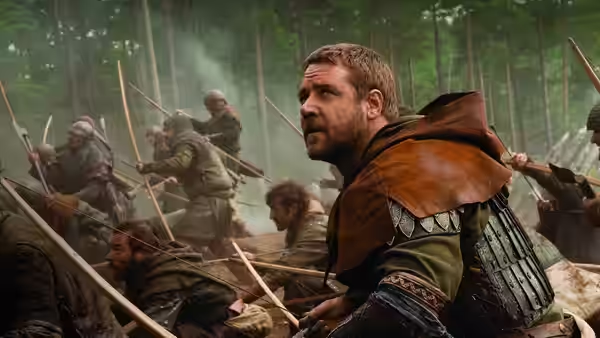
Russell Crowe plays Robin Longstride as a tired, decent soldier with a barrel chest and an accent that tours the British Isles without settling. What he does not do, at any point, is enjoy himself. Little John (Kevin Durand), Will Scarlet (Scott Grimes) and Friar Tuck (Mark Addy) get a drinking song and some business with bees, and are then stood at the back of scenes about taxes. We missed the grin, and were surprised by how much.

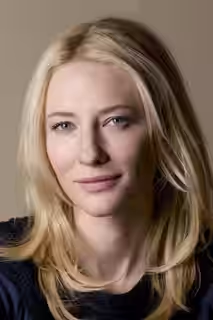
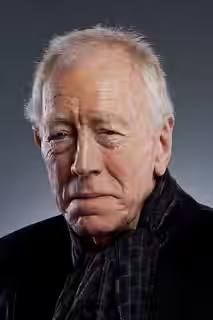
The Nottingham scenes are the best, because the film slows down and lets two old hands talk. Max von Sydow plays Sir Walter Loxley, blind and nearly broke, who knows within a minute that the man carrying his son’s sword is not his son and asks him to pretend anyway, so the land stays in the family. The moment he runs his hands over Crowe’s face took us by surprise: von Sydow does nothing but listen with his fingers, and it is the one place in the picture where we felt something was at stake. Cate Blanchett’s Marion is a widow running a farm with no husband, no seed corn and a village of hungry tenants, and she plays her as too busy to be charmed. Helgeland builds the romance out of arguments about who sleeps where, which is the right way to do it.

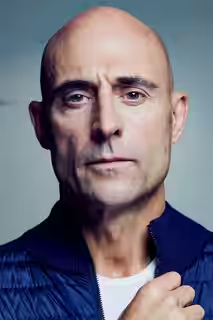
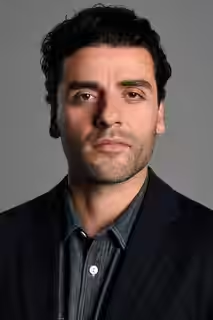
The villains are a mixed bag. Mark Strong’s Godfrey rides about burning villages with a scar down one cheek and a fixed scowl he never varies. Oscar Isaac’s Prince John is the liveliest thing on screen: petulant, vain, forever in bed or in a sulk, and funny in a way the film badly needs. Matthew Macfadyen’s Sheriff of Nottingham has about four scenes and one failed pass at Marion. The one antagonist the legend requires is an afterthought.

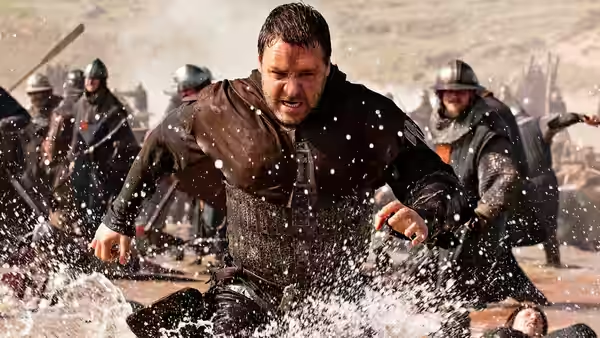
It is handsomely built. John Mathieson shoots England under a lid of grey cloud, so the fields are the colour of wet slate and the firelight indoors looks warm by contrast. Pietro Scalia cuts those early fights so you can follow who is where, which is more than can be said for the large battle late on, which we will not describe except to say that it is shot from a great many angles and that the 12A certificate keeps every blade clean.

The script is the problem. Helgeland, from a story he shares with Cyrus Voris and Ethan Reiff, has a French invasion plot, a tax plot, a charter plot, a plot about a father Robin cannot remember and a band of orphans in the woods, and the film keeps all of them in the air and lands none of them cleanly. Somewhere in the middle hour, during a long stretch about barley, tithes and a mislaid document, we were bored, and we checked the time twice, which we do not often do in a Ridley Scott film. Gladiator told you what its hero wanted inside ten minutes; here we were still unsure at the two-hour mark.

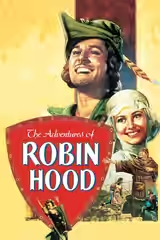
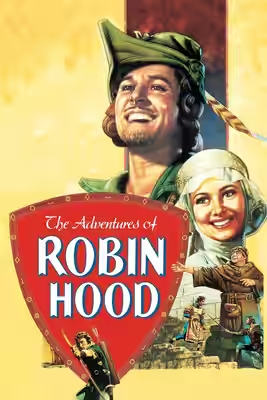
Most critics landed close to where we have, and the split is easy to understand: it is a serious, well-made film about the years before the story everyone came for. If you want Robin Hood, the 1938 one is still there and has a great deal more fun. If you want Ridley Scott marching men through mud to a good score, this does that, and does it better at home, where the mud looks less like money. The tagline promises that lambs will become lions. By the end they have mostly become a sequel nobody made.
Critical consensus AI synthesised

52
Positive
2
Mixed
6
Negative
6

Most critics find Ridley Scott’s Robin Hood a competent, serious-minded origin story that is harder to enjoy than it ought to be. The praise, where it comes, goes to Scott’s robust handling of the battles, the castle siege and the climactic beach landing in particular, and to the supporting cast: Oscar Isaac’s Prince John and Cate Blanchett’s Marion are singled out more often than Russell Crowe’s Robin. The period production design and Marc Streitenfeld’s score also draw approving mentions.

The reservations cluster on tone and plotting. The reviews call it joyless and overburdened with set-up, short on the merriment and playfulness the legend usually brings, and several say the historical muddle leaves Robin without a clear purpose. Crowe divides them: some admire the physical performance, others think he is simply miscast. The spread is wide, from Empire, which finds it refreshingly grown-up, to Eye for Film, which thinks it need not have been made at all.

Empire
1 February 2007 · Dan Jolin
75*

Jolin finds the film entertaining and refreshingly grown-up, with a lively, coherent story. He especially praises Oscar Isaac’s flamboyant Prince John, while faulting the bloodless action and shifting accents.

Read the full review →
The Guardian
13 May 2010 · festival review · Peter Bradshaw
70*

Bradshaw finds the grim origin-story entertaining and engaging despite its shortage of merriness. He praises Scott’s robust direction and the film’s energetic battles and political intrigue.

Read the full review →
RogerEbert.com
64*

The page is blocked, so the critic’s verdict cannot be verified. No praise or complaint can be reliably identified from the available text.

Read the full review →
Screen Daily
10 May 2010 · festival review · Mike Goodridge
64*

The page identifies it as a Cannes review, but the critic's verdict is unavailable. No praise or complaint can be verified from the accessible text.

Read the full review →
Radio Times
★★★ · Anna Richards
60

Richards finds Scott’s politically complex take on the legend engaging, though the romance distracts and the folk-dancing scenes feel pointless. She singles out the romance with Marion as well handled, despite its distraction from the story.

Read the full review →
The Hollywood Reporter
14 October 2010 · festival review · Kirk Honeycutt
60*

Honeycutt finds the film an energetic but uneven epic, with its historical muddling and sidelined Robin Hood lore undercutting its appeal. He praises Scott’s muscular direction and action choreography, along with Marc Streitenfeld’s score.

Read the full review →

Straight answers AI written, from our review

How long is Robin Hood, and what is it rated?
Robin Hood runs 2h 20m. It is an action and adventure film.
Where can I watch Robin Hood in Slovakia?
Robin Hood is streaming on SkyShowtime and Netflix in Slovakia. Availability is checked daily; the links above go straight to each service.
What should I watch after Robin Hood?
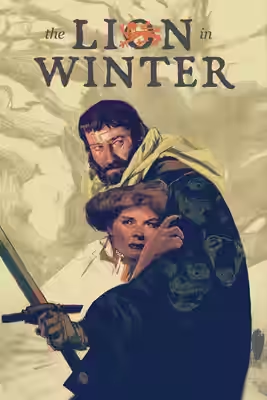
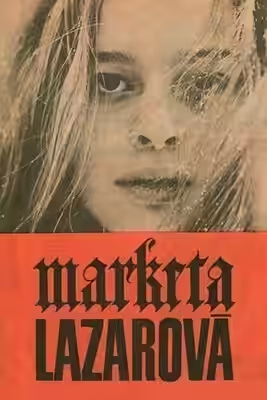
After Robin Hood, try The Adventures of Robin Hood (1938, Fi1m 90): The legend as it was meant to be played: in colour, in tights, with a grin. Then The Lion in Winter (1968, Fi1m 81): Eleanor, John and Richard at Christmas, tearing strips off each other in a cold castle; and Marketa Lazarová (1967, Fi1m 84): A Czech medieval film with real mud, real cold and no interest in being liked.

Cast

If you liked this, try…

  1. The Adventures of Robin Hood (1938, Fi1m 90)The legend as it was meant to be played: in colour, in tights, with a grin.

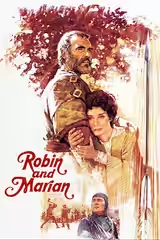
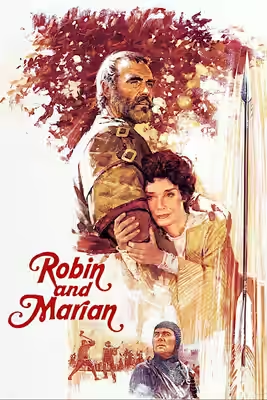
  2. Robin and Marian (1976) · not reviewed yetConnery and Hepburn as the outlaws grown old; autumnal, sad and quietly funny.

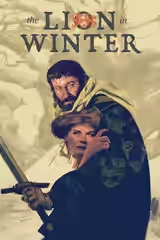
  3. The Lion in Winter (1968, Fi1m 81)Eleanor, John and Richard at Christmas, tearing strips off each other in a cold castle.

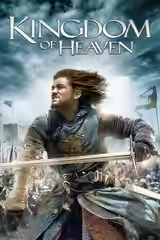
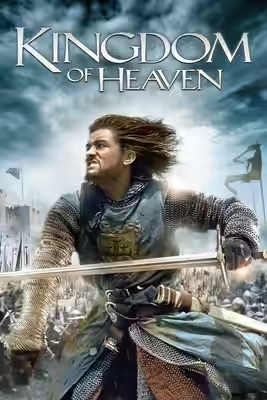
  4. Kingdom of Heaven (2005) · not reviewed yetScott’s other Crusades picture, which knows what its hero wants and follows him there.

  5. Marketa Lazarová (1967, Fi1m 84)A Czech medieval film with real mud, real cold and no interest in being liked.

Free account

Know what to watch tonight

Two lists that know where things are streaming, collections you can share, your own score beside ours, and Discover that remembers what you have seen.

  • Want to see, sorted by what is streaming now
  • Seen, with your score out of ten
  • No adverts, ever