Leo McCarey’s comedy about an English valet won in a card game by a cattleman from Red Gap is gentle, slow and funny, with Charles Laughton at his most likeable. The plot runs thin in its second half, and we did not much mind.
Marmaduke Ruggles has been in service all his life and has never once asked himself whether he enjoys it. In the first minutes of Leo McCarey’s comedy he is lost in a card game in Paris by the Earl of Burnstead (Roland Young), who is apologetic about it, and handed over to Egbert Floud (Charles Ruggles), a cattleman from Red Gap, Washington, who does not want a valet and would much rather have someone to drink with. What follows is slow, kind and funny, a film about what happens to a man when nobody asks him to bow. We liked it a great deal and we recommend it, with the caveat that the plot is thin and gets thinner.
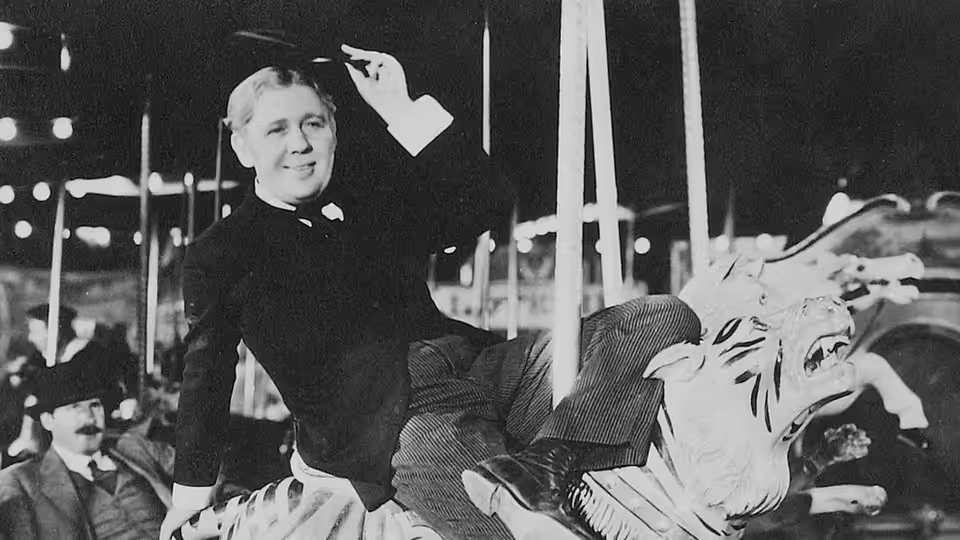
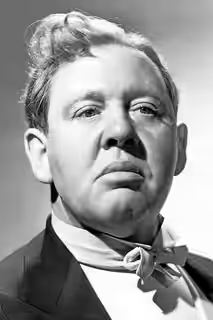
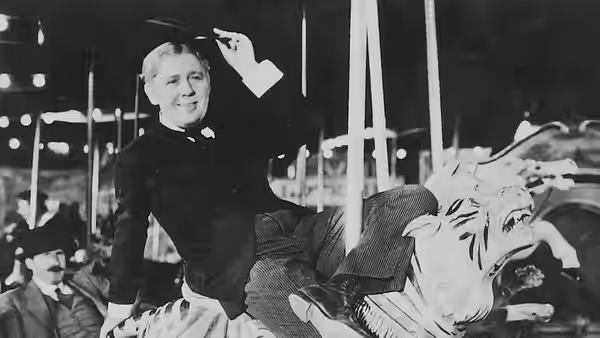
Charles Laughton is the reason. Two years earlier he was Henry VIII with his mouth full; here he is buttoned to the collar and barely moves his face for the first half hour. Watch what his body does over ninety minutes. The change starts in the eyebrows, moves to the shoulders, and by the time half a Washington town is calling him Bill he is standing on his heels like a different man. It is one of the finest pieces of physical acting in a Hollywood comedy of the period, and there is not a pratfall in it.
The scene everyone remembers is the Gettysburg Address. In a saloon, a room full of Americans discover that none of them can get past the first line, and the Englishman can. We expected to find it corny and we did not; it moved us. Laughton does not perform the speech. He says it, quietly, as a man who has read it alone in a hotel room and been changed by it, and the noise of the bar drops away because the people in it have stopped talking, not because the soundtrack has told them to. Alfred Gilks keeps the camera on him, and Robert Odell and Edward Dmytryk cut away only to faces going still. It is the whole film in two minutes.
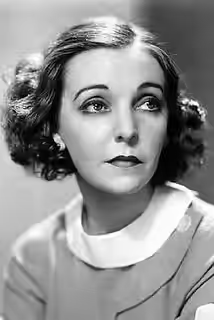
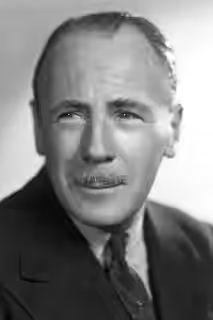
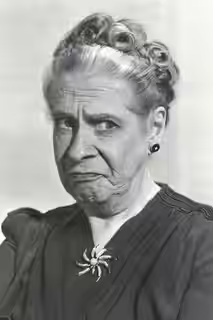
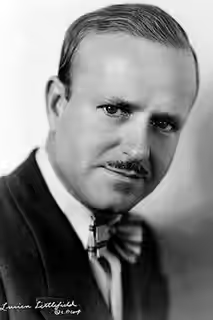
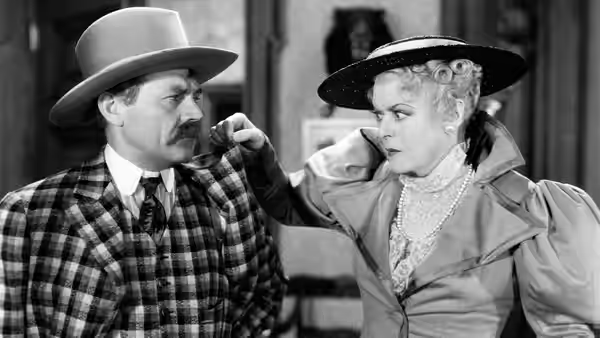
McCarey has cast the rest of it well. Mary Boland’s Effie Floud, who wants Egbert tidied up for society and cannot say Paris without adding a syllable, is a monster of small ambitions, and Boland never asks us to hate her. Charles Ruggles, hitching his trousers and calling everyone friend, is the film’s warm centre; the running joke in which he and the valet sneak off to get drunk is funnier the third time than the first. Zasu Pitts, as the widow Mrs. Judson, gets the film’s one romance and plays it with a flutter that ought to grate and instead is sweet, and Laughton around her is all elbows. Maude Eburne’s ‘Ma’ Pettingill gets laughs by looking unimpressed. Lucien Littlefield’s Charles Belknap-Jackson is the town snob who wants Ruggles put back below stairs.
Gilks shoots it plainly, at eye level, in the bright even light of a 1935 studio, and that plainness suits a comedy that lives in faces. Travis Banton buries Boland in feathers and fur and puts Laughton in a dark suit cut so exactly it reads as a uniform, so that when the collar finally comes loose you notice. Odell and Dmytryk let gags run past the point where a comedy made today would cut, and the laughs are in the extra second.
The trouble is the script. Walter DeLeon and Harlan Thompson, working from Harry Leon Wilson’s novel, have one idea, and once the film reaches Red Gap it circles that idea. The misunderstanding about who Ruggles is runs longer than it can bear, some of the situations were worn even in 1935, and the last half hour turns on a development we will not describe that arrives because the script needs it rather than because the story does. At ninety minutes none of this is fatal. It is why we like the film rather than love it.
Set beside McCarey’s other work, it sits between Duck Soup and The Awful Truth in temperament as well as date: less anarchic than the first, less elegant than the second, warmer than either. Watch it on a wet afternoon with someone who thinks old comedies are slow. It is slow. About twenty minutes in you will stop noticing.