Andrei Tarkovsky’s Solaris makes space travel feel painfully lonely. Its grief and strange planetary images justify the patience it asks, though the long philosophical conversations sometimes explain what the performances have already made clear.
Solaris is moving science fiction, though it asks for more patience than it always needs. Andrei Tarkovsky adapts Stanisław Lem’s novel with Friedrich Gorenstein, sending Kris Kelvin (Donatas Banionis) to a remote station near a planet whose behaviour defeats ordinary explanation. The journey is supposed to bring him closer to understanding another form of life, but human memories and needs keep getting in the way. We recommend it warmly, with a warning about the long philosophical conversations.
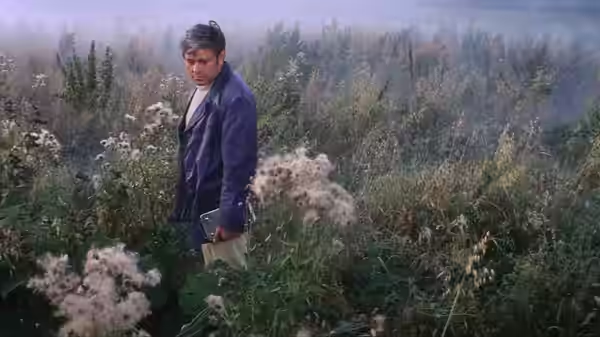
The opening on Earth is essential to that journey, even when its length seems hard to account for. Vadim Yusov gives the natural world enough time on screen for us to begin missing it before the film has properly left. We felt homesick during this stretch; the sustained attention to nature makes leaving it seem a considerable loss. Once the station takes over, we keep remembering how much there was to look at outside.
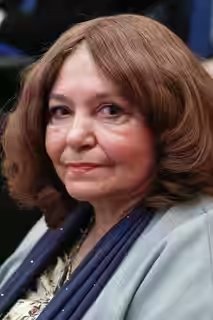
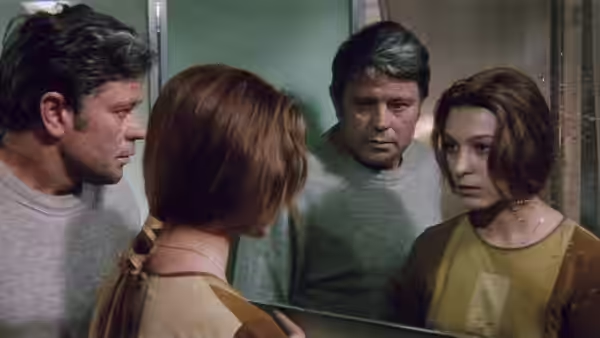
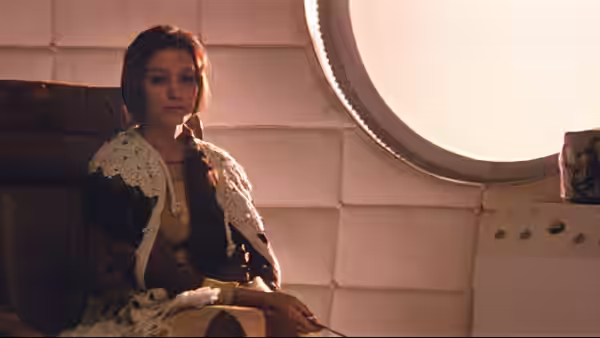
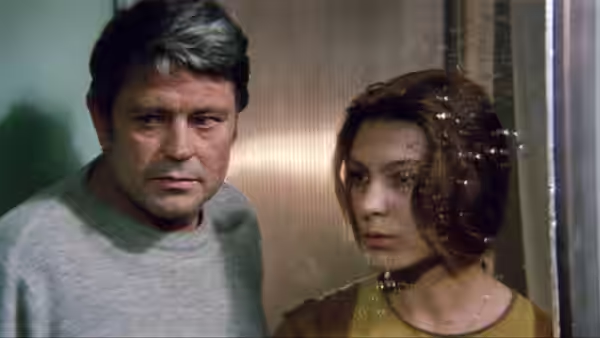
Donatas Banionis makes Kelvin a difficult man to reach, which is useful until it becomes frustrating. His reserve gives the film somewhere to start, but it can also make a conversation feel longer than the thought behind it. Natalya Bondarchuk, as Hari, supplies much of the hurt that keeps the questions about love from becoming an exercise. We believe in the need for another person when she is on screen, even when the dialogue seems determined to turn that need into a discussion.
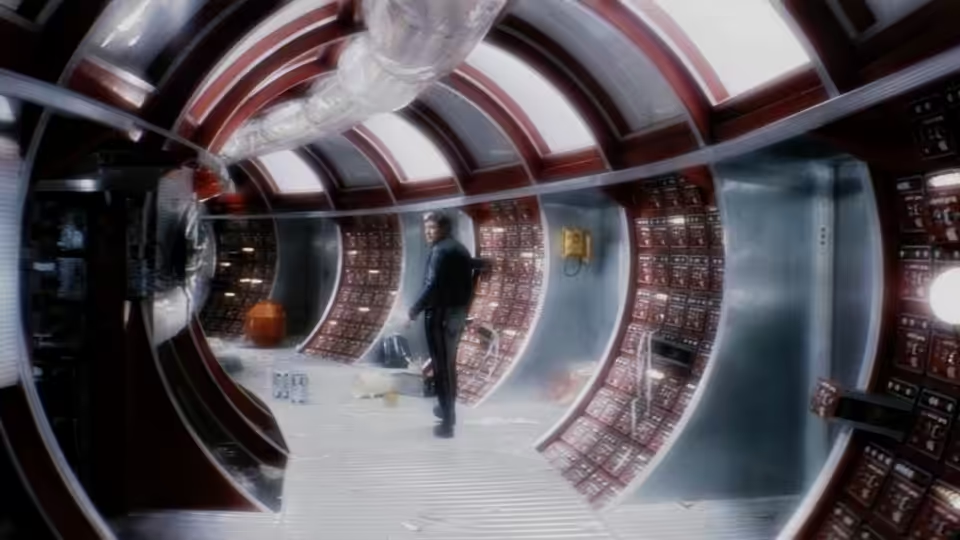
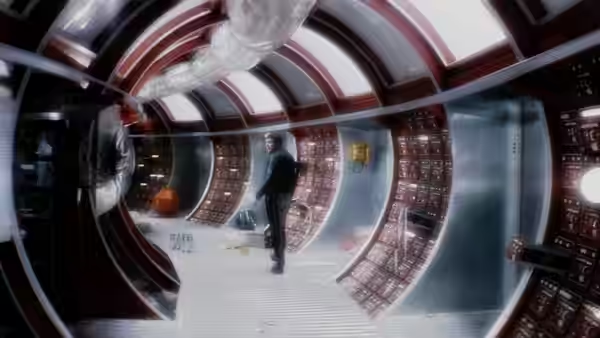
Vadim Yusov’s images of Solaris are more unsettling than any tidy explanation of the planet would be. They seem unstable under our gaze, making the effort to inspect them part of the unease. Mikhail Romadin’s production design gives the station a sense of human occupation, and the attention to art and objects helps prevent it becoming merely a setting for arguments. The music, credited to Eduard Artemyev and Vyacheslav Ovchinnikov, sustains the strangeness without making it feel like a warning before a shock.
The editing by Lyudmila Feiginova and Nina Marcus allows the long takes to establish their own pace, and often the extra time changes what we notice. An image we have understood can still become more disquieting if we are left with it. The philosophical conversations are less consistently rewarding: we sometimes finish considering a question well before the conversation does. Across 167 minutes, those stretches are a real obstacle, particularly when the film seems to be insisting on the seriousness of something its actors have already made clear.
We are used to science fiction rewarding curiosity with a clearer view of how something works. Here the closer attention goes to the people doing the looking, and to their habit of treating an unknown world as something that ought to answer their questions. There is a severity to that view of human beings, but the film’s grief prevents it from becoming smug. Its demands on our attention are substantial. Choose it when there is time to sit with the silences without waiting for the next event.