John Travolta’s effort cannot rescue a sequel that mistakes Tony Manero’s ambition for a personality. Sylvester Stallone gives the pursuit of Broadway success plenty of insistence, but too little reason to care.
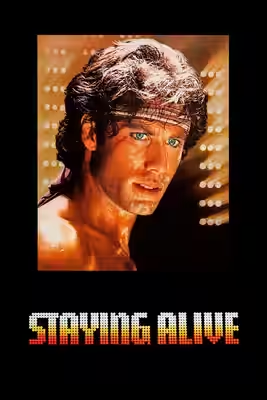
Sylvester Stallone’s Staying Alive is a poor sequel that asks us to take Tony Manero’s ambition more seriously than his behaviour warrants. The pursuit of Broadway success ought to give John Travolta’s character something demanding to work towards, with other people entitled to needs of their own. Instead, Tony’s determination occupies so much attention that there is little space left to discover what makes him interesting. The thin characterisation makes 96 minutes feel longer than they should.
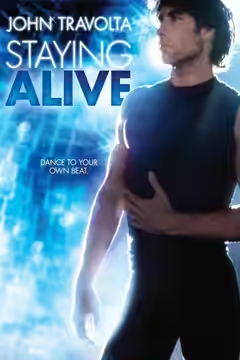
John Travolta supplies commitment, and the film does not suffer from a leading actor unwilling to put in the work. We were bored by Tony, because his persistent self-absorption gives us so little to consider beyond his desire to get ahead. The screenplay by Norman Wexler and Sylvester Stallone does too little to examine his manipulative behaviour. An unpleasant lead can hold our attention, but the writing needs to find something worth investigating beneath the unpleasantness. Here his narrow set of wants soon becomes wearing.
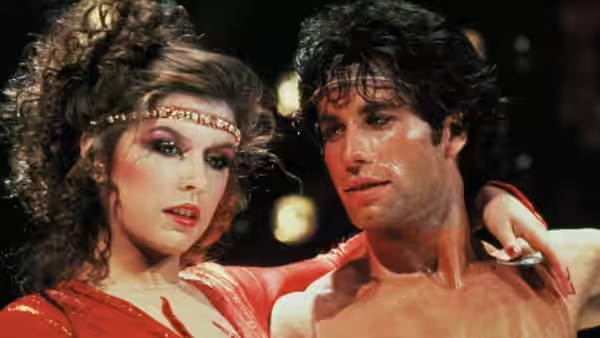
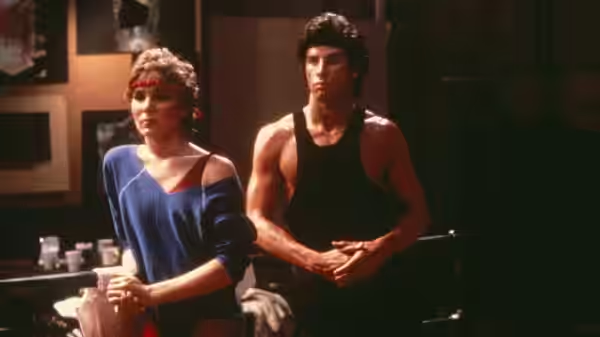
Cynthia Rhodes plays Jackie and Finola Hughes plays Laura, and both have the difficult job of sustaining our interest around such a self-involved lead. There is effort in the performances, but the writing gives them too little help. The tendency to push emotions harder only makes the shortage of convincing human behaviour more noticeable. Even when a performer makes an impression, the film returns us to Tony without making his company any more rewarding.
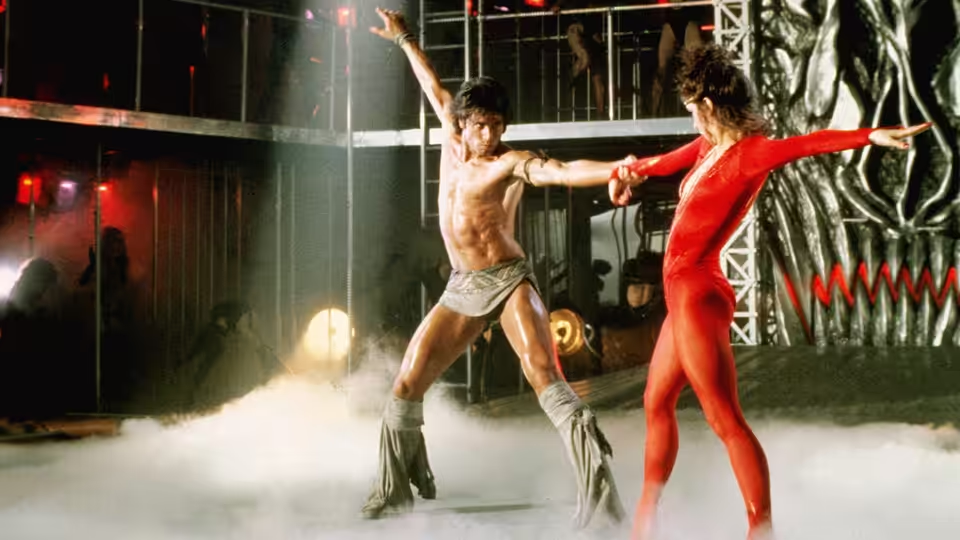
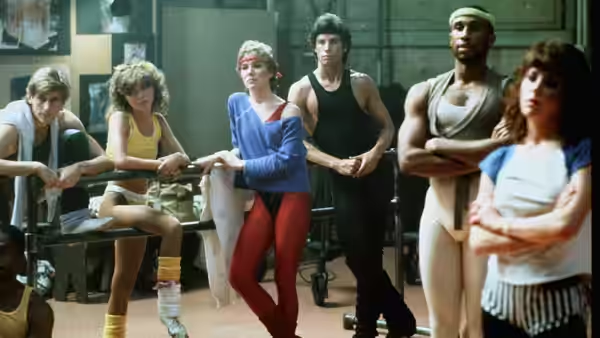
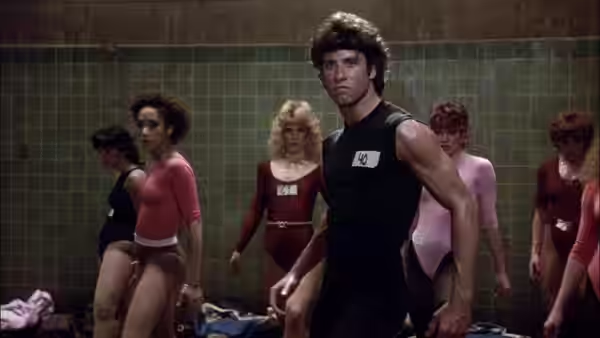
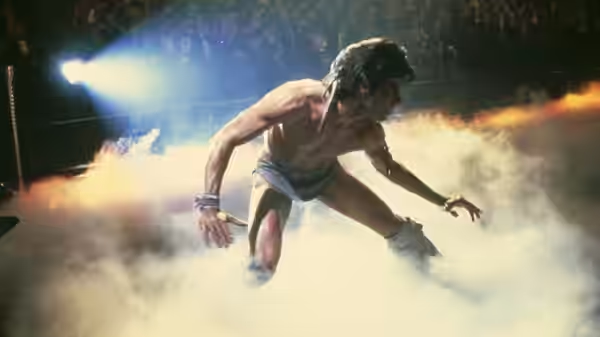
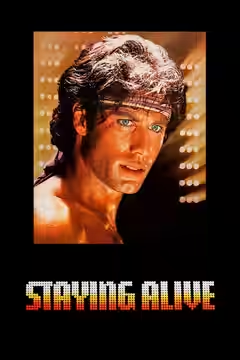
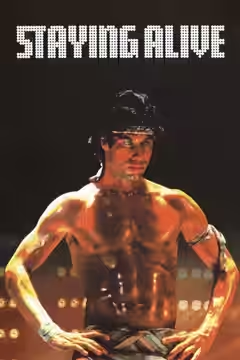
Nick McLean’s cinematography at least gives us a reason to keep looking at John Travolta. His physical commitment comes across clearly, and watching him work provides some welcome pleasure when the character has exhausted our patience. Robert F. Boyle’s production design does its share in making theatrical success seem worth pursuing. These contributions help establish the attraction of Tony’s goal, though the screenplay still struggles to make us care about his pursuit of it.
The music from Robin Gibb, Maurice Gibb and Barry Gibb provides welcome relief from the dialogue. Its momentum helps us through stretches in which the drama has run short of things to say. Peter E. Berger, Mark Warner and Don Zimmerman handle the editing, but the film’s forward movement cannot conceal how often it repeats its point about Tony wanting success. We understand his ambition well before the film finishes insisting on it.
The familiar underdog formula is the deeper problem, and it makes the comparison with Rocky understandable. We need some interest in the person doing the work before that work can become an absorbing drama. Against Saturday Night Fever, this sequel shows too little curiosity about Tony and too much readiness to applaud his persistence. Sylvester Stallone’s direction keeps pressing for an emotional response that the screenplay has not done enough to earn.
There is nothing contemptible about the labour here, and the performers deserved a script that understood why an audience might resist Tony. His struggle could have carried another film, provided it had allowed him more complexity and the people around him more independence. The effort on screen earns some respect, but it does not make this worth recommending. If John Travolta is the reason for watching, be prepared to wish the dialogue would stop.