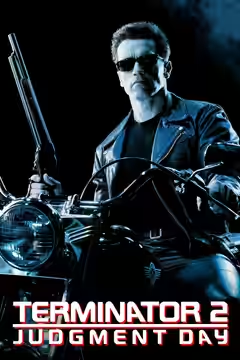
Tim Miller’s sequel wipes the slate back to 1991 and brings Linda Hamilton with it, and for an hour that is enough. Then the script starts remaking Terminator 2 beat for beat, and the last act blurs into digital metal.
The idea behind Terminator: Dark Fate is a good one and a cynical one. Pretend the three sequels after Terminator 2: Judgment Day (1991) never happened, bring James Cameron back as producer, bring Linda Hamilton back as Sarah Connor, and start again in Mexico with a new young woman being hunted by a new machine. Tim Miller directs it with more discipline than that suggests. What he cannot do is stop the script from turning, somewhere around the halfway mark, into the film Cameron already made.
Hamilton is the reason to see it. She plays Sarah now as a woman who has spent the decades since alone with her guns and her grudges, and she is funny about it in a way the series has rarely allowed her. Her entrance, out of a car on a motorway with a launcher on her shoulder and a line we will not spoil, made us sit up, which we had not expected from a fifth sequel. We had thought the pleasure of seeing her would be sentimental. It was not; she is simply the strongest presence in the film, and the script knows it.
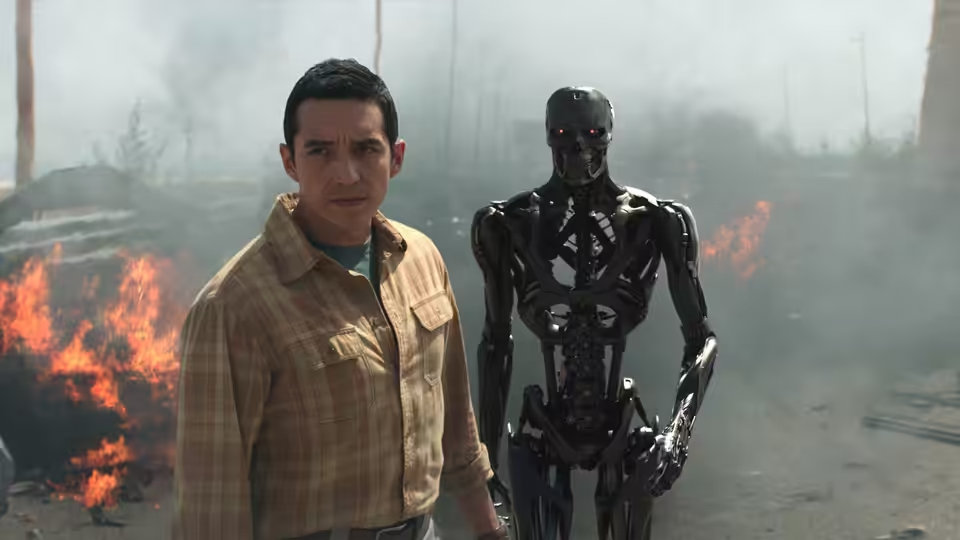
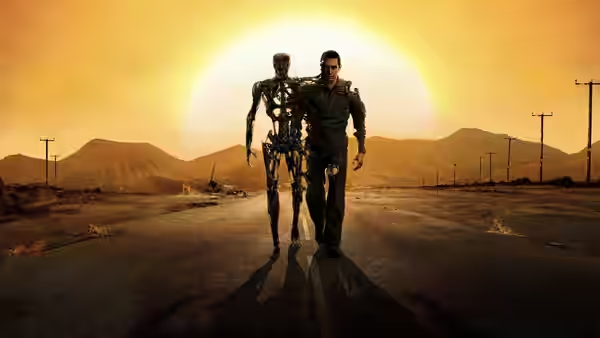
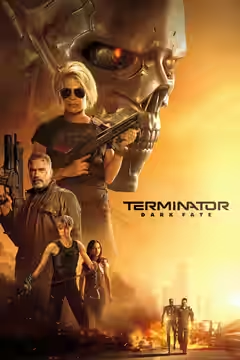
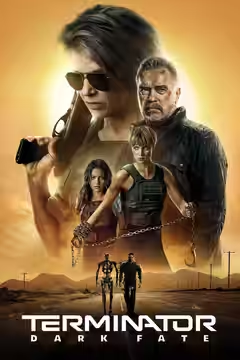
Mackenzie Davis does most of the running. Grace is a human with machine parts, which means she fights like a Terminator and then has to lie down and be fed, and Davis plays the exhaustion as well as the violence, all long limbs and clenched jaw. Natalia Reyes has the harder job as Dani, the person everyone is protecting, and for too long the writers give her little to do but be protected. Gabriel Luna plays the REV-9 with a pleasant, empty courtesy that is properly unnerving, and the design of the thing, a liquid skin that peels away from a black endoskeleton so that two of it come after you, is the one new idea in the film.
The craft is sound. Ken Seng shoots the Mexican daylight hard and white, so the factory floor and the motorway feel like real places, and Sonja Klaus dresses that floor with enough machinery for a fight to have things to hit. Julian Clarke cuts the factory brawl and the motorway chase so that we always know which body is where. Ngila Dickson puts Sarah in dark glasses and a jacket that has seen a great deal, and Grace in whatever she could steal. Junkie XL’s score is percussion and low synthesiser, mixed loud, and by the end it is doing the work the pictures should be doing.
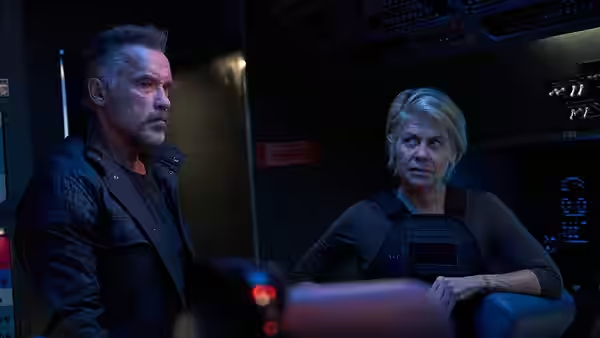
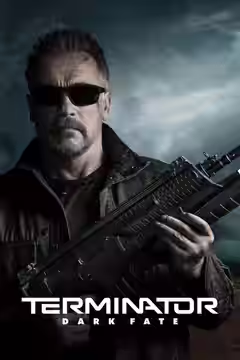
Arnold Schwarzenegger arrives about an hour in, as a T-800 who has taken the name Carl, a wife and a business fitting curtains. This ought to be dreadful. It is the funniest stretch of the film, because Schwarzenegger plays it straight, with a flat pride in his drapes that had us laughing and then oddly touched, and his scenes with Hamilton, two old enemies who cannot stand each other, have a weight nothing else here has.
Then the plot takes over. The screenplay, credited to Billy Ray, David S. Goyer and Justin Rhodes from a story with five names on it, follows the shape of Terminator 2 almost scene for scene: the hunted, the protector, the reluctant veteran, the road, the final industrial location. There is a reveal about Dani that we will not describe; it is the film’s attempt at saying something, and it is delivered as a speech. The last half hour is a plane, a fall and a fight in which digital figures throw each other through digital walls, and somewhere in it we stopped following who was hitting whom. We were not bored so much as worn down.
Most critics have called it the best Terminator since T2. That is true and it is a low bar. The Terminator (1984) had one idea and one monster and ran them for 107 lean minutes; this has three heroines, two machines and 128 minutes, and the arithmetic does not favour it. Watch it for Hamilton, for Davis, for Schwarzenegger’s curtains, and for a first hour that remembers what made the series good. The second hour remembers it too, and copies it out. It carries a 15 certificate.