McG builds a convincing dead world and stages one desert chase that belongs in the series. Around it Christian Bale shouts, the script recites old lines, and a film about the end of the human race plays like a wait for the next instalment.
Terminator Salvation is the first film in the series to spend the whole of its running time in the war the others only glimpsed. James Cameron’s The Terminator (1984) and Terminator 2: Judgment Day (1991) showed the dead future in flashes, blue-lit, with skulls under the tank treads. Here John Brancato and Michael Ferris set the entire story there, in 2018, and the question is whether a place that worked as a nightmare works as somewhere to spend 115 minutes. The answer is partly, and not for long.
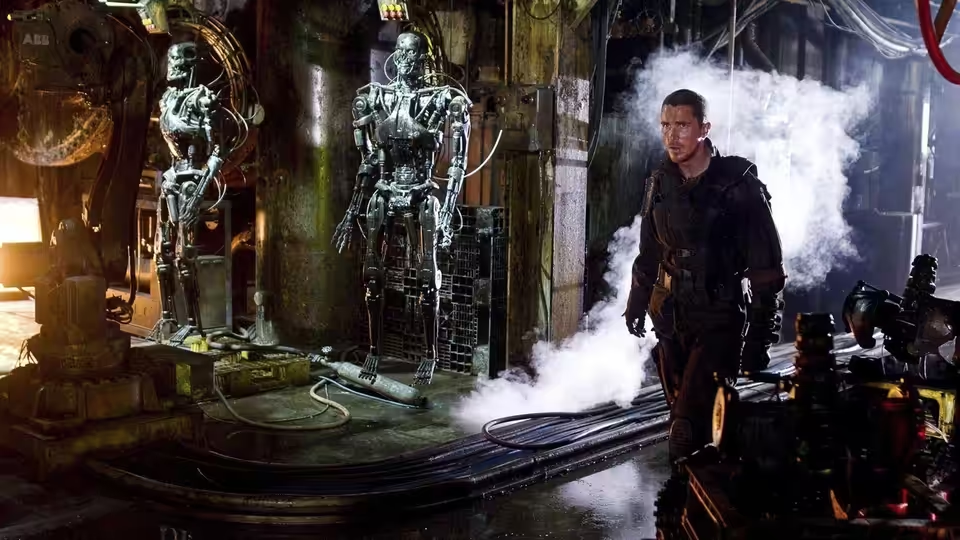
The look is the best of it. Martin Laing’s production design gives the Resistance patched-up helicopters and a hideout in the scrub, and gives Skynet machines that look as if they weigh something: a Harvester the height of a petrol station, and motorcycles that drop off it and hunt on their own. Shane Hurlbut shoots it all in a bleached, near-monochrome light, the sky the colour of ash and the faces the colour of the sky, so that a fireball is the only warm thing in the frame. Michael Wilkinson puts everyone in the same grey rags, which suits the world and wears on the eye.
There is one sequence we would defend to anyone. Marcus Wright (Sam Worthington), Kyle Reese (Anton Yelchin) and a mute child are sheltering in a wrecked petrol station when the Harvester comes through the roof, and the film follows them into a tow truck and down a desert road, with the motorcycles alongside and a transport aircraft overhead. Conrad Buff IV cuts it so that we always know where the truck is and where the machines are. We sat forward, and for six minutes we forgot how much of the film was left. It is the one stretch McG has plainly planned shot by shot.
Then there is John Connor. Christian Bale plays the man the whole series has been about as a hoarse, humourless officer who delivers every line at the same volume, whether to a general or to his wife Kate (Bryce Dallas Howard). The performance is not bad, but it is shut; there is no scene in which Connor is surprised, amused or afraid. We were bored by his radio broadcasts to the survivors, and then annoyed at being bored by a character we have been asked to care about for a quarter of a century. Worthington has the better part and mostly earns it, playing a man who does not understand why he is alive and has decided not to ask. Yelchin is better still. His Reese is quick, scared and funny, the only person on screen who remembers these films used to have jokes in them.
Brancato and Ferris, who also wrote Terminator 3: Rise of the Machines (2003), have built the dialogue out of things people have already said. Reese gets the old line about coming with him if you want to live within minutes of arriving; Connor gets the older one about coming back; each time, the film pauses as if for applause. The 12A certificate keeps the violence bloodless in a story about the extermination of the species. Michael Ironside’s General Ashdown runs the Resistance from a submarine and is there to disagree with Connor until he stops. Danny Elfman’s score quotes the old clanking theme for a bar or two and otherwise supplies brass where the feeling should be. Moon Bloodgood, as the pilot Blair Williams, has a romance the film keeps forgetting to write.
The second half takes turns we will not describe. The last act settles into a Skynet factory that Laing has designed with care and McG uses as somewhere to hit things. Set against the series, this sits below Cameron’s two and beside the third, which it resembles more than it would like: another film about the war to come, except that now the war has come and turns out to be corridors.
Most critics have landed close to where we have, torn between the hardware and the humans, and we see no reason to argue. Watch it for the Harvester and the desert road, and for Yelchin. The rest is a loud, grey, competent evening that reminds you of better films at regular intervals and then declines to be one.