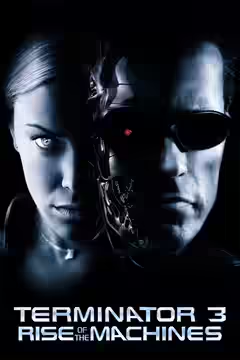
Jonathan Mostow’s third Terminator is an honest, well-built chase film with one tremendous set piece and a final reel braver than anything around it. It is also a retread of the first film, and it knows it. Worth an evening; do not expect Cameron.
Twelve years after Terminator 2: Judgment Day, and without James Cameron, the series comes back with a new director and the old machine. John Connor (Nick Stahl) is in his twenties and living off the grid, because the nuclear war he was raised to survive was due in 1997 and did not come. A new model (Kristanna Loken) arrives from the future to settle the question, and an older one (Arnold Schwarzenegger) arrives to stop her. Jonathan Mostow’s film is not the disaster many feared and not the equal of what came before. It is a sturdy, loud, often funny chase film with one tremendous set piece and a final reel braver than the rest of it.
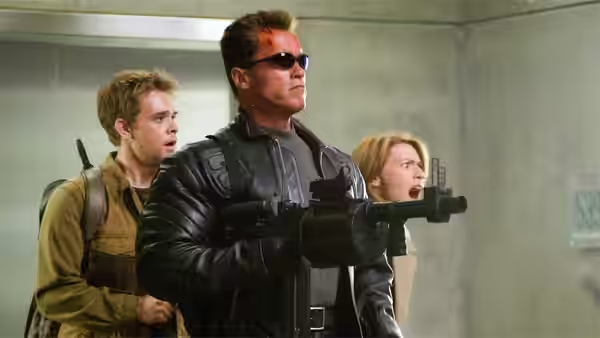
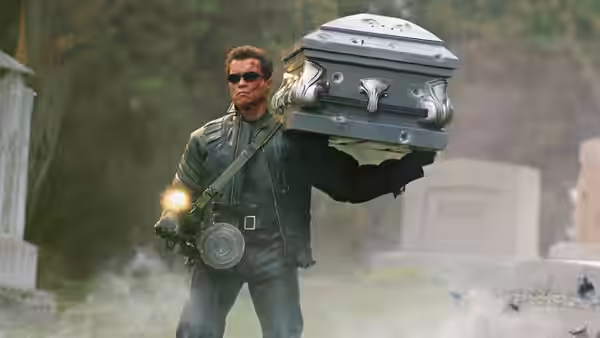
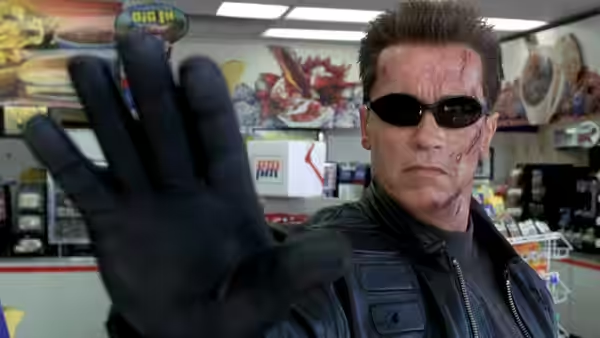
John Brancato and Michael Ferris’s script, from a story they wrote with Tedi Sarafian, follows the shape of the 1984 original almost beat for beat: a killer, a protector, a target who believes none of it, and a great deal of running. The film does not hide this, and makes jokes about it, half of which land. Schwarzenegger’s Terminator walks into a bar on ladies’ night, takes a stripper’s leathers and comes out in star-shaped sunglasses, and the film has the sense to let him take them off. When he announces that he is an obsolete design, Schwarzenegger says it without a flicker, and it is funnier than it has any right to be.
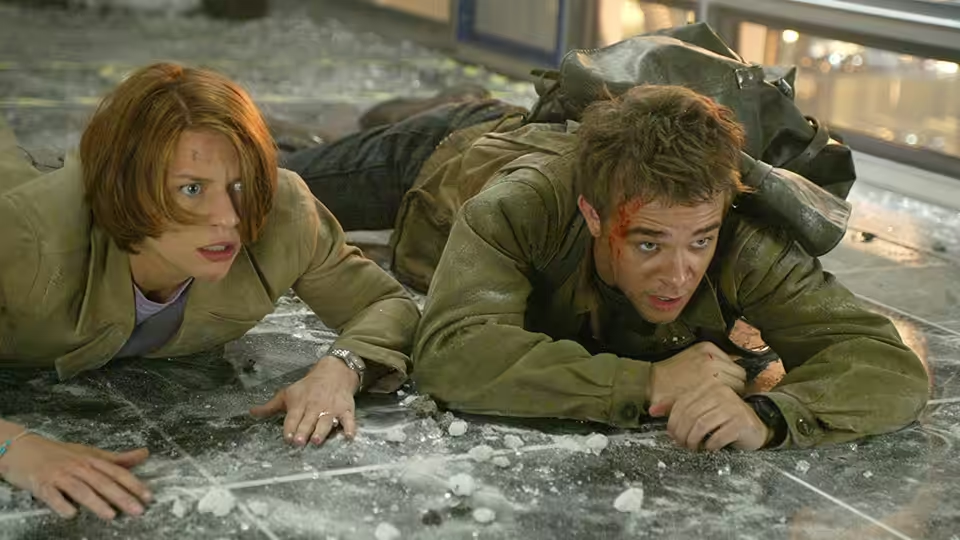
The crane chase is why you watch. The T-X steals a mobile crane the size of a house, snags the Terminator on its hook and drives through Los Angeles with him swinging behind her, through the glass front of an office block and out the other side. Don Burgess shoots it from street level, so we always know where the crane is, where the fire engine is and where John is on his bike, and Nicolas De Toth and Neil Travis let each collision finish before the next one starts. We grinned through the whole thing, because nothing in it asked to be admired; it simply kept happening, and kept getting bigger, for minutes on end.
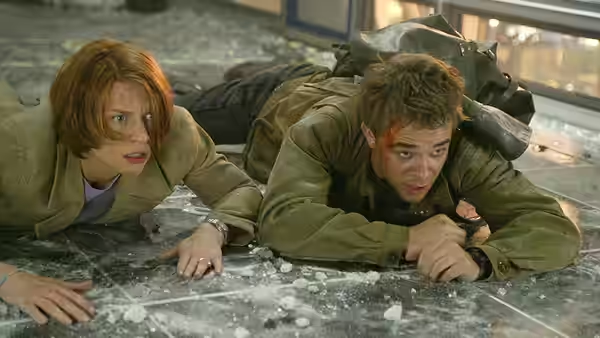
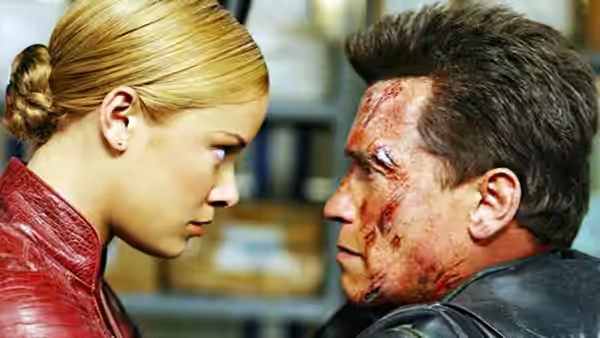
Schwarzenegger is heavier and slower than he was, and Mostow uses that rather than hiding it. Stahl plays John as pale and twitchy, a man who has been told he will lead the human race and would rather not, and his fear reads as fear rather than sulking. Claire Danes’s Kate Brewster is dragged out of a veterinary clinic, engaged to a pleasant man (Mark Famiglietti) and not remotely interested in saving the world, and Danes plays exasperation better than anyone else here. Loken, in April Ferry’s red leather, has a model’s stillness and a sneer she can hold for a minute; she is less frightening than the liquid policeman of the last film, but she does the job. Earl Boen returns as Dr Silberman for one scene, and it is the best-written thing in the film.
The trouble is everything between the set pieces. The T-X is a T-1000 with a gun in her arm and the power to boss other machines about, which is a list of features rather than an idea. Jeff Mann’s Cyber Research Systems facility is anonymous corridor and blue-lit server room. Marco Beltrami’s score is brass and drums telling us to be tense, and it holds the old theme back until almost the end. David Andrews’s Robert Brewster, Kate’s father, carries the plot’s one thought about how the machines take over, that a computer virus is the excuse the military needs to hand everything to Skynet, and the film hurries past it.
Then there is the ending, which we will not describe. We will say that the last ten minutes go somewhere the rest of the film gave us no reason to expect, and that we sat quite still, colder than we had been all evening, while the credits began. Cameron’s films earned their dread over two hours; this one buys it in a lump at the close, but it does buy it.
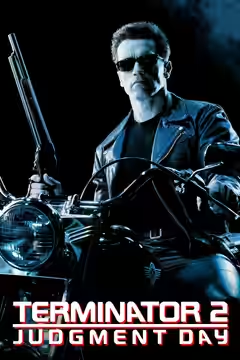
Terminator 2 was about a boy, his mother and a machine learning to be a father, with the end of the world as backdrop. Here the end of the world is the whole story and the people are along for the ride, and it is a smaller film for it. It runs 109 minutes and carries a 12A, which softens things so that machines and people go through walls and stand up unmarked. See it for the crane, for Schwarzenegger’s timing and for the final reel; the rest is furniture you have seen before.