Alan Taylor’s reboot has one good idea, an old Terminator who raised Sarah Connor, and Schwarzenegger plays it with more feeling than it needs. Around him the timelines pile up, the leads stay blank and the action looks like an advert for the phones it fears.
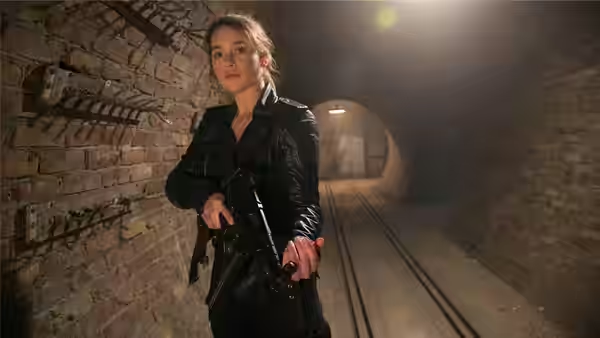
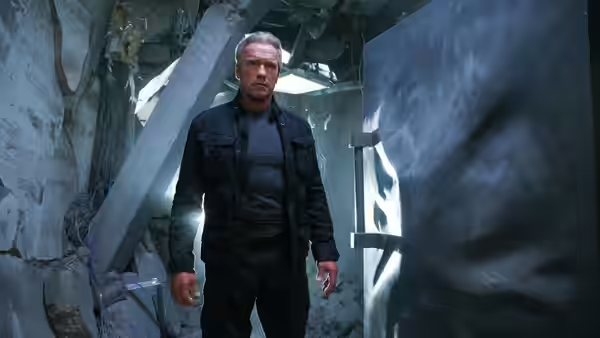
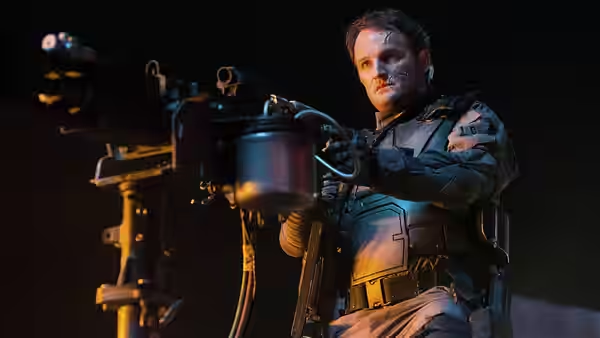
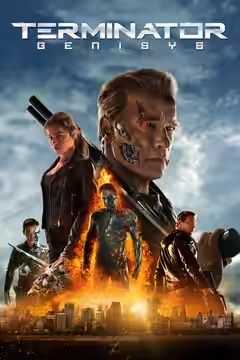
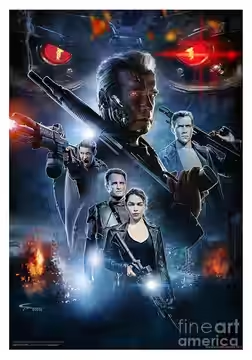
Laeta Kalogridis and Patrick Lussier’s script starts by wiping the board. John Connor (Jason Clarke) wins the war in 2029, Kyle Reese (Jai Courtney) goes back to 1984 as he always has, and finds that 1984 has changed: Sarah Connor (Emilia Clarke) is already a soldier, raised since childhood by an ageing T-800 she calls Pops (Arnold Schwarzenegger). That is a good idea, and for half an hour the film seems to know it. Then the characters begin explaining the new timeline to one another, and they do not stop for the remaining ninety minutes.
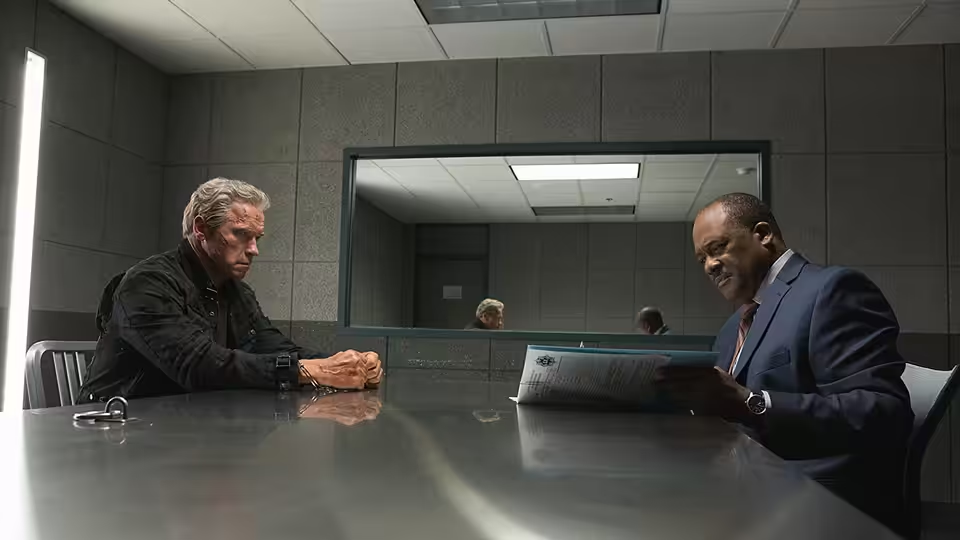
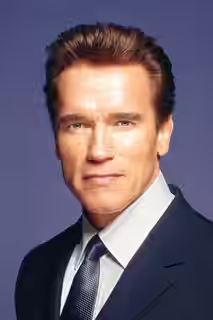
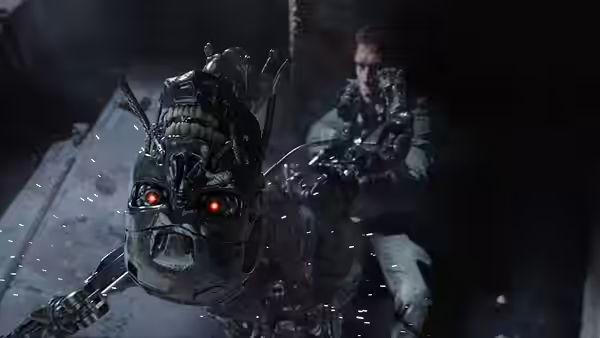
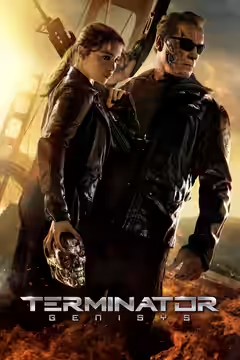
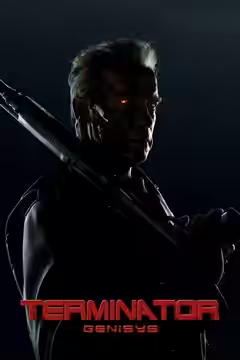
Schwarzenegger is the reason to watch, and he is better here than the film around him. The Guardian has grey hair, a face that has started to fall, and a smile he has been taught humans find reassuring, which he produces at the wrong moments like a man reading from a card. We laughed at the smile the first time, and the second time we felt sorry for it, which is more feeling than anything else in the film got out of us. His fight with a digital version of his 1984 self, staged inside a rebuilt version of the original film’s opening minutes, is the one set piece with a reason to exist. Neil Spisak’s team rebuild the old streets with care, Susan Matheson puts him back in the leather, and for a few minutes it works.
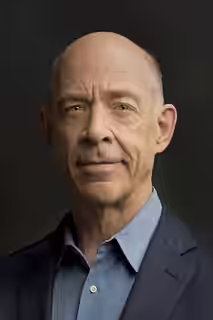
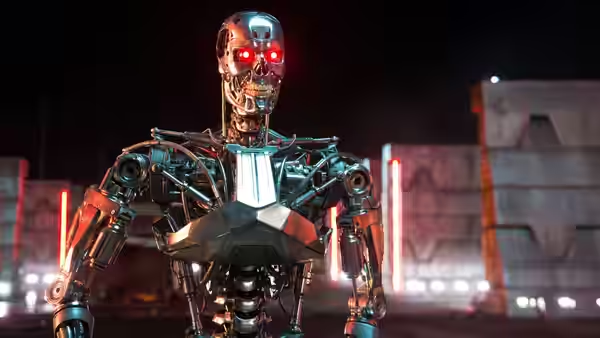
Two supporting players earn their keep. J.K. Simmons plays O’Brien, a policeman who saw something in 1984 (Wayne Bastrup plays him young) and has spent three decades being laughed at for saying so, and Simmons gives him a nervous, pleased decency that is the film’s only comedy besides the smile. Lee Byung-hun is the liquid-metal officer who hunts them through the first act, and he is quick, silent and frightening, and gone before we had properly registered him.
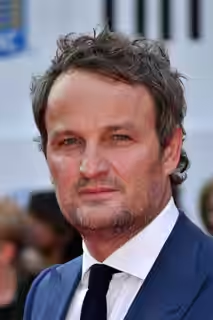
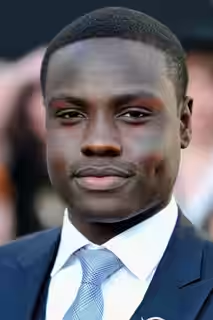
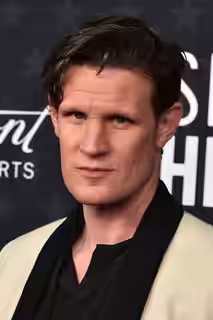
The leads are the trouble. Emilia Clarke is small, cross and plausible as a Sarah who resents being told what her life will be, but the script keeps announcing her resentment rather than letting her act on it. Courtney is miscast. Kyle Reese should be a starved man from a bombed-out future who has never seen a sunrise without smoke in it; Courtney looks well fed and untroubled, and there is no fear in him, which was the point of the character. Jason Clarke is genial as John and is then handed a turn the marketing gave away weeks before release; we will not do the same. Matt Smith is in the film for perhaps four minutes.
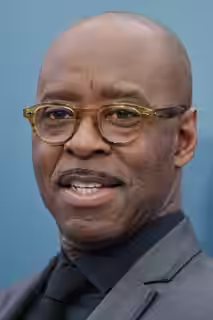
The action is where the money went and where we stopped caring. Kramer Morgenthau shoots 2017 San Francisco in clean blue glass, and the Cyberdyne building, where Miles Dyson (Courtney B. Vance) and his son Danny (Dayo Okeniyi) are about to launch an operating system called Genisys, looks exactly like the product launch it is meant to be warning us about. The Golden Gate Bridge chase sends a school bus over the railing to hang by its rear axle, and we were bored, and then cross about being bored, because a bus dangling off a bridge ought to be the easiest thing in the world to make frightening. Roger Barton cuts every hit fast enough that nothing has weight. Lorne Balfe lets the old clanking five-beat theme through twice, and the rest is drums. The 12A means nobody bleeds and everybody who dies is metal, which is an odd choice for this series.
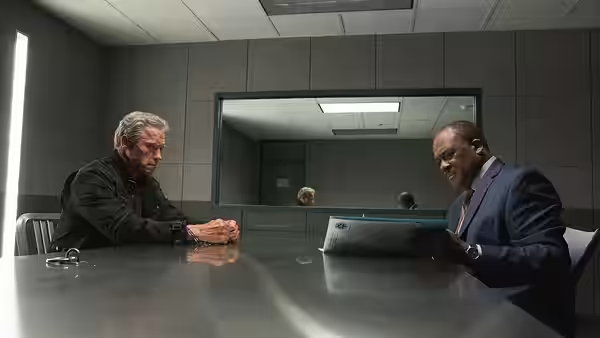
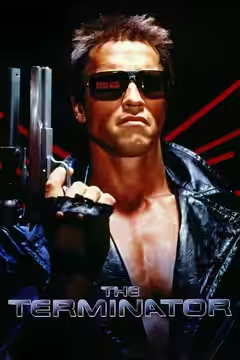
James Cameron’s The Terminator, from 1984, was a chase. Terminator 2: Judgment Day, from 1991, was a bigger chase with a boy in the middle of it. This fifth film is a seminar with chases attached, and the seminar wins. Four times, by our count, people stand in a room and tell one another how time travel works. Alan Taylor keeps the camera steady and the actors audible, and that is about the extent of the direction. At 126 minutes it is not long, but it is long for what it has to say.
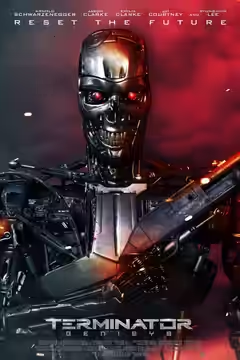
The tagline is “Reset the future”, and a film built to restart a series is at least honest about it. Watch it for Schwarzenegger, who has found something true in a machine learning to be old, and for Simmons. At home you can pause the exposition, which will not make it any clearer.