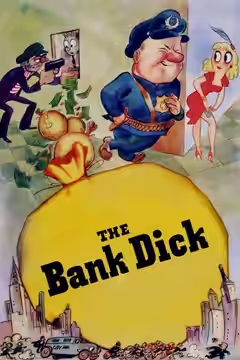
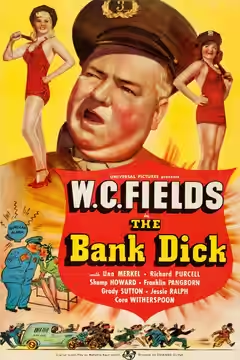
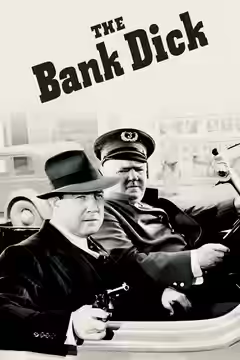
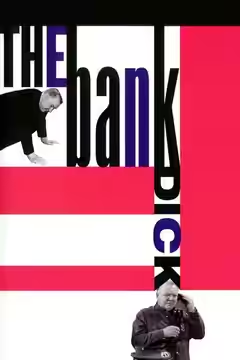
W.C. Fields makes The Bank Dick a pleasure, despite plotting that barely connects its routines. The supporting cast earns its share of the laughs, though some old jokes need more help than they get.
The Bank Dick is a funny, cheerfully untidy comedy whose chief pleasure is the sound of W.C. Fields talking. Edward F. Cline gives his leading man room, and the screenplay is his too: individual routines matter more than a story that connects them. We recommend it for the performance, with fair warning that the plot often seems to exist merely to introduce the next routine. At 72 minutes, it can afford a little wandering.
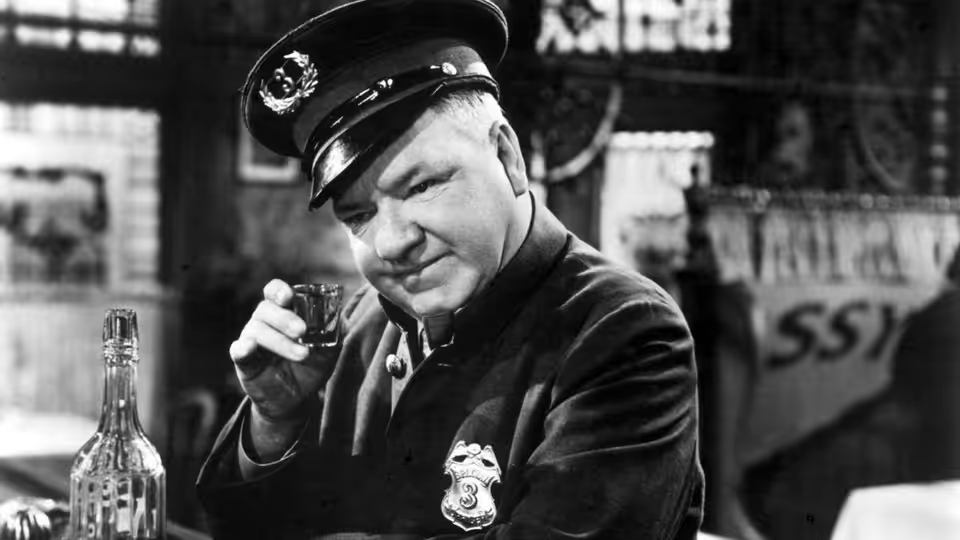
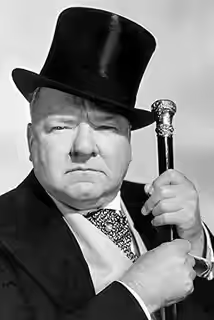
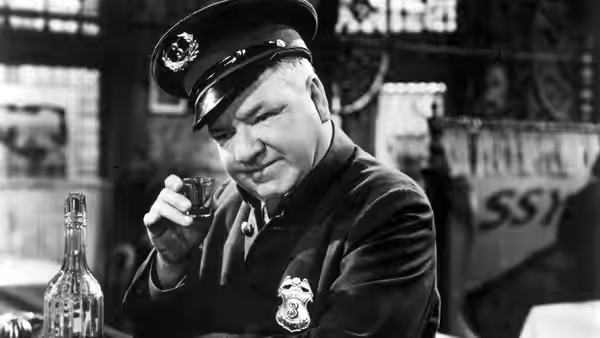
As Egbert Sousé, W.C. Fields sounds entitled to whatever good fortune happens to come his way. We laughed at how calmly he accepts it; anything less seems likely to strike him as a personal insult. He does not ask us to approve of Egbert, which is a relief. The performance lets us enjoy the man’s sourness without requiring the usual reassurance that he is secretly delightful.
The dialogue is the main reason to stay. W.C. Fields makes exaggeration sound conversational, so that an outrageous assertion can pass almost unnoticed until we have considered what he actually said. His derisive talk is funny because he gives it the patience of a man explaining something obvious. There is an unpleasantness here that remains enjoyable, partly because he makes no effort to excuse it.
Cora Witherspoon, Una Merkel and Jessie Ralph are worth listening to as well. Playing Agatha Sousé, Myrtle Sousé and Mrs. Hermisillo Brunch respectively, they make the supporting company a substantial part of the pleasure. The film belongs to its leading man, but it is better whenever we are conscious of someone besides him. A little more room for these performers would have been welcome, particularly when an individual routine begins to run short of invention.
Milton Krasner’s cinematography is less memorable than the faces it records. Arthur Hilton’s editing does more for the individual routines than for their connections, allowing the comedy to remain conspicuously episodic. Charles Previn’s music makes less of an impression than the speaking voice at the centre of the film, whose delivery supplies plenty of rhythm already. Edward F. Cline’s direction makes a sensible choice in leaving the actor room, although it offers few other attractions when a joke falls flat.
Some of those jokes are tired. W.C. Fields can improve familiar material by sounding aggrieved that anyone might question it, but even he cannot make every routine feel newly invented. The screenplay’s casual connections are usually easy to forgive; occasionally they leave us waiting for another subject rather than enjoying the one at hand. A firmer decision to move on would have helped in those stretches.
As a comedian’s vehicle, though, The Bank Dick does its main job well. It gives a distinctive performer material that suits him, makes good use of its supporting players and does not insist that an abrasive personality must be softened before we can enjoy his company. The range is narrow, and we are happy to stay within it for most of the running time. Give it an evening when nobody needs the people on screen to be likeable.