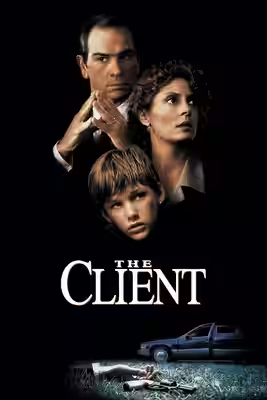
Joel Schumacher’s Grisham adaptation is the small one, and better for it: a boy, a lawyer and a prosecutor in cramped rooms, shouting. Susan Sarandon and Tommy Lee Jones carry it with evident pleasure; the gangsters very nearly sink it.
John Grisham’s thrillers tend to arrive on screen with a lot of furniture: a Supreme Court, a law firm with a second set of books. The Client has none of that. A boy in a trailer park sees something, a prosecutor wants it out of him, and a lawyer stands in the way. Joel Schumacher treats it as a chamber piece with the occasional car, and for most of its 119 minutes that is the right call. It is a good, plain, well-acted thriller about who gets to speak for a child.
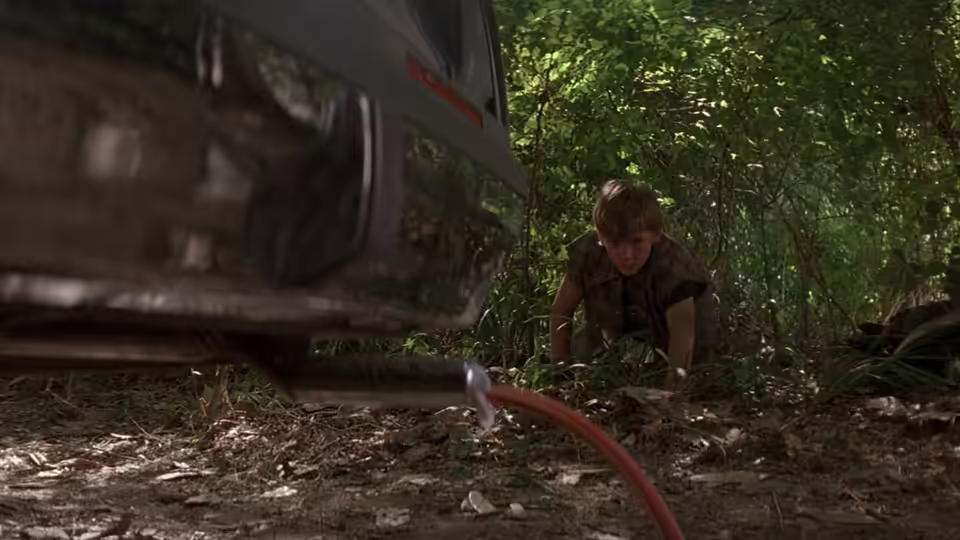
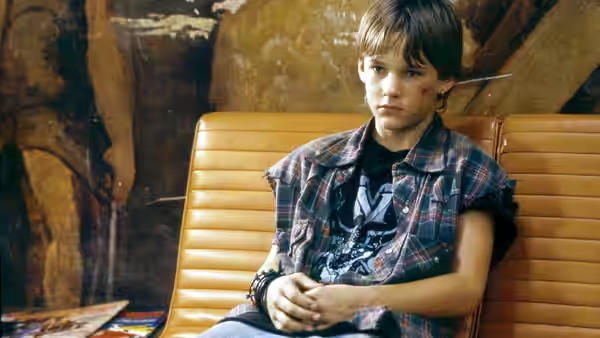
The opening is the best thing in it. Mark (Brad Renfro) and his little brother sneak into the woods to smoke, and a black Lincoln pulls up with a hose running from the exhaust into the window. Mark pulls the hose out, then goes back and does it again; the drunk lawyer inside drags him into the car and tells him where a dead senator is buried. Tony Pierce-Roberts shoots it in low afternoon light through the trees, so the car looks like a wrong thing dropped in a pleasant place, and Robert Brown cuts the hose business so that each time the boy goes back we were sure he would not get out. We were frightened for him, and the fear comes from Renfro, who plays the whole thing as a kid too proud to run.
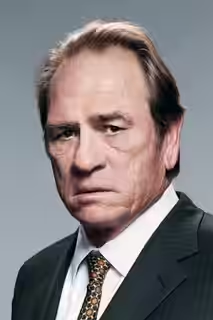
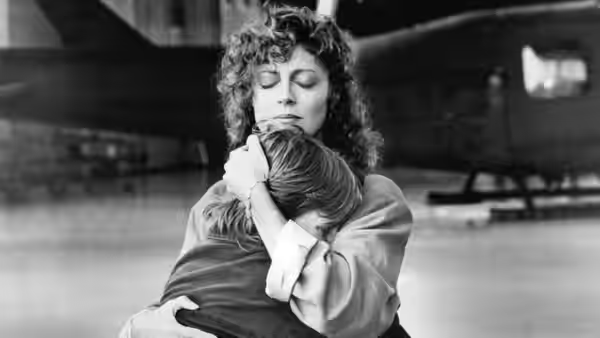
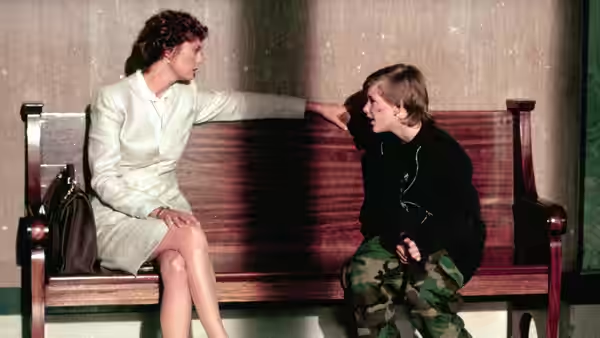
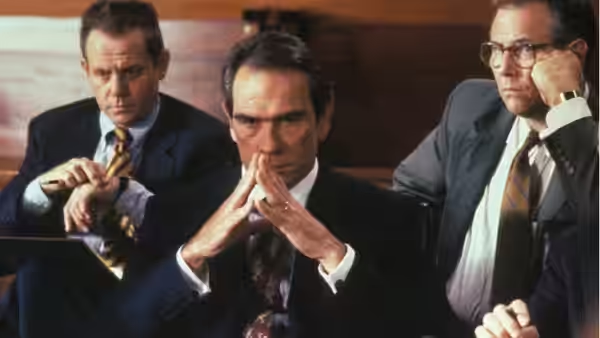
Then the adults arrive. Tommy Lee Jones plays Roy Foltrigg, a prosecutor with a television anchor’s hair and a line of scripture for every occasion, and he does not so much enter a room as take it into custody. Susan Sarandon’s Reggie Love works out of a small office and takes Mark on because he puts a dollar on her desk. Their scenes together are the film. She needles, he preaches, and both of them are performing for the boy. We laughed out loud when she tells Foltrigg, with perfect courtesy, what she thinks of his taste in cameras; here is a courtroom film in which the people arguing are cleverer than the plot.
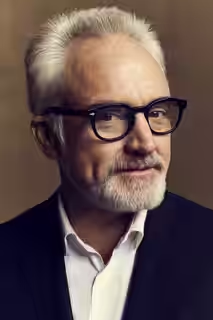
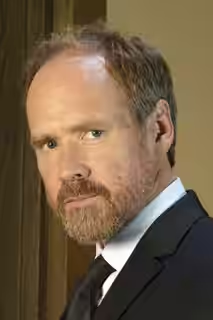
Mary-Louise Parker’s Dianne Sway spends most of the film in a hospital corridor, smoking and losing a job she cannot afford to lose, and Parker makes her frightened rather than tragic. Anthony Edwards is likeable as Clint, Reggie’s assistant. Bradley Whitford, J. T. Walsh and Will Patton divide the law-enforcement duties and are mostly there to be outwitted by a child. Bruno Rubeo gives Reggie an office of filing cabinets and the hospital a run of pale green corridors, and Ingrid Ferrin puts Jones in suits a size too confident.
What does not work is the other side of the case. Anthony LaPaglia’s Barry Muldano, the gangster who would like the boy to forget, has a ponytail and a switchblade, Kim Coates’s Gronke is his muscle, and every time the film cuts to them it drops from drama into comic strip. The danger to Mark is real on paper and never once on screen. The screenplay, by Akiva Goldsman and Robert Getchell, has trouble with the middle, where the boy is moved from room to room while grown-ups talk about him; somewhere around the hour we caught ourselves checking the time. Howard Shore’s score pushes a low brass pulse under the chases that the chases have not earned, and is better in the quiet, where a few piano notes under Sarandon do the work.
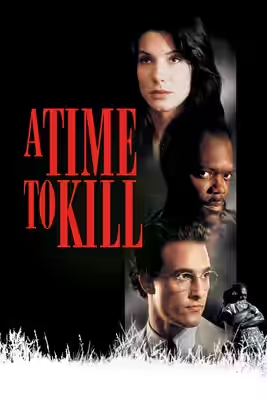
Set against the other Grisham films, this is the least grand and the most alive. The Firm (1993) had Tom Cruise running from his own law firm; The Pelican Brief (1993) had a conspiracy. This one is about three people and whose side a child should be on, and Schumacher, who would come back to Grisham with A Time to Kill (1996), understands that an argument in a hospital cafeteria can be the action.
Worth an evening if you like your thrillers talky and your lawyers tired. The gangsters you will have to forgive. It carries a 15, runs just under two hours, and the best thing in it is a boy declining to be impressed by a man who is used to impressing people.