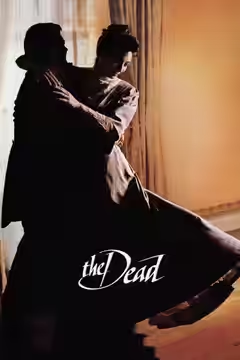
John Huston’s last film is Joyce’s story done plainly and well: a Dublin party in 1904, watched with patience, and a closing stretch that says more about a marriage than most films twice its length. Small, now and then stiff, and it lasts.
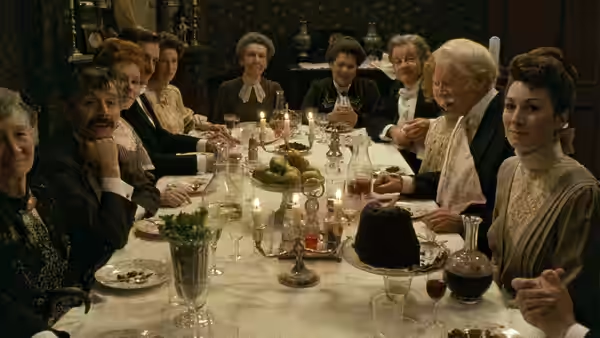
John Huston’s last film adapts the story that closes James Joyce’s Dubliners. Almost nothing happens. Two elderly sisters and their niece give their annual party in Dublin in January 1904; the guests eat, dance, sing and make speeches; then one couple goes back to their hotel. Tony Huston’s script keeps nearly all of it and adds little. His father directs it as if he were a guest who had decided to stand by the wall and watch.
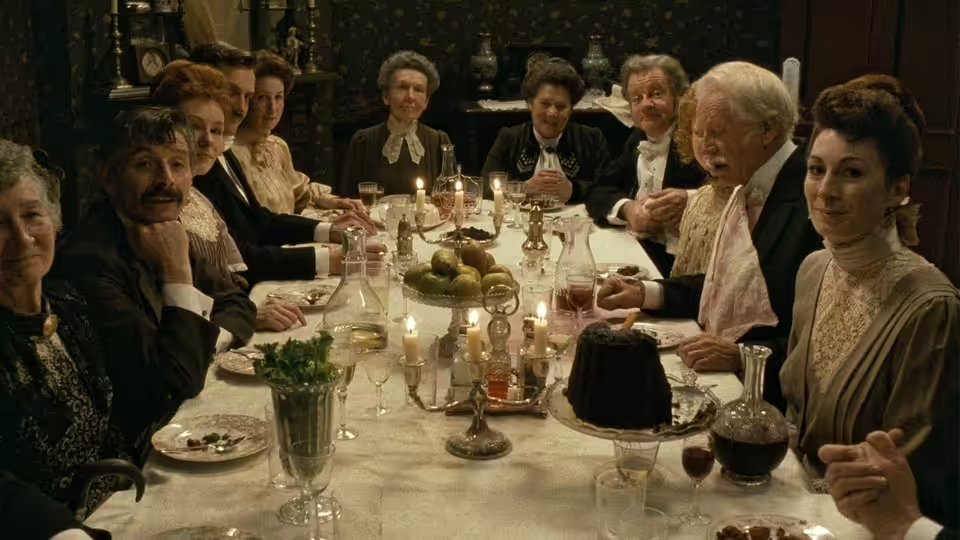
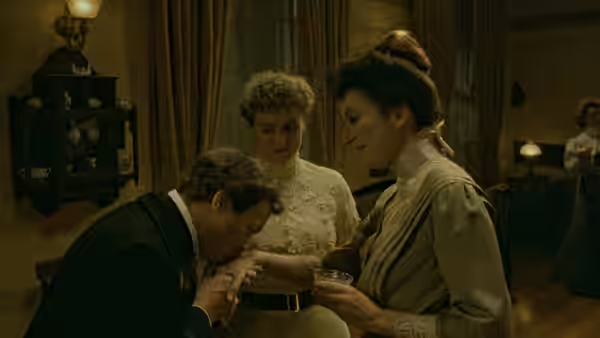
It is a fine film, and easy to underrate, because it looks like a filmed play. Fred Murphy lights the house by lamp and candle so the faces are warm and the corners go dark, and he moves the camera only when somebody crosses the floor. Stephen B. Grimes and J. Dennis Washington fill it with the things two old music teachers would own: a piano, photographs, embroidered chairs, a cabinet of china nobody uses. You believe the aunts have lived here for forty years and that the house is slightly too small for the party they insist on giving.
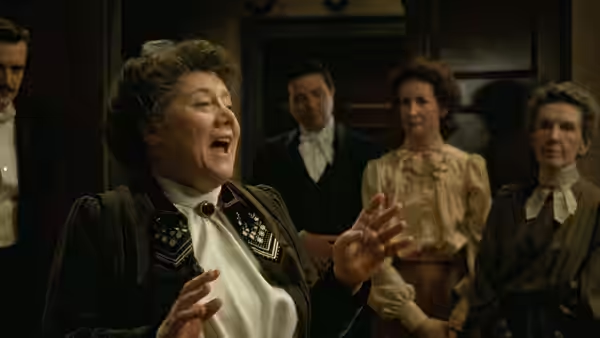
The scene that settled it for us comes when Aunt Julia (Cathleen Delany) is coaxed to the piano to sing “Arrayed for the Bridal”. Her voice is old and it wavers, and she gives the song everything she has left. Huston does not stay on her. He and the editor Roberto Silvi drift upstairs, past photographs, an empty bed, a pair of slippers, the possessions of a woman who will not see many more Januaries. It hurt more than we were ready for, because Huston never tells us to be sad; he shows us what she owns and lets the song run. When the camera returns, the guests applaud and Freddy Malins tells her she has never sung better.
Around her the party is a gallery of small performances. Donal Donnelly’s Freddy arrives late and full and spends the evening being managed by his mother (Marie Kean). Dan O’Herlihy’s Mr Browne, the one Protestant in the house, works the young women with a gallantry twenty years past its use. Rachael Dowling has one scene as Lily the maid, telling Gabriel, when he asks about her wedding prospects, that men are all talk; Donal McCann’s flinch, and the coin he pushes at her, tell you most of what you need about Gabriel.
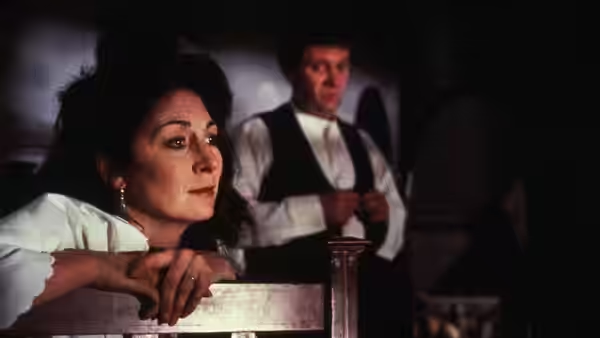
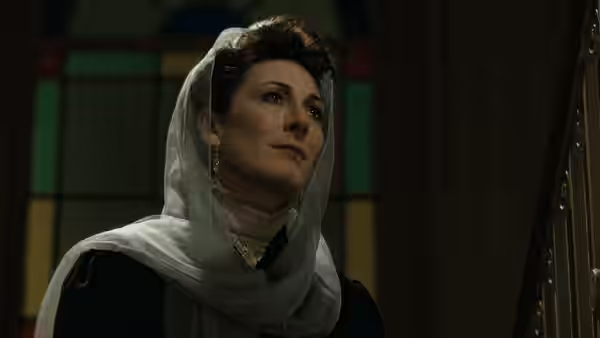
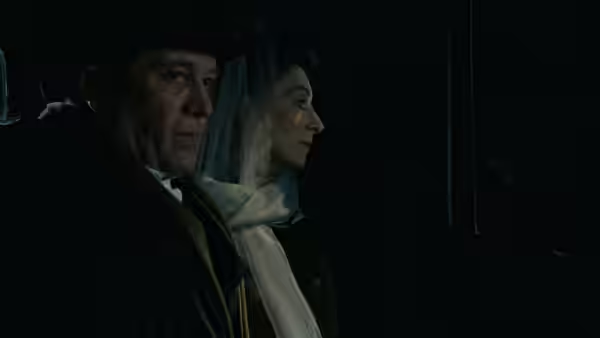
McCann holds the film together. Gabriel is the clever nephew who reviews books, and McCann plays him as a man forever half a second from saying the wrong thing and knowing it. His after-dinner speech, about hospitality and the dead who are not there to hear it, is given with the tiredness of a man who has made it before. Anjelica Huston has little to do for an hour beyond stand on staircases and listen. Then the party ends, the Conroys take a cab to their hotel, and the last twenty minutes belong to her. We will not say what she tells him. We will say it is done in the hotel, with almost no cutting, and that it changed how we thought about everything before it.
It is not without faults. Tony Huston adds a recitation of an old Irish poem about a woman betrayed; it is well spoken and it sits in the middle of the film like a signpost. Donnelly’s Freddy is a turn rather than a person, funny but pitched a notch louder than the party around him. Alex North’s score is mostly absent, which is right, and when it does arrive in the final stretch it nudges at a feeling the pictures have already earned. Some of the party talk is stiff, actors delivering Joyce rather than chatting.
Huston had been directing since 1941 and he finished with the smallest picture he ever made: 83 minutes, one house, one hotel, one night. Most critics have taken it as a farewell, and perhaps been a little generous for that reason. We think it does not need the biography. It would be a fine film if a stranger had made it. Watch it in winter, in the evening, and do not put anything on afterwards.