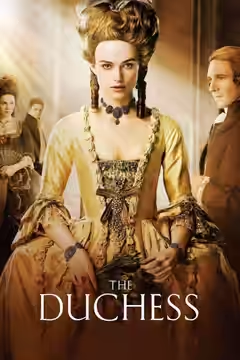
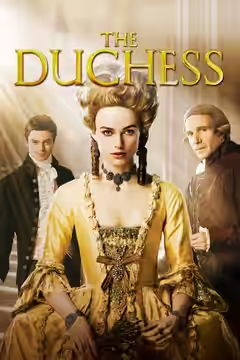
Saul Dibb’s film of Georgiana Cavendish’s marriage is handsome, well acted and quietly stolen by Ralph Fiennes. It is also too polite about a life that was anything but, and the love affair at its centre gives off almost no heat.
Saul Dibb’s film, drawn from Amanda Foreman’s book about Georgiana Cavendish, sets out to tell an eighteenth-century marriage from the inside of the corset. A clever girl is handed to a dull rich man, discovers that fame is the one freedom on offer to her, and takes it. The result is handsome, intelligent and well acted, and it is quietly taken away from its star by the man playing her husband. Dibb’s script, written with Anders Thomas Jensen and Jeffrey Hatcher, has pressed a life of politics, drink and scandal into 110 orderly minutes, and the order is the trouble.
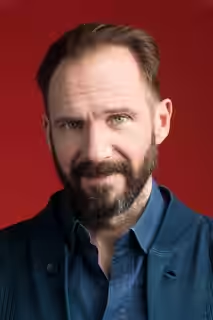
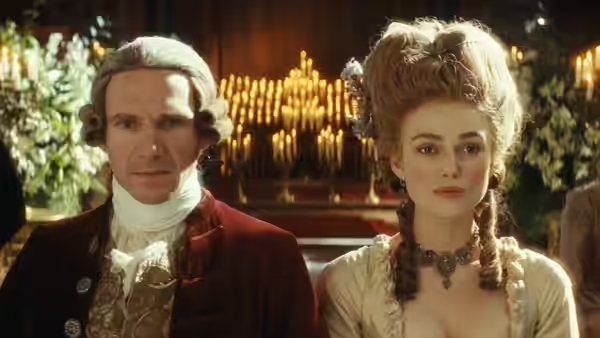
Ralph Fiennes plays the Duke not as a villain but as a man who has never once had to wonder what anyone else wanted. He dines with his dogs at his feet and his wife at the far end of the table. The wedding night chilled us: he undresses her with the patience of a man unwrapping a parcel he has already paid for, wondering aloud why women’s clothes must be so complicated, and Fiennes puts no malice in the line at all, which is what makes it awful. When the household later rearranges itself around him, his face registers mild inconvenience and nothing more. It is the best performance in the film.
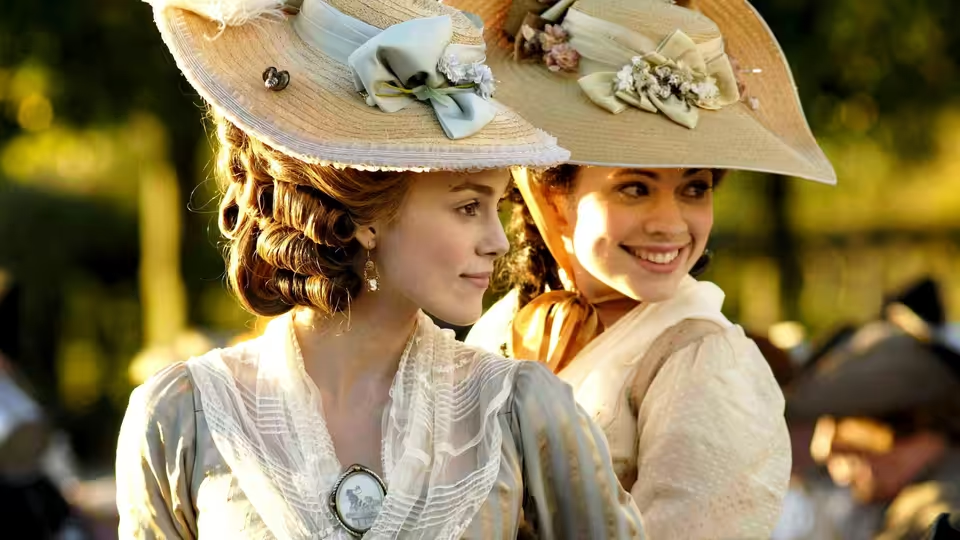
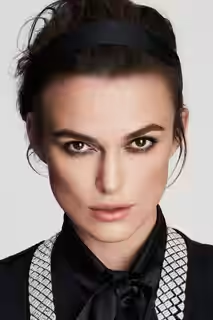
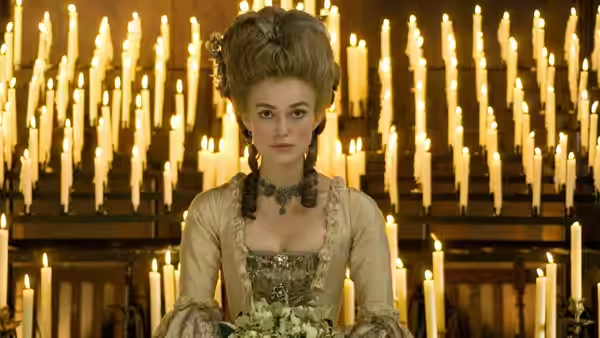
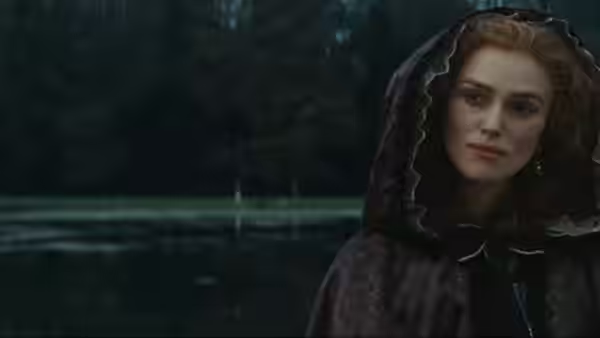
Keira Knightley has the harder job, because Georgiana has to be two women: the wit who holds the Devonshire House dinners together and the wife who goes upstairs afterwards to be ignored. She is better at the first, and so is the film. The scenes with Simon McBurney’s Charles Fox and Aidan McArdle’s Sheridan have snap, Fox proposing that liberty is best enjoyed in moderation and Georgiana replying that moderated liberty is not liberty. When her wig catches a candle at a party she has it put out and carries on talking. When the script asks her to suffer she sets her jaw and does it, and we believed the suffering without feeling much of it.
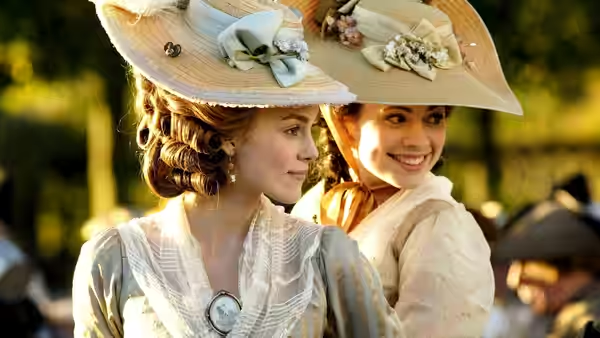
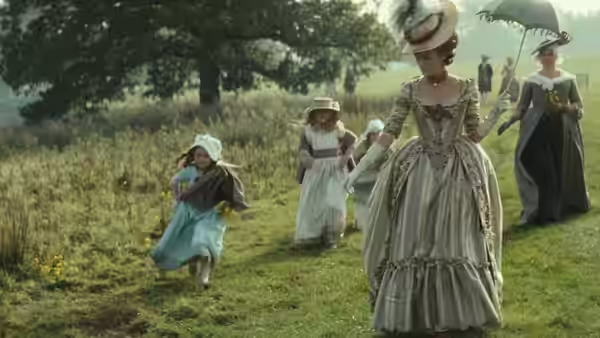
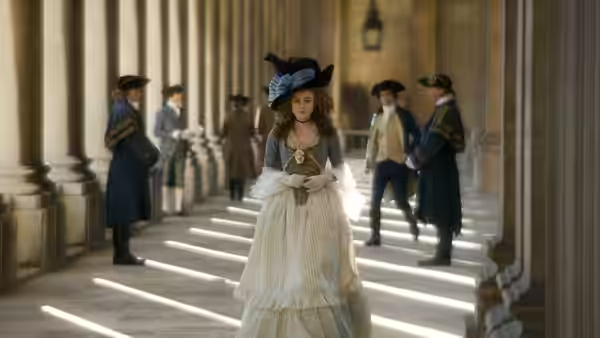
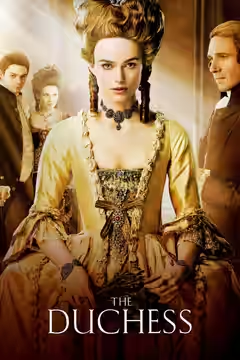
Gyula Pados shoots the great houses in long, level shots and lights the interiors by candle and window, so that faces are warm and the rooms behind them fall away into brown. Michael Carlin’s Devonshire House is all long tables and longer corridors. Michael O’Connor’s costumes do storytelling the script sometimes forgets: Georgiana’s hats and feathers climb higher as her fame grows, while the Duke wears the same brown coat throughout. Rachel Portman’s score is strings and piano, gentle to a fault, and it reaches each sad moment a beat before we do. Masahiro Hirakubo cuts years into minutes, a pregnancy here, a christening there, so that we are rarely in a room long enough to settle.
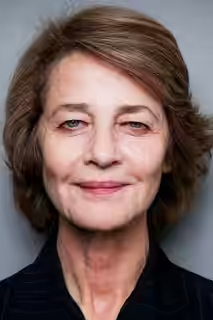
The love story is where the restraint costs most. Dominic Cooper’s Charles Grey is written as everything the Duke is not, and Cooper plays him as a pleasant man in a good coat. There is no heat between him and Knightley; their scenes are short and the camera keeps a polite distance. Hayley Atwell’s Bess Foster is a far more interesting proposition, a woman who has worked out exactly what the house will cost her and pays it, and the film never lets her be dangerous. Charlotte Rampling’s Lady Spencer tells her daughter what a wife is for in two or three short scenes, and we would have taken more of her.
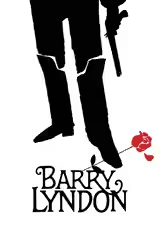
The publicity leaned on the Spencer connection, Georgiana being a Spencer like Diana, and the echo of a famous remark about three people in a marriage is there. Dangerous Liaisons (1988) worked the same century with more appetite and more cruelty, and Barry Lyndon (1975) made the tedium of a loveless great house its subject rather than its mood. The Duchess sits between them, fond of its heroine and sorry for her, and never angry enough on her behalf.
Watch it for Fiennes, for O’Connor’s hats, and for the dinners, which are the best scenes in the film because they are the only ones where anybody says what they mean. It runs 110 minutes and carries a 12A. There is a great deal of unhappiness in it and none of it raises its voice.