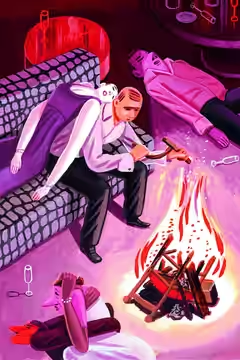
Luis Buñuel locks the rich in a drawing room and watches what they turn into. It is still funny, still cruel and still impossible to explain, which is the point, and Gabriel Figueroa’s black and white gives the joke a cold, level stare.
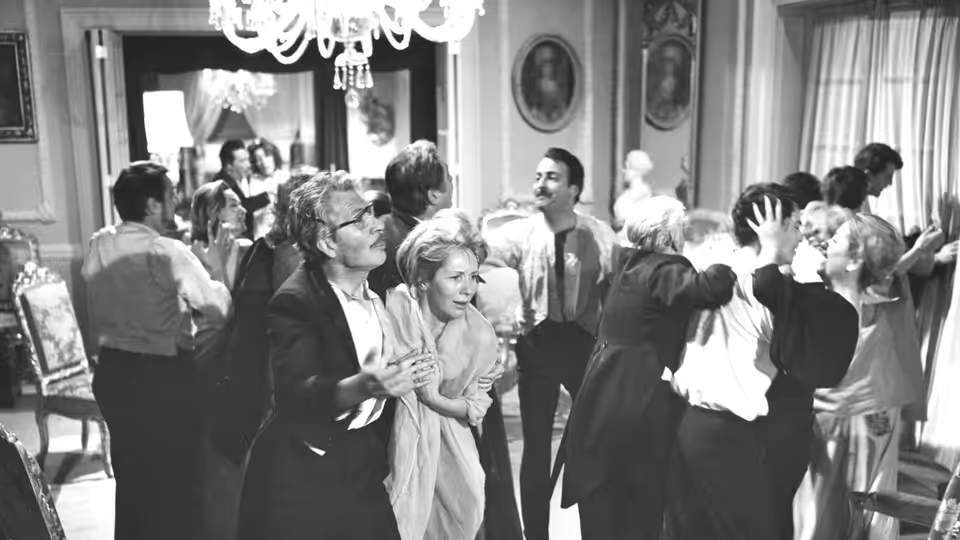
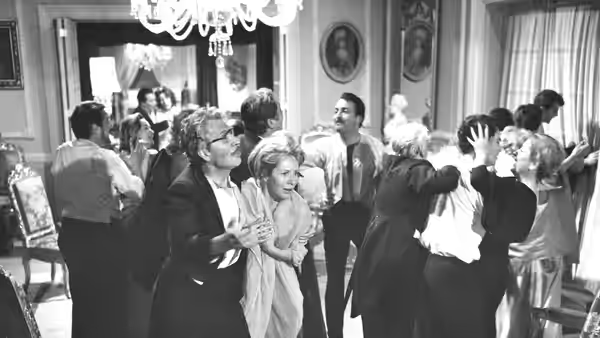
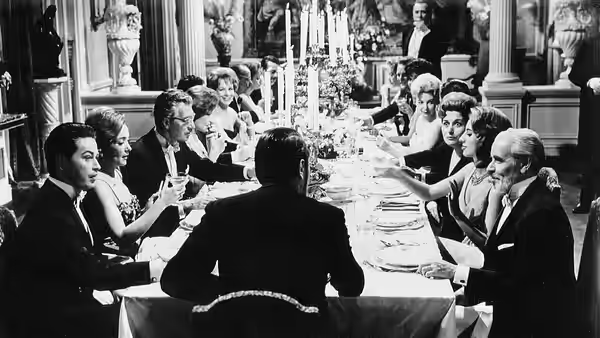
Luis Buñuel’s premise fits in one sentence. A party of wealthy guests, home from the opera, sit down to a late supper in the Nóbile mansion, move through to the drawing room for a piano recital, and then find that none of them can leave. Nothing bars the door. They simply do not go, and the next morning they are still there, in evening dress, on the sofas and the floor. It is the best joke Buñuel ever told, and he tells it for 93 minutes without once explaining it. We think it one of the great comedies.
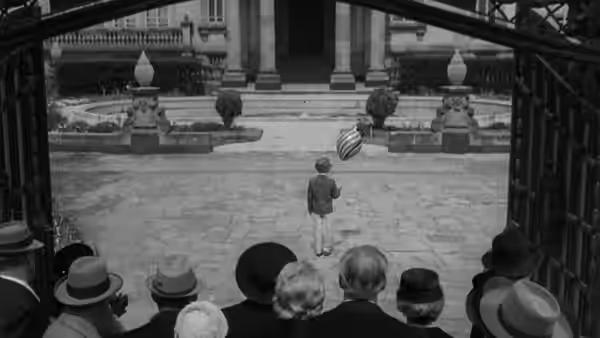
The film begins with the servants leaving. One by one the cook, the maids and the footmen invent excuses and slip out before the guests arrive; only the butler, Julio (Claudio Brook), stays. Then the guests come up the stairs, and a minute later they come up the stairs again, the same shot, the same greetings. Buñuel and Luis Alcoriza, who has the story credit, do this several times: a toast repeated word for word, an introduction made twice, and nobody on screen notices. We laughed at the second staircase, then started watching for the next repeat. The strange thing happens, the camera does not flinch, and the guests carry on being polite.
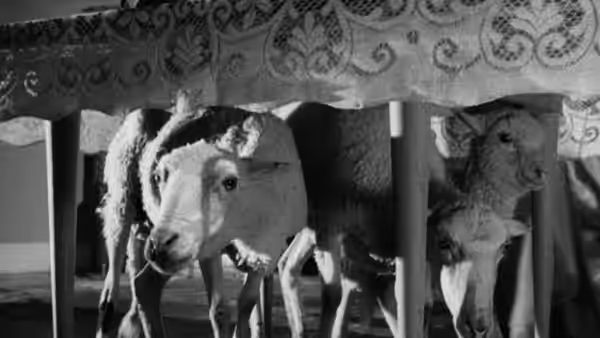
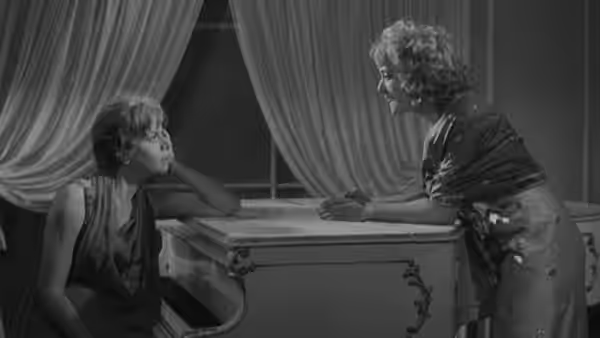
Gabriel Figueroa shoots it in a level, unhurried black and white that refuses to tell you what is funny. The camera sits at chest height, the guests arranged across the frame like a group portrait, and stays there while the portrait goes to pieces. Jesús Bracho’s production design gives them brocade, dark wood and one archway they cannot cross, and Georgette Somohano’s gowns and dinner jackets get greasier and more creased by the day. Carlos Savage cuts plainly and never underlines a gag. Raúl Lavista’s music mostly stays out of the way; what we hear is the piano, then talk, then the sheep.
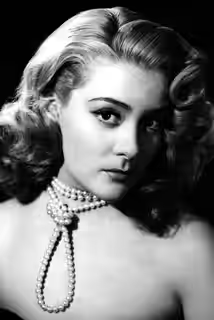
Silvia Pinal plays Leticia, nicknamed ‘La Valkiria’, the one unmarried woman in the party and the one who sees most clearly, and she gives her a stillness that stands out among the fidgeting. Enrique Rambal’s Edmundo Nóbile is the host who keeps offering hospitality long after there is nothing left to offer. Augusto Benedico’s Dr. Conde is the voice of reason, which in a Buñuel film is itself a joke; he takes pulses and prescribes patience. Brook’s Julio is the quiet centre, a servant so well trained that he goes on serving after his employers have stopped behaving like employers.
The film is funny for its first half and then it stops being only funny. Buñuel takes away the food, then the water, then the manners, and does not comment. There is a moment, which we will not place, when a group of these people gather round one of their number in the dark, and Figueroa lights it exactly as he lit the soup course. We were horrified, and what horrified us was not what they were about to do but how reasonable they sounded proposing it. Buñuel has no interest in why they cannot leave. He is interested in what they become when they cannot.
It is not without faults. Several guests, Antonio Bravo’s Sergio Russell and Luis Beristáin’s Cristián Ugalde among them, never become more than a face and a grievance. The middle stretch marks time, with a few too many scenes of people asking the doctor what he thinks. And anyone who needs a film to say what it means will find this one rude. It does not. We think that is right, but we have sat beside people who did not.
Buñuel made it in Mexico a year after Viridiana, with the same star and the same producer, Gustavo Alatriste, and a decade before The Discreet Charm of the Bourgeoisie, another dinner nobody manages to eat. This is the hardest of the three: shorter, colder, less pleased with itself. Most critics rate it highly, and we rate it a little higher still, partly for the sheep.
Watch it in company, in one sitting, and do not look up what the title means until afterwards. Then try to get up off the sofa.