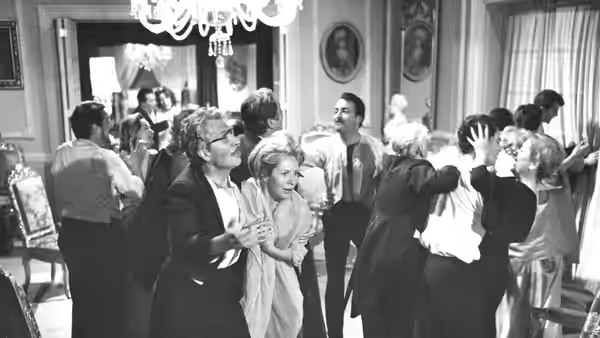
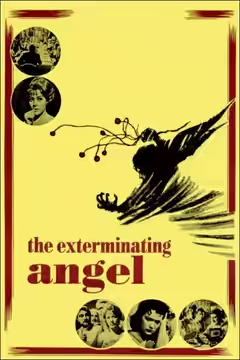
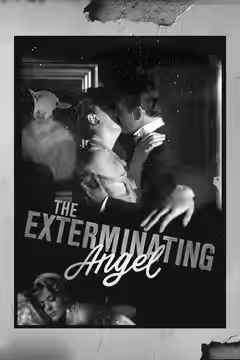
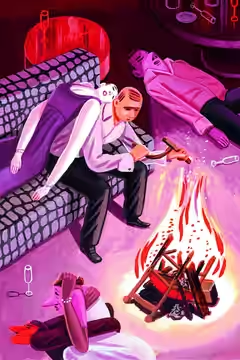
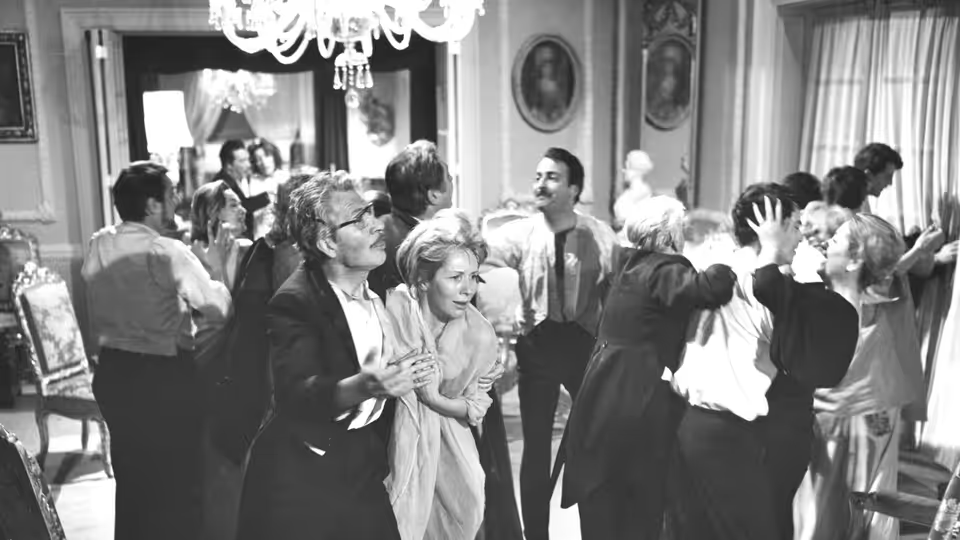
Well-dressed guests mingle in a crowded mansion drawing room
Film review

The Exterminating Angel

1962 · Directed by Luis Buñuel · 1h 33m · MiC 14+

In a sentenceA dinner party no one can leave, and the sheep turn out to have better manners than the guests

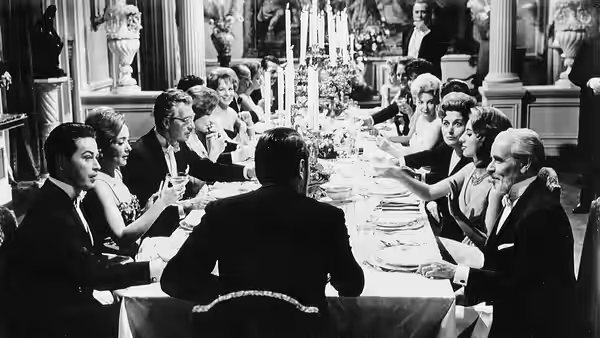
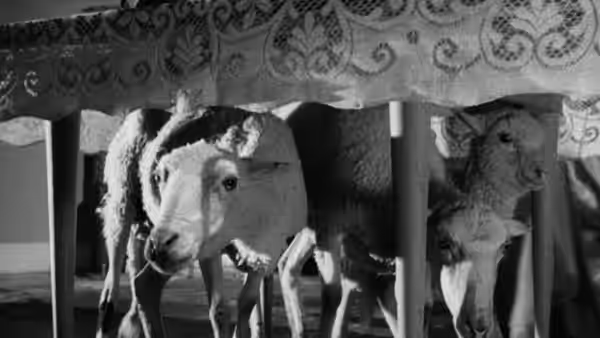
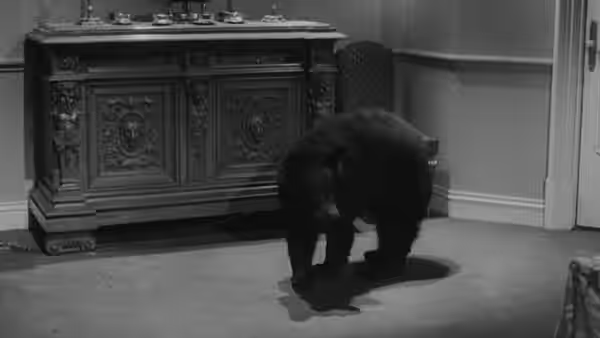
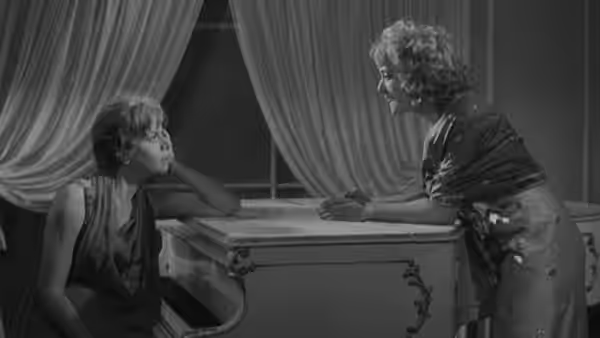
Mexico City, the early 1960s. Edmundo Nóbile (Enrique Rambal) and his wife Lucía (Lucy Gallardo) bring a party of wealthy friends home from the opera for a late supper. Before the guests have climbed the stairs the servants are leaving, with excuses nobody believes; only the butler, Julio (Claudio Brook), stays. In the kitchen a bear and a flock of lambs wait for a joke that will not be played. Among the guests are Leticia ‘La Valkiria’ (Silvia Pinal), the one unmarried woman, Dr. Carlos Conde (Augusto Benedico) and Alicia Roc (Jacqueline Andere). After dinner they move to the drawing room for a piano recital, sit, talk, and do not go home. Morning comes, and they are still there.

Fi1m review

Luis Buñuel locks the rich in a drawing room and watches what they turn into. It is still funny, still cruel and still impossible to explain, which is the point, and Gabriel Figueroa’s black and white gives the joke a cold, level stare.

Luis Buñuel’s premise fits in one sentence. A party of wealthy guests, home from the opera, sit down to a late supper in the Nóbile mansion, move through to the drawing room for a piano recital, and then find that none of them can leave. Nothing bars the door. They simply do not go, and the next morning they are still there, in evening dress, on the sofas and the floor. It is the best joke Buñuel ever told, and he tells it for 93 minutes without once explaining it. We think it one of the great comedies.

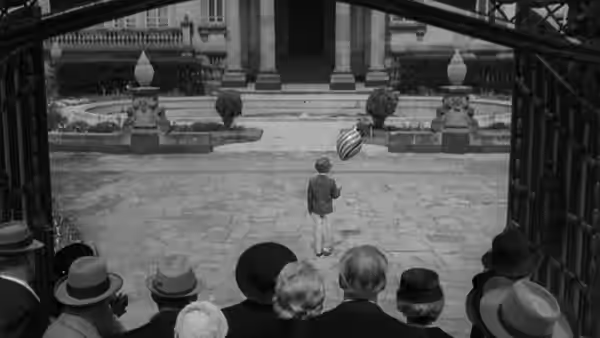
The film begins with the servants leaving. One by one the cook, the maids and the footmen invent excuses and slip out before the guests arrive; only the butler, Julio (Claudio Brook), stays. Then the guests come up the stairs, and a minute later they come up the stairs again, the same shot, the same greetings. Buñuel and Luis Alcoriza, who has the story credit, do this several times: a toast repeated word for word, an introduction made twice, and nobody on screen notices. We laughed at the second staircase, then started watching for the next repeat. The strange thing happens, the camera does not flinch, and the guests carry on being polite.

Gabriel Figueroa shoots it in a level, unhurried black and white that refuses to tell you what is funny. The camera sits at chest height, the guests arranged across the frame like a group portrait, and stays there while the portrait goes to pieces. Jesús Bracho’s production design gives them brocade, dark wood and one archway they cannot cross, and Georgette Somohano’s gowns and dinner jackets get greasier and more creased by the day. Carlos Savage cuts plainly and never underlines a gag. Raúl Lavista’s music mostly stays out of the way; what we hear is the piano, then talk, then the sheep.

Silvia Pinal plays Leticia, nicknamed ‘La Valkiria’, the one unmarried woman in the party and the one who sees most clearly, and she gives her a stillness that stands out among the fidgeting. Enrique Rambal’s Edmundo Nóbile is the host who keeps offering hospitality long after there is nothing left to offer. Augusto Benedico’s Dr. Conde is the voice of reason, which in a Buñuel film is itself a joke; he takes pulses and prescribes patience. Brook’s Julio is the quiet centre, a servant so well trained that he goes on serving after his employers have stopped behaving like employers.

The film is funny for its first half and then it stops being only funny. Buñuel takes away the food, then the water, then the manners, and does not comment. There is a moment, which we will not place, when a group of these people gather round one of their number in the dark, and Figueroa lights it exactly as he lit the soup course. We were horrified, and what horrified us was not what they were about to do but how reasonable they sounded proposing it. Buñuel has no interest in why they cannot leave. He is interested in what they become when they cannot.

It is not without faults. Several guests, Antonio Bravo’s Sergio Russell and Luis Beristáin’s Cristián Ugalde among them, never become more than a face and a grievance. The middle stretch marks time, with a few too many scenes of people asking the doctor what he thinks. And anyone who needs a film to say what it means will find this one rude. It does not. We think that is right, but we have sat beside people who did not.

Buñuel made it in Mexico a year after Viridiana, with the same star and the same producer, Gustavo Alatriste, and a decade before The Discreet Charm of the Bourgeoisie, another dinner nobody manages to eat. This is the hardest of the three: shorter, colder, less pleased with itself. Most critics rate it highly, and we rate it a little higher still, partly for the sheep.

Watch it in company, in one sitting, and do not look up what the title means until afterwards. Then try to get up off the sofa.

Critical consensus AI synthesised

80
Positive
10
Mixed
1
Negative
0
Slant Magazine
7 September 2003 · ★★★★/4 · Ed Gonzalez
100

Gonzalez sees the film as a wicked, sharply critical portrait of bourgeois dependence and social hypocrisy. He praises Buñuel’s darkly comic, sadistic staging of the guests’ confinement and unraveling.

Read the full review →
Film Comment
· Mark Harris
85*

Harris presents Buñuel’s surrealist film as a timeless success. The standfirst singles out its surrealist premise of aristocrats unable to leave a room.

Read the full review →
The Guardian
31 August 2006 · Rob Mackie
85*

Mackie praises the film as a funny, vicious dissection of civilisation. He singles out its surreal juxtapositions, barbed dialogue and collapsing pomposity as the source of its comic bite.

Read the full review →
Time Out
· TM
85*

The review is strongly positive, describing Buñuel’s film as brilliant and disconcertingly funny. It singles out the surrealist joke at the heart of the premise for praise.

Read the full review →
Radio Times
★★★★ · David Parkinson
80

Parkinson describes the film as a searing, pessimistic condemnation of bourgeois convention and morality. He praises its brilliantly played cast and the way the nightmare dinner party conveys its unsettling argument.

Read the full review →
Empire
5 April 2006 · David Parkinson
75*

Parkinson finds the film defiantly surreal and difficult to decipher, but ultimately a superb example of its kind. He praises its satirical exposure of bourgeois privilege and the primal instincts beneath social manners.

Read the full review →

Straight answers AI written, from our review

Is The Exterminating Angel worth watching?
The Exterminating Angel is worth watching for anyone with a taste for dry, cruel comedy, and we scored it 87. Buñuel locks a party of wealthy guests in a drawing room for 93 minutes and never explains why they cannot leave; the film is funny for its first half and then turns quietly horrifying. Viewers who need a film to say what it means will find it rude.
How long is The Exterminating Angel, and what is it rated?
The Exterminating Angel runs 1h 33m and is rated 14+ by the MiC in Italy. It is a comedy and drama film.
Where can I watch The Exterminating Angel in Italy?
The Exterminating Angel is not on any streaming or rental service in Italy at the moment. It is available in 1 other country; change your country at the top of the page to see where. Availability is checked daily.
How does The Exterminating Angel compare to The Discreet Charm of the Bourgeoisie?
The Exterminating Angel is the harder and colder of Buñuel's two dinner-party films, and we think it the better one. Both trap the rich around a meal, but The Discreet Charm of the Bourgeoisie is longer, more indulgent and repeats its joke of interrupted dinners once or twice too often. Start with the earlier film if you want the sharper version; the later one is warmer company.
What should I watch after The Exterminating Angel?
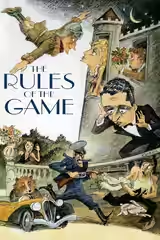
After The Exterminating Angel, try The Discreet Charm of the Bourgeoisie (1972, Fi1m 83): Buñuel’s later dinner party, where the rich sit down and never get to eat. Then The Rules of the Game (1939, Fi1m 91): Renoir’s country-house weekend, where the manners hold until suddenly they do not; and Triangle of Sadness (2022, Fi1m 66): The wealthy stranded and stripped of staff, louder than Buñuel but recognisably his heirs.

Cast

If you liked this, try…

  1. The Discreet Charm of the Bourgeoisie (1972, Fi1m 83)Buñuel’s later dinner party, where the rich sit down and never get to eat.

  2. The Rules of the Game (1939, Fi1m 91)Renoir’s country-house weekend, where the manners hold until suddenly they do not.

  3. Dogtooth (2009) · not on Fi1m yetA family who cannot leave the garden, filmed with the same straight face.

  4. La Grande Bouffe (1973) · not on Fi1m yetFour men lock themselves in a villa to eat; the joke is not kind.

  5. Triangle of Sadness (2022, Fi1m 66)The wealthy stranded and stripped of staff, louder than Buñuel but recognisably his heirs.