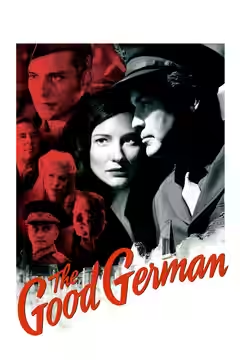
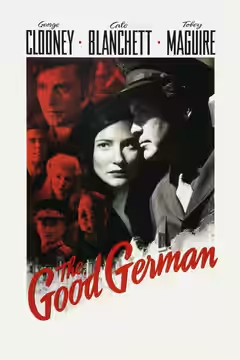
Steven Soderbergh shoots 1945 Berlin the way a 1946 studio would have, and the effect is often striking. But the story underneath is a muddle, the hero a bystander, and the film keeps everyone, including us, at arm’s length.
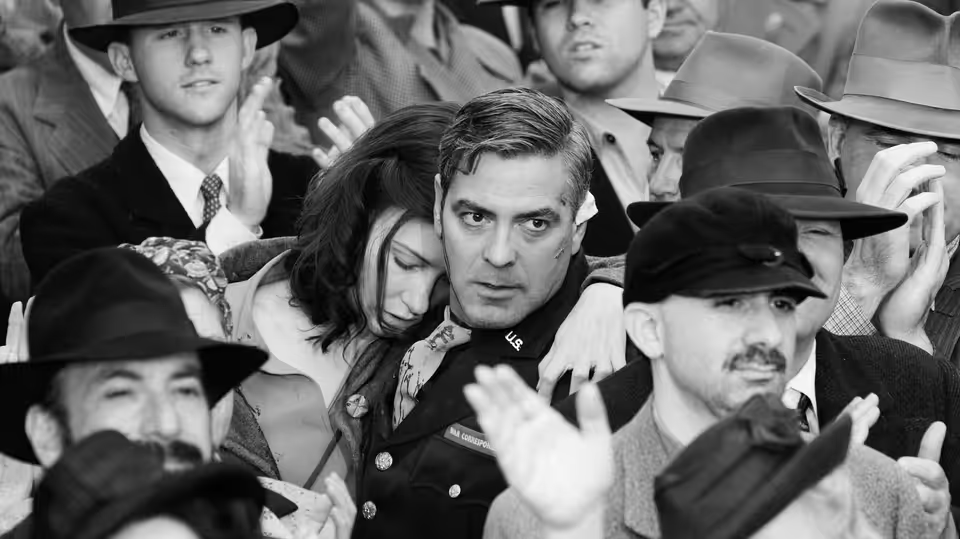
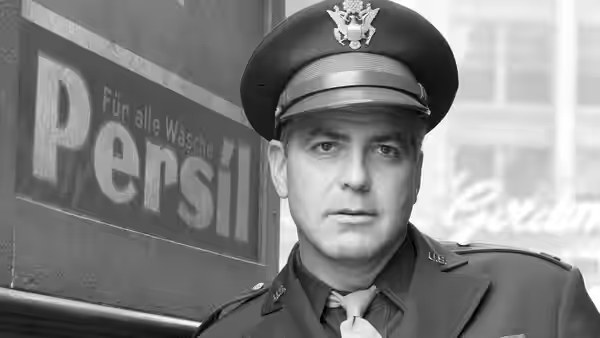
Steven Soderbergh has set out to make a 1946 studio thriller sixty years late. The Good German is in black and white, it runs a tidy 108 minutes, and it is set in Berlin in the summer of 1945, with the Allied leaders meeting at Potsdam down the road. Jake Geismar (George Clooney) flies in as a correspondent to cover the conference. His driver is a corporal called Tully (Tobey Maguire), who sells whatever the Russians will buy and sleeps with a German woman called Lena Brandt (Cate Blanchett). Jake knew Lena before the war. He goes looking for her, and the film is about what he finds instead.
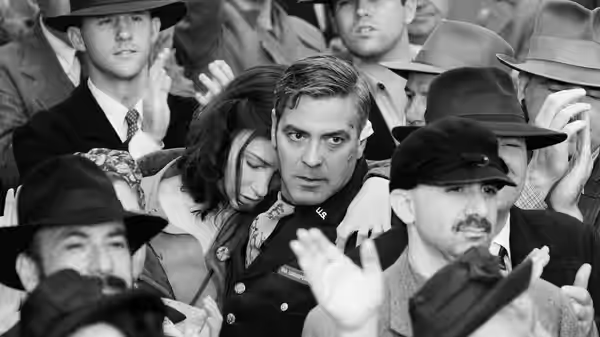
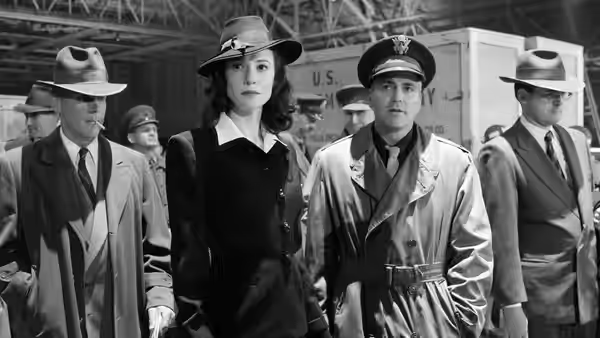
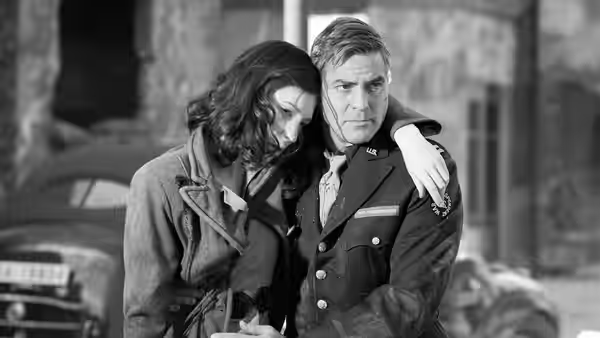
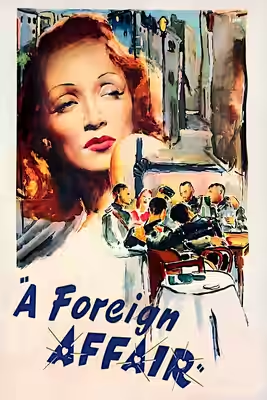
Soderbergh shot and cut the film himself, and the look is the reason it exists. The light is hard and comes from one direction; faces go white, coats go black, and the shadows have edges. Philip Messina’s Berlin is a stage set of rubble and doorways with nothing behind them, and Louise Frogley dresses everybody in the belted raincoats and pulled-down hats a 1940s wardrobe department would have reached for without thinking. Thomas Newman writes for a full orchestra and lets the strings sob. We sat up the first time Blanchett walked into a scene, because she has the walk and the cheekbones of a Dietrich picture and looks as though she has been cut out of one and pasted in. For twenty minutes the imitation is enough.
Then the film starts doing the things a 1946 picture could not. People swear. People take their clothes off. Tully hits people, and Maguire, with his choirboy’s face, plays him as a cheerful little sadist. The idea is plain enough: the world these films were made in was fouler than the films admitted, and here is the version with the foulness left in. Once, it lands. After that it becomes a habit, and the habit sits oddly against the rear projection and the swelling brass.
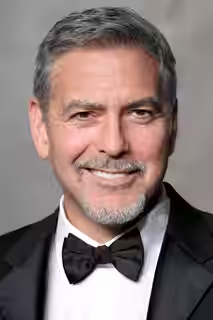
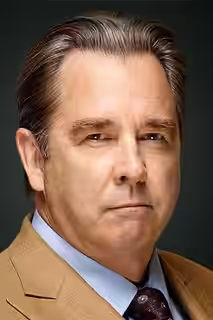
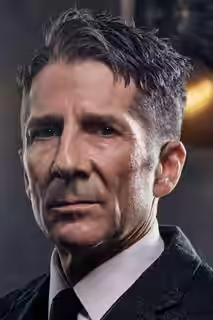
Clooney has the harder problem. Jake is a man to whom things are done. He is beaten up, lied to and beaten up again, and he learns most of what he learns because someone in a uniform decides to tell him. Paul Attanasio’s screenplay, from Joseph Kanon’s novel, moves the plot forward in rooms: Beau Bridges’s Colonel Muller has a room, Leland Orser’s Bernie Teitel has a room, Jack Thompson’s congressman and Ravil Isyanov’s Russian general each get a room, and in each of them a man explains. Somewhere in the second half we lost track of who wanted which piece of paper and why. Then we stopped minding. Then we were annoyed at ourselves for not minding, because this is Berlin in 1945 and we ought to.
Blanchett holds the middle of the film together on her own. She plays Lena as a woman who has already decided how much she will tell and to whom, and she keeps that decision in her face for the whole running time. When she does show something, it is a flicker, and the film around her is so cool that the flicker registers as heat. Clooney is at his best opposite her, listening; on his own he looks like a man waiting for his cue.
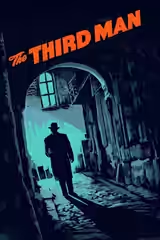
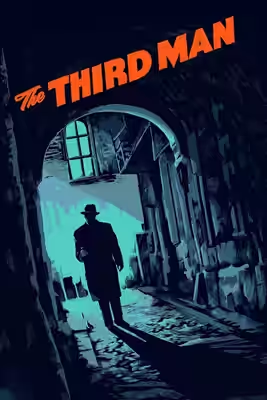
Soderbergh has a long record of experiments, and this is one of the purer ones. The comparison it invites is Casablanca, and it does not survive it. The comparison it should have wanted is The Third Man, Carol Reed’s 1949 film about another occupied capital, which also has a man who understands nothing walking through the ruins, and which is frightened and funny and sad in ways this film never manages. The difference is not the lenses. Reed cared what happened to his people.
Most critics found it cold, and so did we, though we would put more on the credit side for the discipline of the surface. See it if a modern cast inside a museum-quality 1940s frame interests you as an idea; it is 108 minutes and there is always something to look at. Watch it at home with the lights off, where the blacks stay black. Do not expect to feel much, and do not blame Blanchett when you do not.