George Clooney’s political thriller is worth seeing for Ryan Gosling, Philip Seymour Hoffman and Paul Giamatti, who make professional calculation absorbing. Its account of corrupted idealism is familiar, and the plotting sometimes forces changes the performances cannot quite justify.
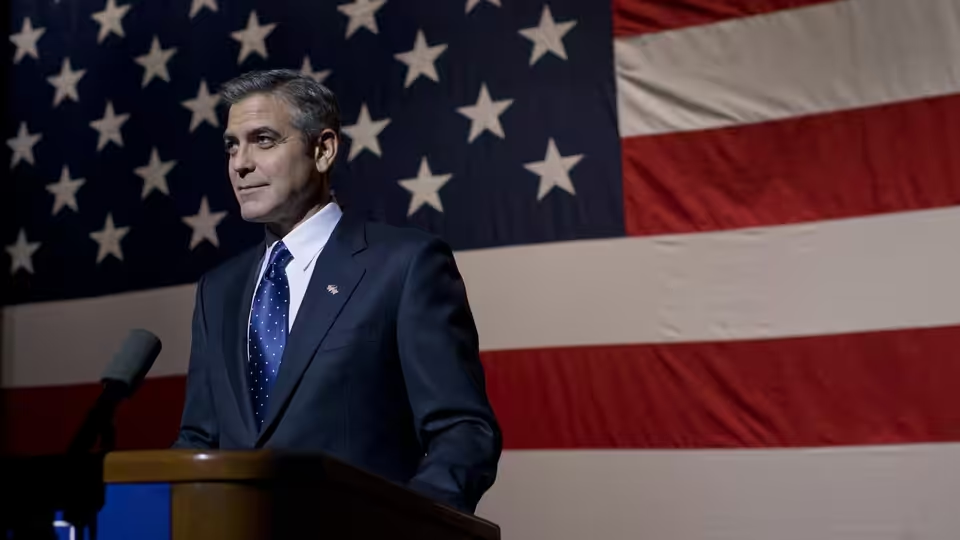
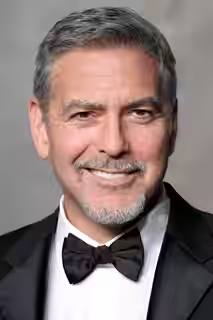
The Ides of March is a well-acted political thriller with a rather ordinary view of corruption. George Clooney directs it with enough patience to make professional calculation interesting, even when the plot follows a familiar route. The pleasure is in watching people work out what they can say, what they should withhold and how much of themselves to put into a campaign. We recommend it for those exchanges, with no great expectation of learning anything new about power.
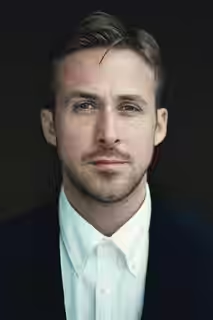
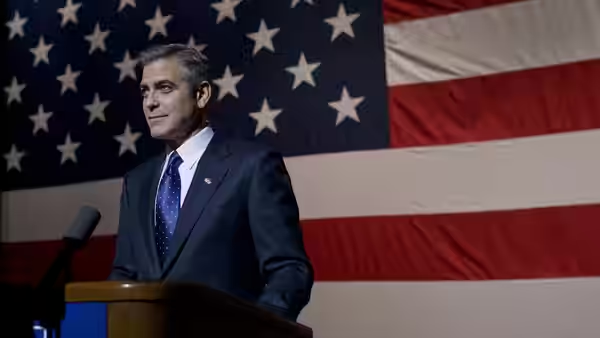
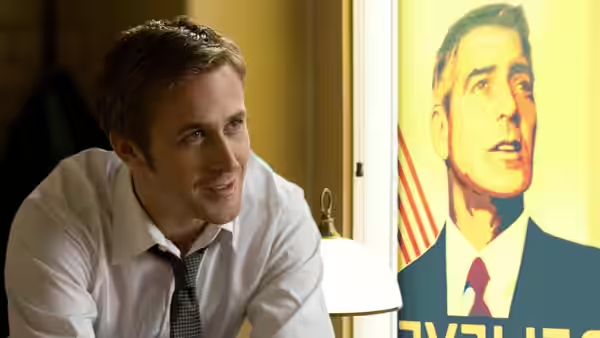
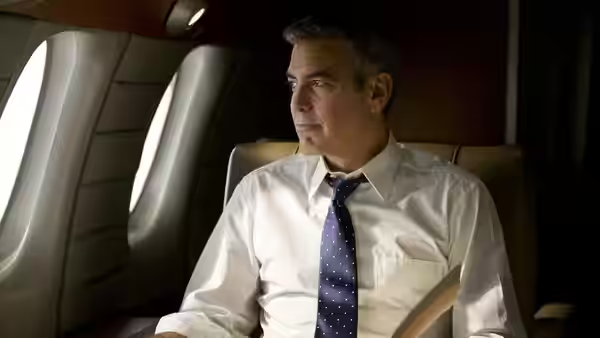
Ryan Gosling gives press secretary Stephen Meyers an earnestness that makes his confidence both appealing and faintly worrying. Working for Mike Morris, George Clooney’s idealistic Democratic candidate, Stephen has invested his judgement in someone he wants to believe deserves it. Ryan Gosling makes that attachment credible enough to hold our attention, although the character’s political innocence is harder to accept. A professional this assured ought to be less surprised by the business he has chosen.
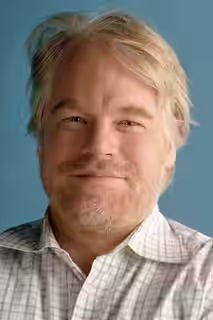
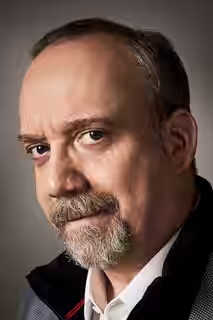
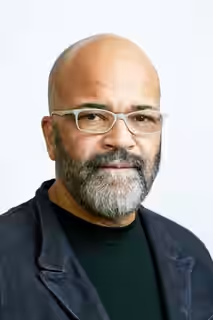
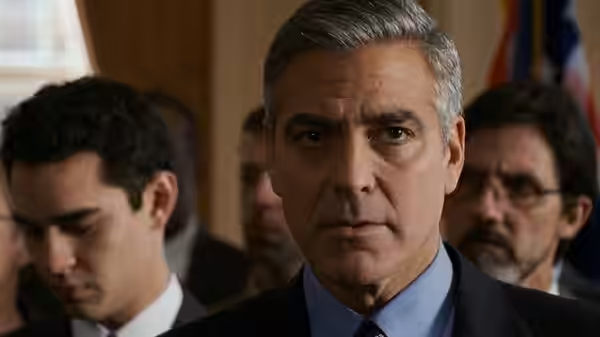
Philip Seymour Hoffman, as Paul Zara, and Paul Giamatti, as Tom Duffy, supply the experience Stephen lacks. Both are particularly good at making political manoeuvring sound like an ordinary professional skill, and the dialogue gives them room to be persuasive. We were gripped by their verbal sparring with Ryan Gosling: the advice sounds plausible enough to make trust feel risky. The tension comes from wondering what each speaker expects to gain, even when the conversation sounds reasonable.
Phedon Papamichael’s close-ups suit this kind of acting, allowing a face to hold our attention without demanding a speech to explain it. George Clooney gives the dialogue-free stretches time to register, and those pauses help us consider the people doing the talking. Stephen Mirrione’s editing keeps the exchanges taut without making every pause feel expendable. This controlled pace serves the material well, especially when the writing trusts the actors to carry a scene.
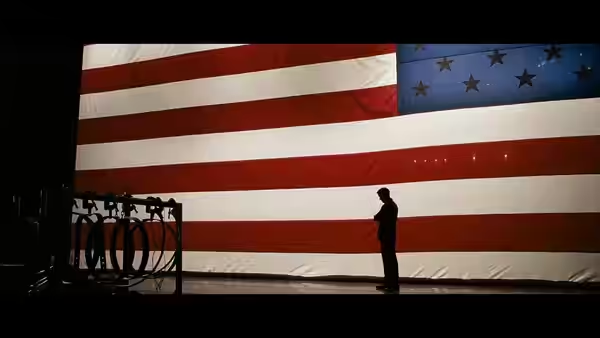
Sharon Seymour’s production design is effective because it does not demand to be admired separately from the drama. The campaign remains a place of work, and the emphasis stays on the people doing it. Alexandre Desplat’s music helps sustain the unease, though the film’s solemnity occasionally makes an ordinary piece of intrigue seem more consequential than it is. The quieter passages are more convincing, giving us time to judge a calculation without insisting on its importance.
The screenplay by Beau Willimon, George Clooney and Grant Heslov is less convincing when it asks us to accept sudden changes in behaviour. There is a strain of melodrama here that sits awkwardly beside the patient attention to professional bargaining. Stephen’s vanity and idealism need more examination if the story’s harsher pressures are to feel earned; instead, some developments do that work for him. Even these actors cannot make all of those decisions convincing.
As a political thriller, it has the useful habit of making talk tense, but it treats familiar cynicism with rather more gravity than it needs. Its interest in the campaign’s insiders also leaves little sense of the voters whose lives are supposed to matter to them. That limits how much weight the film can reasonably place on its disappointment in politics. Choose it when a tense conversation sounds more appealing than a chase.