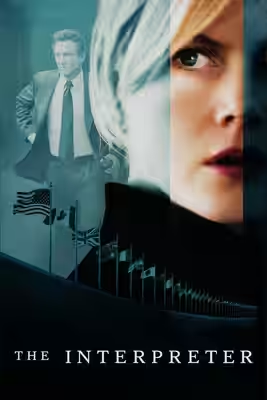
Sydney Pollack makes a composed, watchable political thriller, helped by Nicole Kidman and Sean Penn. The tangled, unlikely plot keeps it from becoming as gripping or as substantial as its serious manner promises.
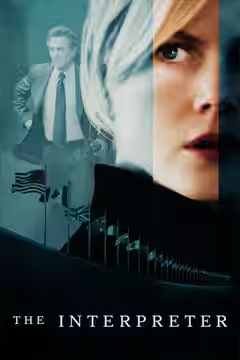
The Interpreter is a decent choice for a patient thriller viewer, though patience receives more exercise than it should. Sydney Pollack treats political intrigue as something worth taking seriously, and the care is welcome. He gives Nicole Kidman and Sean Penn room to hold our attention without constantly forcing the pace. At 128 minutes, however, the film asks its performances to sustain interest through too much unlikely plotting.
Nicole Kidman gives Silvia Broome the gravity the material needs, while Sean Penn’s Tobin Keller supplies a persuasive partner for the film’s more intimate business. Neither performance makes a fuss about its seriousness. We were touched by the tenderness of their quieter exchanges, where their interest in each other is allowed to matter. The relationship remains reserved, and it does not always provide enough warmth to carry the longer stretches of intrigue.
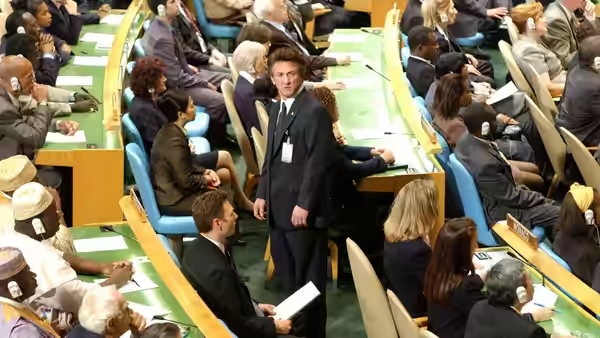
Darius Khondji’s cinematography helps considerably. The United Nations setting has a composed, imposing look, and the director understands how much authority those surroundings can lend a conversation. Jon Hutman’s production design fits that sober approach, helping to make the official business feel credible. The setting gives scenes of people talking a scale they could not have in an anonymous office, and provides something worth looking at while the explanations continue.
William Steinkamp’s editing keeps the strands manageable, but there is only so much cutting can do when each complication requires another stretch of explanation. The suspense works best when the director has a clear situation to manage. He can control a sequence without making it frantic, and there is pleasure in that confidence. The trouble comes when we stop enjoying the immediate tension and consider how much we have been asked to accept.
The screenplay, credited to Charles Randolph, Scott Frank and Steven Zaillian, wants its political concerns to carry weight. Too often, though, the accumulating plot leaves too little room to examine them. We understand that the film means to take these matters seriously without finding much to think about afterwards. A political thriller need not offer solutions, but its ideas should survive beyond the next explanation of who is involved and why.
James Newton Howard’s music supports the solemn tone, though that tone is already well supplied by the performances and the setting. A little less emphasis would have helped the film seem less pleased with its own importance. The director’s restraint with the actors is more useful, allowing the personal relationship to develop without demanding an immediate emotional response. Those passages keep the film watchable even when the larger story becomes difficult to credit.
Against the demands of the political thriller, this is capable work held back by a story that does not justify its complexity. It has the performances and enough well-managed suspense to make a modest evening’s entertainment. Expecting much political insight, or plotting that withstands close inspection, is asking too much. For admirers of Nicole Kidman and Sean Penn, it is worth considering; anyone after a brisk thriller should look elsewhere.