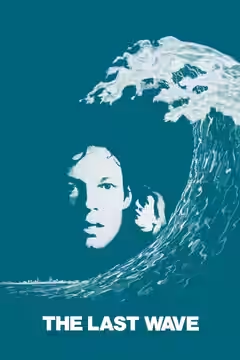
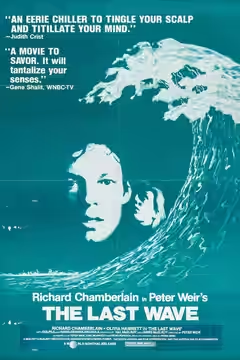
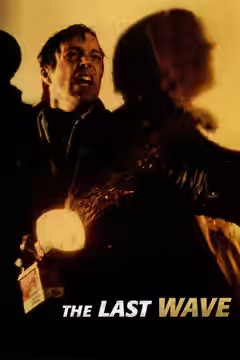
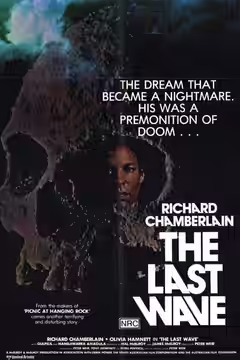
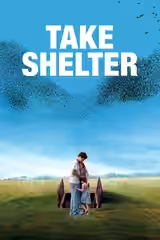
Peter Weir follows Picnic at Hanging Rock with a ghost story told through the weather, and it is as unnerving as anything Australian cinema has made. Richard Chamberlain is the weak point; David Gulpilil and the rain are the strong ones.
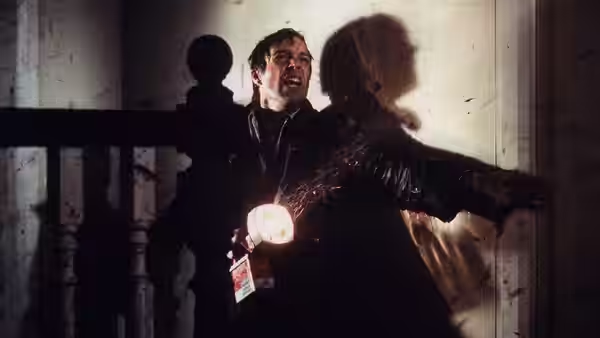
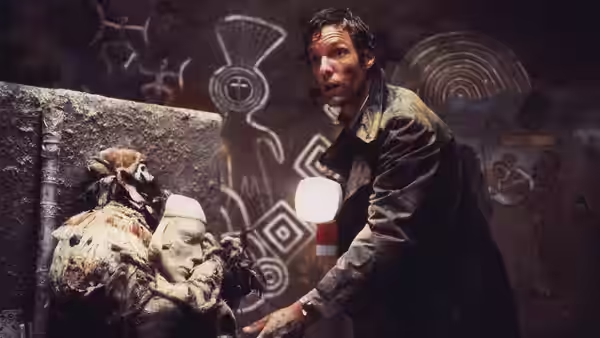
Peter Weir follows Picnic at Hanging Rock (1975) with another film about white Australians standing in front of something older than them and failing to see it. This time the setting is Sydney rather than the bush, the year is now, and the thing they cannot see is arriving as weather. David Burton (Richard Chamberlain), a tax lawyer with a good house and a fair-haired family, is asked to defend a group of Aboriginal men over the death of Billy Corman (Athol Compton). Before he has met any of them he dreams of one, Chris Lee (David Gulpilil), standing in his hallway at night holding out a stone. It is a good film with a hole in the middle where its lead should be, and we would still send you to it.
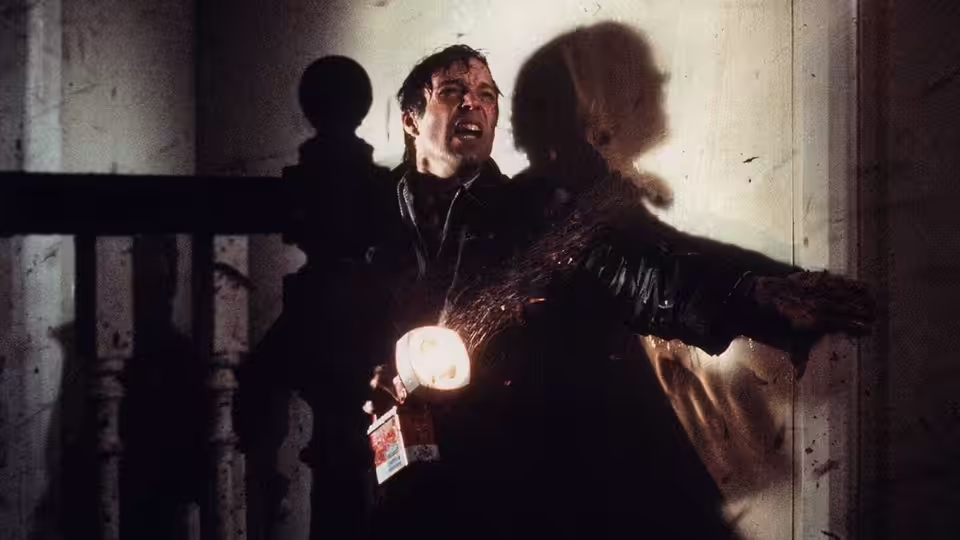
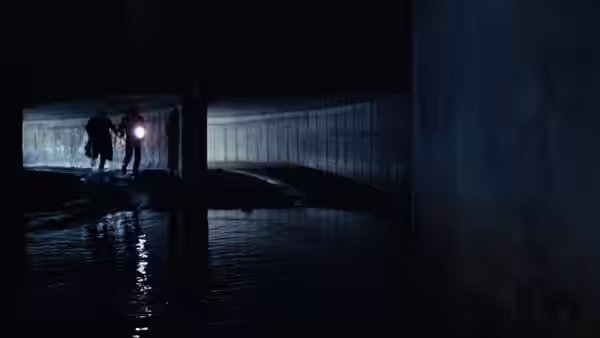
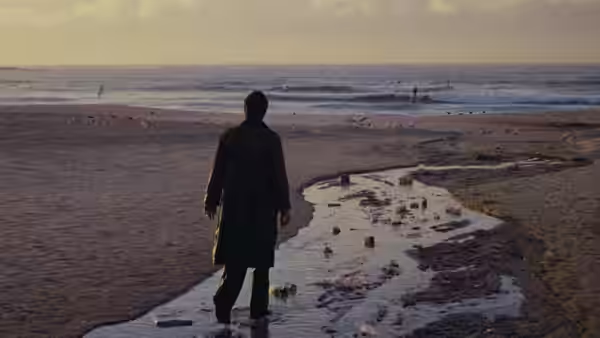
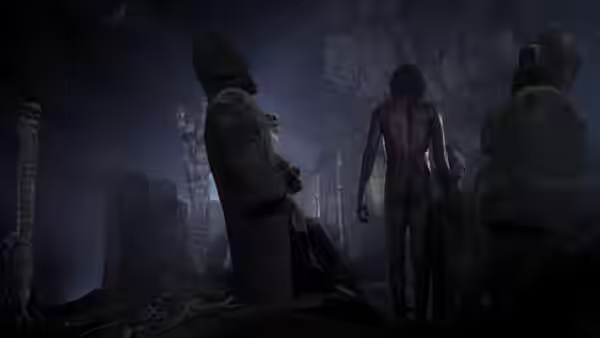
The weather does most of the work. The first scene is a schoolyard in the desert, a teacher, a clear sky and then hailstones the size of fists coming through a corrugated roof while the children scream. Then Sydney, and rain that does not stop, and radio announcers being cheerful about it. Russell Boyd shoots the city through wet glass in the colours of mud and weak tea, keeps the interiors dim and puts water on every surface. He does not change the lens or tilt the camera when David starts dreaming. A dream looks like a Tuesday, which is why a bath overflowing down a staircase made us glance at our own ceiling.
Max Lemon cuts the dreams into the waking film without a dissolve or a sound cue to warn us, so we are often two or three shots into one before we realise where we are. Charles Wain’s score is used sparingly: a low drone that might be an instrument or might be the wind, and long stretches of nothing but rain on a roof. Annie Bleakley keeps David in suits that always look slightly damp and Chris in a cheap city jacket that sits on him like a disguise, which is the point.
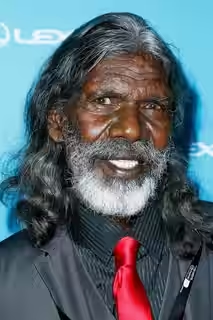
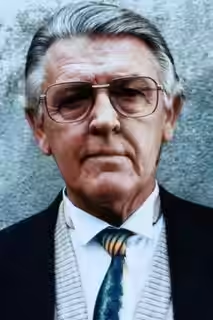
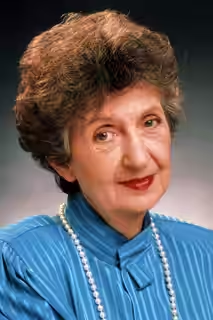
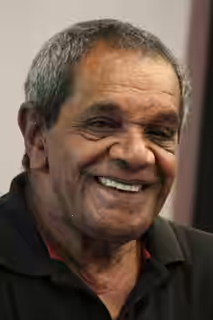
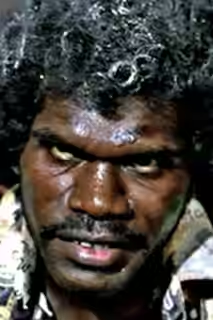
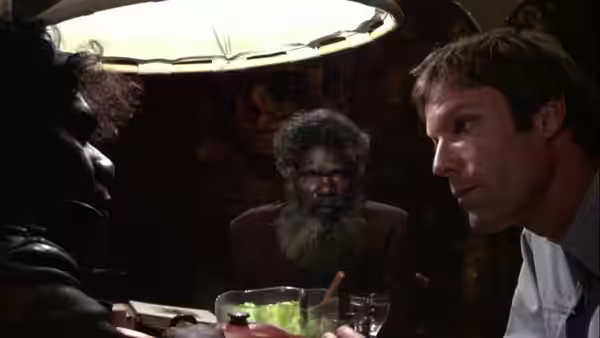
Gulpilil is the reason to watch. Chris says very little, answers questions with questions and looks at David exactly the way David looks at him, and the film tilts towards him whenever he is on screen. Nandjiwarra Amagula, as the elder Charlie, comes to dinner at the Burtons’ house and barely speaks, and the whole dinner party reorganises itself around his end of the table. Vivean Gray gives Dr Whitburn the brisk certainty of the sensible world, explaining that there can be no tribal killing because there are no tribes here, and the film is plainly not on her side.
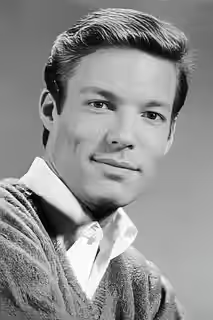
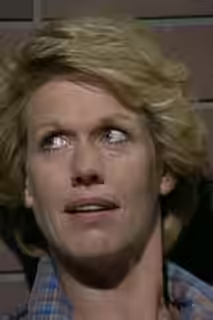
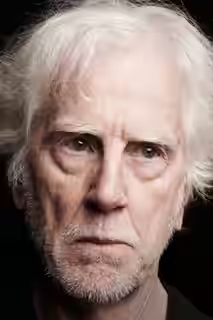
Chamberlain is the problem, and it is not a small one. He is handsome and decent and he plays bewilderment as a single expression that he holds for 106 minutes. The part needs a man coming apart; he gives us a man mildly inconvenienced. Olivia Hamnett gets the better of their scenes as Annie, the wife who notices her husband has stopped listening before he does. Frederick Parslow, as David’s stepfather the Reverend, has one strong scene, a conversation about what David dreamed as a boy that turns into a sermon nobody asked for.
Here is what it did to us. The hail on the schoolhouse roof, with that blue sky sitting over it, unsettled us and the film never gave us leave to stop being unsettled. Twice we were frightened without being able to say by what, once by a man in a doorway and once by water in a parked car, and both times there was nothing on screen a censor could point to. That is a rarer trick than it sounds, and Weir does it with a light meter and a hose.
The script, by Weir, Tony Morphett and Petru Popescu, is less sure of itself than the images. Around the hour mark it starts telling us what we have already been shown, and the courtroom scenes are there to move the plot rather than because anyone was interested in the law. There is also the older difficulty: the film makes Aboriginal belief a mystery for a white lawyer’s benefit, and while Weir knows this and lets Gulpilil and Amagula keep their own counsel, the story still belongs to the man in the suit.
It ends on a single image we will not describe. It is worth 106 minutes to arrive at it, with the lights off and, if you can arrange it, rain on the window. It carries a 15.