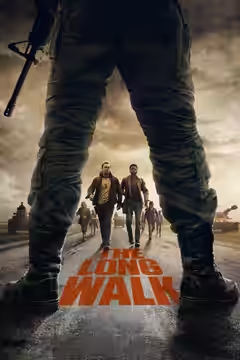
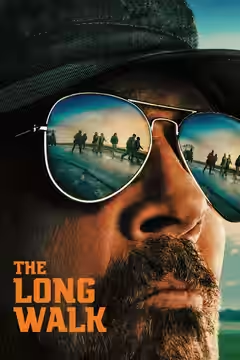
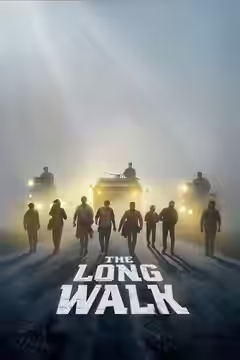
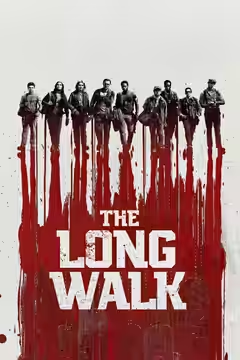
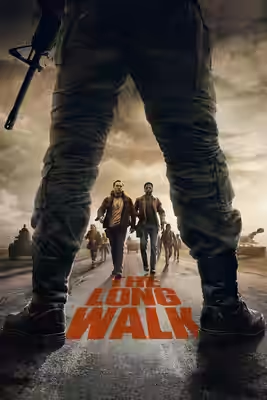
The Long Walk poster

The Long Walk

2025 · Directed by Francis Lawrence
1h 48mScience FictionThrillerHorror15
72
Fi1m score
74
Critics · 17
Audience · not yet

Where to watch in the UK

Checked 10 September at 22:29. Prices and availability change; the service’s page is the last word.

Plays from YouTube when you press play; nothing loads from them until then.

Synopsis

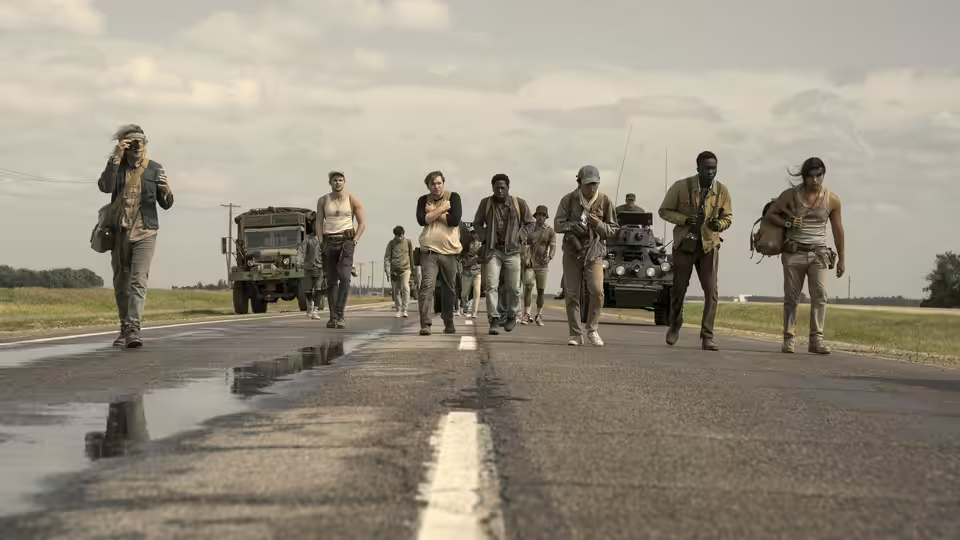
In a broke and frightened America, a few dozen teenage boys volunteer for the Long Walk, an annual contest with one rule: keep moving. Fall below the pace and a soldier in the truck behind issues a warning. After the third, he shoots. The last boy still walking is promised whatever he asks for. Raymond Garraty (Cooper Hoffman) says goodbye to his mother (Judy Greer) at the roadside and falls in beside Peter McVries (David Jonsson), who wants a friend, Hank Olson (Ben Wang), who wants a laugh, and Gary Barkovitch (Charlie Plummer), who wants a fight. The Major (Mark Hamill) sends them off. Francis Lawrence directs, from JT Mollner’s adaptation of Stephen King’s novel.

Fi1m review

In a sentenceDozens of boys, one road, a truck full of rifles behind them and nothing to talk about but dying, for as long as it takes

Francis Lawrence’s adaptation of Stephen King’s death march is grim, honest about what it shows, and carried by Cooper Hoffman and David Jonsson. It has a single idea and walks it for 108 minutes; the idea holds longer than we expected, though not all the way.

Raymond Garraty (Cooper Hoffman) is dropped at a roadside before dawn by his mother (Judy Greer), who does not want him to go and cannot stop him. He has volunteered for the Long Walk, a contest in which teenage boys set off along a country road and keep going. Fall below the pace and you are warned. Three warnings and the soldiers in the truck behind you shoot you where you stand. The last boy walking gets whatever he wants for the rest of his life. Francis Lawrence, who directed most of the Hunger Games films, has made something far plainer here: a good film, hard to sit through, built on one idea, and it walks that idea further than we thought it could.

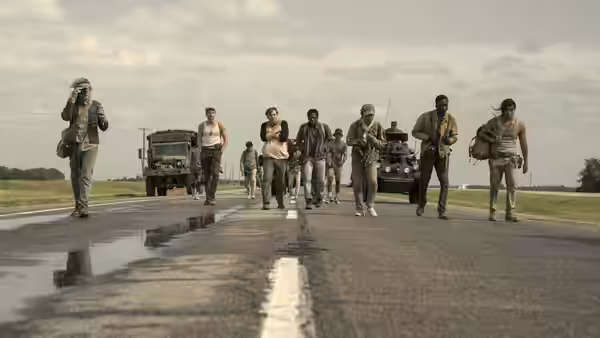
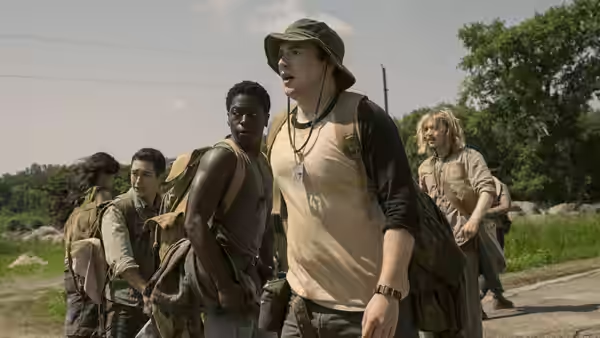
Jo Willems shoots nearly all of it outdoors under flat grey skies, and he keeps the camera moving beside the boys at walking pace, so that we rarely get ahead of them or fall behind. Nicolas Lepage’s production design is a road, some fields, farmhouses with the paint gone, and the truck that grinds along behind with rifles pointed at the walkers’ backs. The spectators, when there are any, stand at the verge and stare. Nobody cheers.

The first shooting comes early. It is a boy called Curly (Roman Griffin Davis), and his crime is a cramp. Lawrence does not cut away and Willems does not soften it, and we flinched, hard. What stayed with us was how much less we flinched at the next one, and less again at the one after that, and that the film had counted on this. It is the closest the film comes to making an argument, and it makes it without a word of dialogue.

Hoffman plays Garraty as a boy who arrived with a grievance and a plan and keeps both to himself for as long as he can. He does not act tired; he lets his stride shorten. David Jonsson’s McVries has decided that the only sane response to the walk is to make a friend, and he sets about it with a cheerfulness that Jonsson lets crack only when nobody else is looking. Their talk, about mothers and girls and what they would do with the prize and whether any of it is worth it, is the film. Ben Wang’s Hank Olson supplies the jokes and then stops supplying them, and the quiet where they used to be is among the film’s best effects. Charlie Plummer’s Barkovitch needles everyone within earshot, and Plummer makes him pitiable without making him likeable.

Mark Hamill’s Major, in aviator glasses and a growl, tells the boys that they are weak because the country is weak, and the film wants him both frightening and a joke. He is neither for long. JT Mollner’s script, working from Stephen King’s first novel, gives the boys a great deal to say about death, and in the middle hour the sayings start to sound like each other. Mark Yoshikawa and Peggy Eghbalian cut the shootings short and sharp and let the conversations run, which is the right choice, but at 108 minutes we felt each of them, and not always in the way intended. Jeremiah Fraites’s score is piano and low strings, and it tells us when to be sad slightly before the actors have.

The last stretch makes a choice the book does not, and we will not describe it. We can say that it is the one point where the film stops trusting the road and reaches for something larger, and we came out arguing about whether it had earned it. We can also say that the film keeps its nerve about the shootings to the end, which is more than we expected from a studio picture with a 15 certificate.

Set beside Lawrence’s own Hunger Games films, there is no arena, no capital, no costumes; the whole spectacle is a road and a truck. It is the more honest film for it and the smaller one. Set beside Stephen King adaptations generally, it sits well above the middle, mostly because two actors in their twenties make a two-hour conversation feel like it might be interrupted at any moment, and often is.

Do not watch it over dinner. Watch it with someone who will want to argue about the last ten minutes, because you will.
Critical consensus AI synthesised

74
Positive
14
Mixed
2
Negative
1

Most critics take to The Long Walk, and the spread is narrow: the bulk of the reviews land as solidly positive, with a small cluster of mixed notices and a single outright rejection. The praise gathers around the two lead performances, from Cooper Hoffman and David Jonsson, and around the friendship between their characters, which nearly every review names as the thing that carries a punishing premise. Francis Lawrence is credited with keeping the film bleak and unflinching without tipping into cruelty, and several reviews approve of the screenwriter’s changes to Stephen King’s novel. The reservations are about the material rather than the making: a walking contest is hard to dramatise, the comparisons to The Hunger Games are frequent and not always flattering, and a few critics find the message muddled or the villain too broad. The Telegraph is the lone dissenter, judging the premise anti-cinematic and the film quickly short of ideas.

Slant Magazine
7 September 2025 · Justin Clark
85*

The review presents the film as a harrowing mirror to reality and a passion play about class solidarity. It singles out the script’s empathy for all characters and the radical defiance found in the central friendship.

Read the full review →
Radio Times
★★★★ · Jeremy Aspinall
80

The critic calls it a searing yet thoughtful adaptation of Stephen King’s first novel that twists the American Dream into something macabre. It features marvellous performances, especially from Cooper Hoffman and David Jonsson, as an often agonising horror directed with expertise in dystopian survival tales.

Read the full review →
Screen Daily
10 September 2025
80*

The critic describes it as an uncompromising, unrelentingly bleak and utterly brutal Stephen King adaptation that is one of the most powerful in recent years. It features a poignant emotional heart that powers the narrative through its grim trek.

Read the full review →
The Hollywood Reporter
5 September 2025 · Frank Scheck
80*

The critic finds Francis Lawrence’s adaptation bleak and bruising yet emotionally affecting overall. He singles out the warm friendship between the two leads and the heartfelt family relationships for particular praise.

Read the full review →
The AV Club
10 September 2025 · B · Jacob Oller
77

The review calls the adaptation a chummy, harrowing Stephen King B-movie that respectably plods through its hellish metaphor. It singles out the sublime moments of connection and solidarity among the boys amid the violence.

Read the full review →
IndieWire
11 September 2025 · Ryan Lattanzio
75*

The critic praises Lawrence and the screenwriter for delivering the source material’s dark-hearted vision without any saccharine hope. He highlights the film’s unflinching totalitarian nightmare and the lead performances.

Read the full review →

Cast

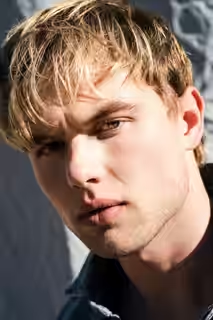
Cooper Hoffman
Raymond Garraty #47
David Jonsson
Peter McVries #23
Garrett Wareing
Billy Stebbins #38
Ben Wang
Hank Olson #46
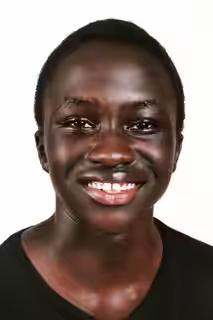
Tut Nyuot
Arthur Baker #6
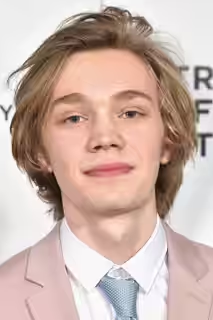
Charlie Plummer
Gary Barkovitch #5
Jordan Gonzalez
Richard Harkness #49
Joshua Odjick
Collie Parker #48

Stills

If you liked this, try…

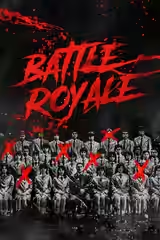
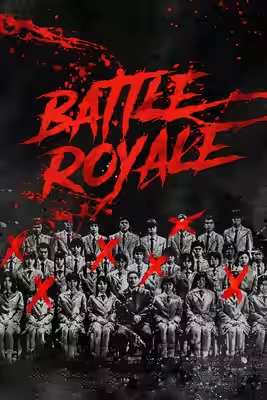
Battle Royale poster

Battle Royale

2000 · Schoolchildren made to kill each other on an island; nastier, funnier, and quicker on its feet.

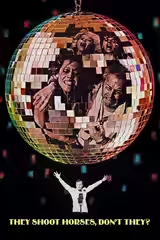
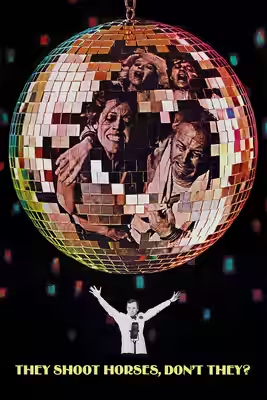
They Shoot Horses, Don't They? poster

They Shoot Horses, Don't They?

1969 · A Depression dance marathon as slow public execution; the grown-up version of this film.

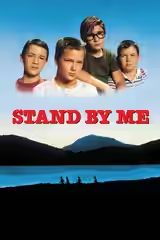
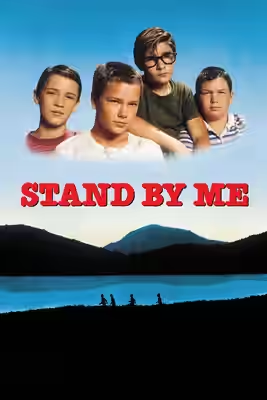
Stand by Me poster

Stand by Me

1986 · King’s boys walk a railway line instead, and nobody shoots them; the same talk, gentler.

Gallipoli poster

Gallipoli

1981 · Two young runners sent to a war that wants their legs; the friendship is the point.

Squid Game poster

Squid Game

2021 · Debtors play children’s games for money and their lives; brighter colours, same contempt for the crowd.