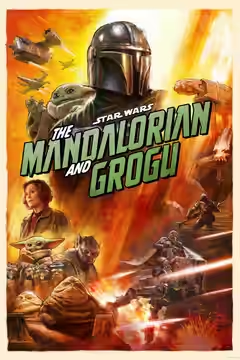
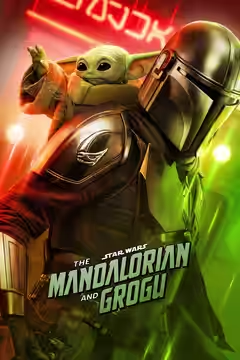
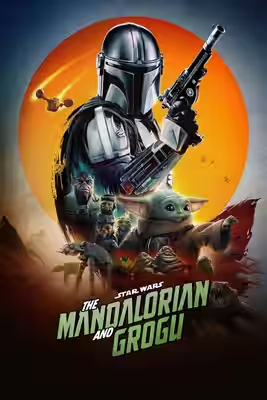
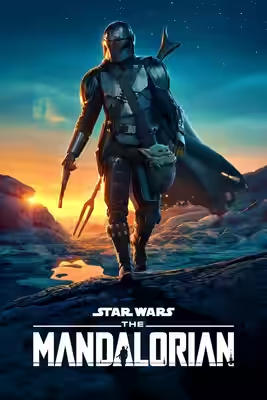
Jon Favreau’s big-screen outing for the armoured bounty hunter and his green ward is pleasant, tidy and forgettable, a pair of good television episodes with the joins painted over. The puppet and Martin Scorsese’s street vendor are the reasons to stay.
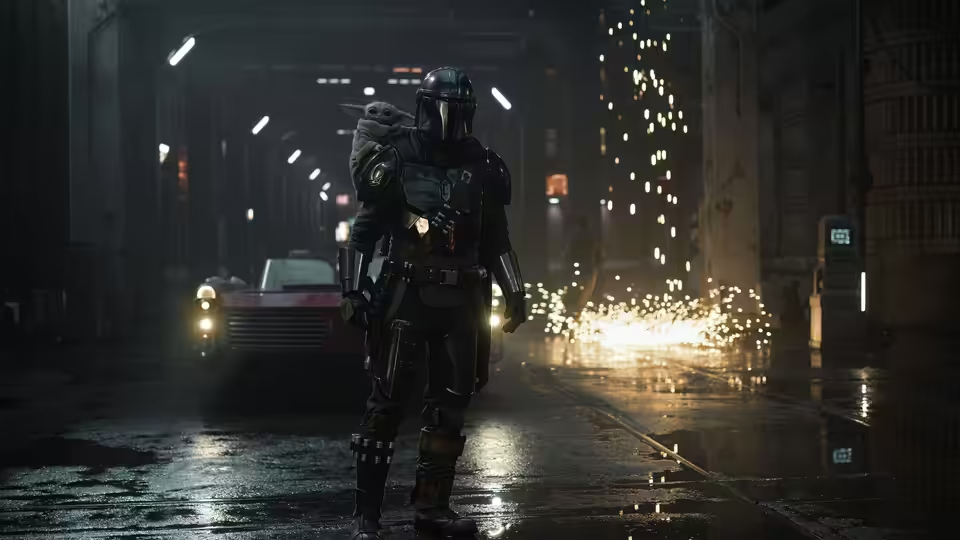
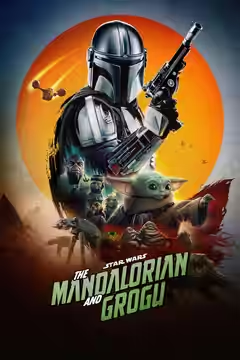
Seven years after it began on television, Jon Favreau brings the armoured bounty hunter and his small green ward to the cinema, and the first thing the film has to justify is the size of the screen. It does not quite manage it. The Mandalorian and Grogu is amiable, tidy and handsomely dressed, and at 132 minutes it plays like two episodes of the programme with the join sanded down. We enjoyed a fair amount of it on the night and could recall surprisingly little of it by the morning.
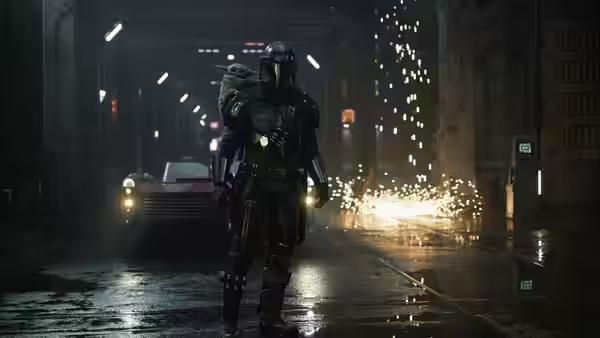
Nobody in it acts better than the puppet. Grogu blinks, flattens his ears and reaches for things he should not have, and because he is a physical object sharing the frame with Pedro Pascal’s armour, every scene they have alone together has a weight the digital ones lack. There is a stretch in the middle where nothing is being hunted and the child is simply looking after the man, and it moved us more than we were ready for. The film knows exactly what it has in that relationship. Then it hears a noise offscreen and goes back to work.
The work is monsters. A sea snake attacks, AT-ATs stride across a battlefield, and a series of large creatures are met and fought. Favreau, who wrote the script with Dave Filoni and Noah Kloor, builds the film as a chain of hunts, and Rachel Goodlett Katz and Dylan Firshein cut each one to a clean, legible finish before the next begins. It is competent and it is repetitive. Somewhere in the second hour we caught ourselves waiting for a recap card that never came.
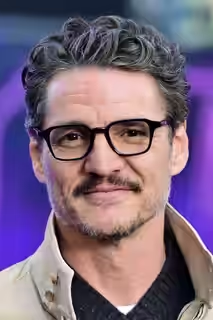
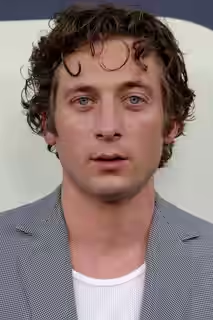
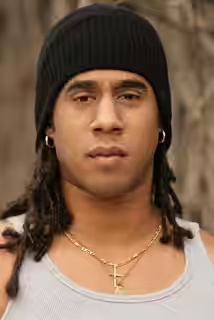
Pascal is under the helmet for the duration, and Brendan Wayne and Lateef Crowder do the walking and the falling, so his performance is a voice, patient and tired and dry, and it carries more than it should have to. Sigourney Weaver gives Colonel Ward the same brisk command she has been lending to spaceships since Aliens, and the film brightens whenever she is issuing orders. Jeremy Allen White voices Rotta, a young Hutt, as the film’s second odd-couple partner, and the character is louder than he is interesting. Steve Blum’s Zeb Orrelios, carried over from the animated Star Wars Rebels, gets a scene. Martin Scorsese voices a street vendor called Hugo Durant, and for about a minute the film is funnier than anything around it.
David Klein shoots in the series’ palette of rust, sand and steel, and the frames are wide and well composed without ever looking like more than expensive television. The sets by Andrew L. Jones and Doug Chiang have the worn, riveted look the programme has always done well; the digital backgrounds behind them are flat in a way the puppet never is, and putting the two side by side does the effects no favours. Mary Zophres dresses the new faces plainly and sensibly. Ludwig Göransson’s score, the recorder motif and the slow drum, is still the most distinctive sound the franchise has, and it does more to make this feel like a film than the widescreen does.
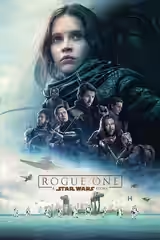
The first series, back in 2019, borrowed the shape of a Western and knew where its hour ended. Favreau also once made Iron Man, which understood that a blockbuster needs a story with a middle. This has a beginning and an end and a great deal of hunting between them. Rogue One showed that a spin-off could stand on its own as a film; this one stands beside the television and asks to be let back in.
Take a child, if you have one; they will love the puppet as much as we did. If you have not got a child, you already know whether you are the sort who will go anyway. The rest of us can wait for it to come home, where it will look like what it is.