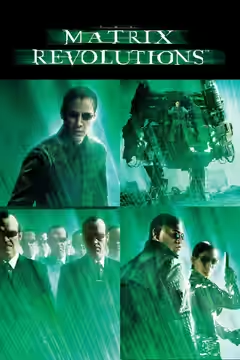
Lana Wachowski and Lilly Wachowski retain a gift for strange places and large-scale action, but their finale struggles to make either matter. Hugo Weaving supplies the personality that the solemn dialogue keeps suppressing.
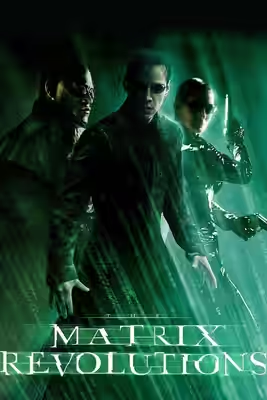
With The Matrix Revolutions, Lana Wachowski and Lilly Wachowski try to give a trilogy the weight of a last stand. The result is a disappointing science-fiction finale, inventive in isolated passages and laborious across much of its 129 minutes. There is a worthwhile change of emphasis in the attention paid to the people of Zion, whose shared danger ought to broaden the story beyond Neo. But the writing makes understanding what is happening hard work, then expects solemn dialogue to supply the emotion.
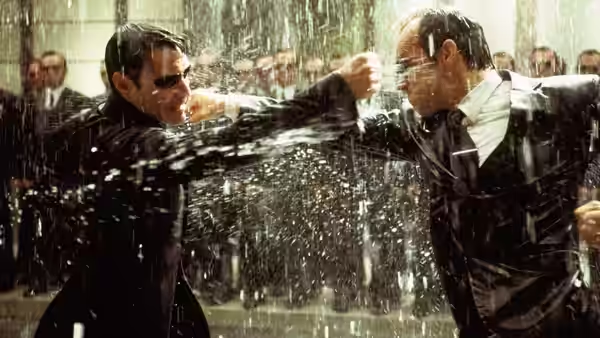
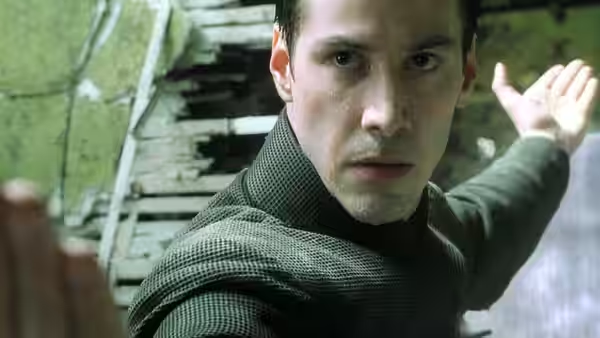
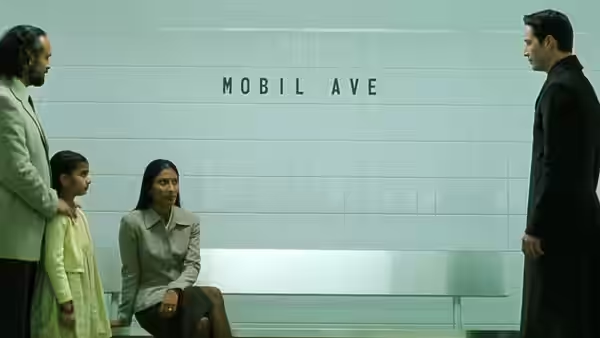
The train-platform sequence is the clearest reminder that these directors can make an unfamiliar place immediately interesting. Owen Paterson’s production design gives that setting a stronger hold on our attention than the film’s explanations, and Bill Pope’s cinematography helps the nightclub fight recover some sharpness. We were briefly excited by the platform, because we wanted to understand how this peculiar place worked. For a while, we wanted to know what would happen next. Too much of the rest encourages us to wait for somebody to explain what has already happened.
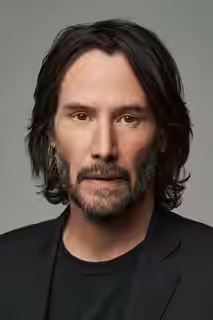
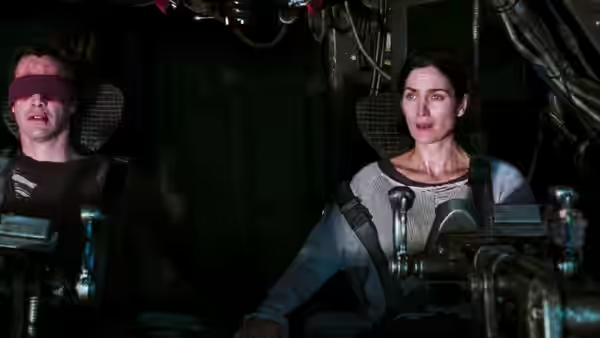
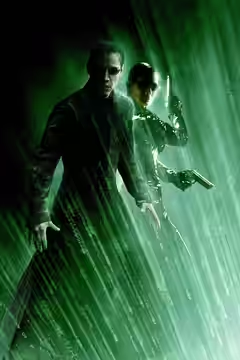
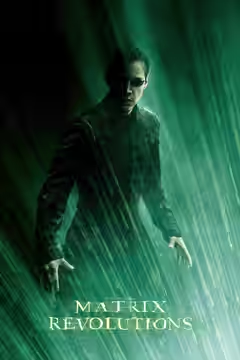
Keanu Reeves is left with too much bewilderment to play, and it makes Neo a difficult companion for a film already struggling to explain itself. Carrie-Anne Moss cannot make Trinity’s romance with Neo carry the emotional weight assigned to it. The relationship is asked to support so much solemn feeling that the people involved become difficult to recognise beneath it. We get too little sense of what these two people enjoy about each other, even allowing for the desperate circumstances. The spiritual language leaves little room for ordinary affection.
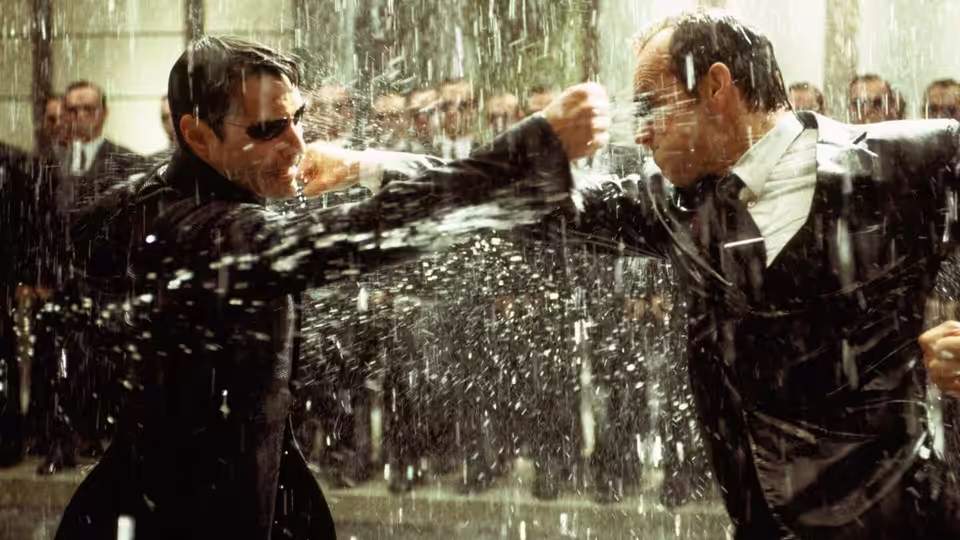
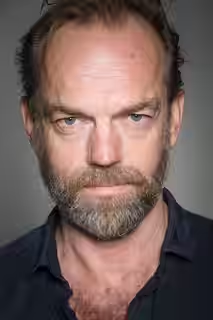
Hugo Weaving, as Agent Smith, is the welcome exception. He seems to enjoy the grandiosity, which is a considerable relief when almost everyone else treats it as a duty. His performance has enough bite to make the dialogue briefly entertaining. The contrast is damaging to the rest of the cast: once somebody makes this language sound playable, all the surrounding reverence becomes harder to excuse. A little more of that freedom might have helped the film’s humourless stretches.
The siege of Zion at least gives the film a clear practical problem: a city faces an attack. Its appeal is understandable, and the staging suggests real thought about how collective resistance might become the centre of an action film. Yet the attention lavished on secondary characters does not automatically make them compelling, and the battle keeps going after its immediate force has worn off. Zach Staenberg’s editing does not solve that problem; the action needs more changes of pace to sustain our interest through such a prolonged assault.
Don Davis’s music presses for a sense of momentous consequence that the script has not earned. That insistence compounds the heavy spiritual language, leaving too few scenes free to establish their importance without announcement. The directors plainly want a science-fiction adventure to accommodate belief, responsibility and love, and that ambition deserves some respect. The problem is how often those concerns arrive as declarations, while the plotting remains too weak to make them convincing.
A concluding chapter need not settle every philosophical question, but it should make the time spent with its characters feel worthwhile. This one devotes so much attention to the size and seriousness of its conflict that it neglects that simpler task. If finishing the trilogy matters, there are flashes of invention to reward the commitment. Do not expect the explanations to be as persuasive as the machinery.