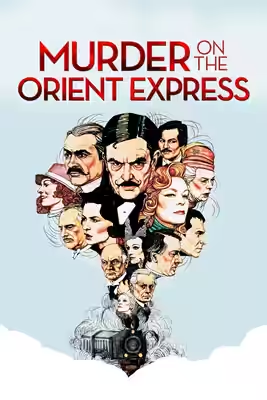
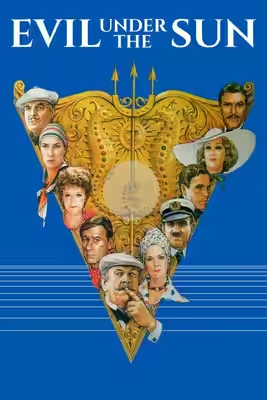
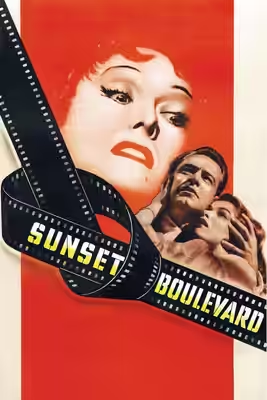
Guy Hamilton’s Christie is a comfortable, well-dressed afternoon, with Taylor and Novak sniping at each other in front of the whole village. The mystery underneath is thin, and Angela Lansbury’s Miss Marple spends too much of it on the sofa.
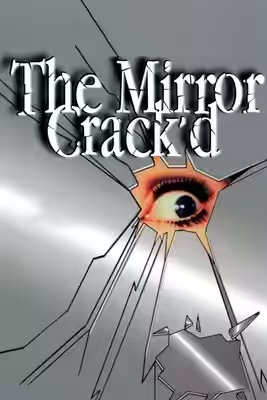
In 1953 a Hollywood company comes to St Mary Mead to make a costume picture. The Mirror Crack’d is Agatha Christie by way of John Brabourne and Richard Goodwin, the producers of Murder on the Orient Express and Death on the Nile, and follows the same recipe: one famous detective, a dozen famous faces, period frocks and a country house. Guy Hamilton directs at an even pace, and Barry Sandler and Jonathan Hales have kept the shape of the novel. The joke is that four Hollywood stars whose best years were the 1950s have been hired to play Hollywood stars whose best years were the 1950s.
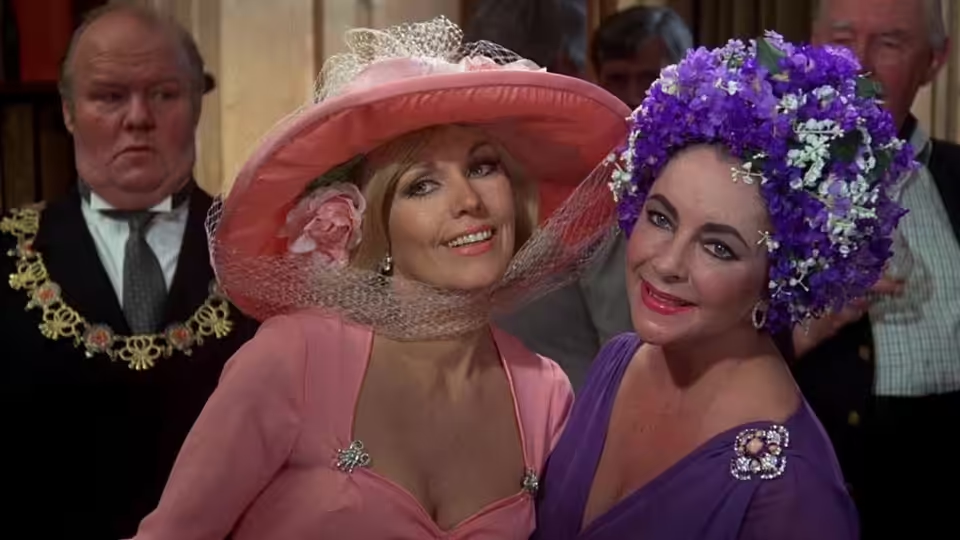
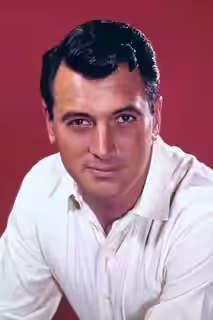
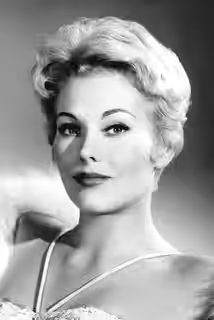
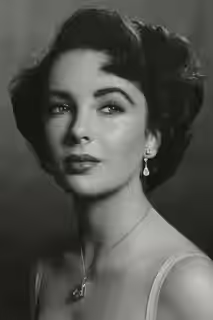
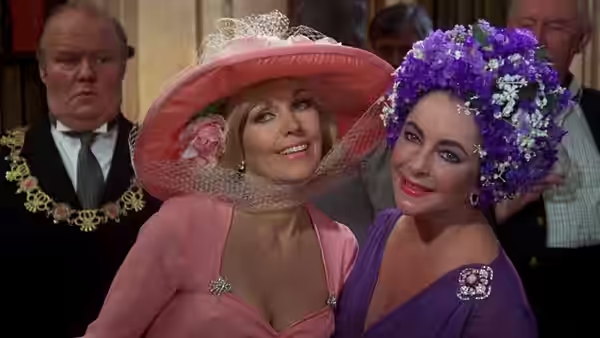
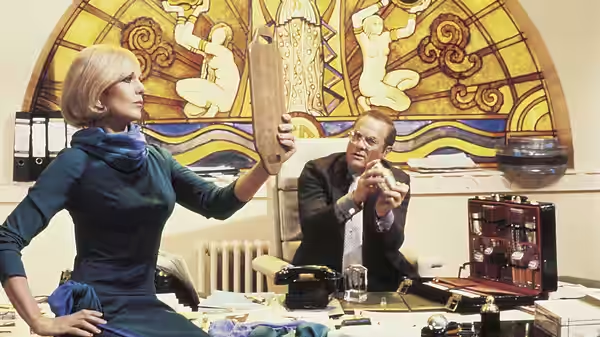
Elizabeth Taylor is Marina Rudd, an actress coming back from a breakdown to play Mary Queen of Scots. Kim Novak is Lola Brewster, cast against her and still angry about something from years ago. Their meeting at the Gossington Hall reception is the scene everyone remembers: two women smiling for the photographers while insulting each other’s age, figure and husbands. We laughed, properly, and then felt a little ashamed, because the film is asking two actresses to play has-beens in front of a crowd and did not seem to notice how close to the bone that was. In her quieter scenes with Rock Hudson, Taylor drops the grand manner and is simply a tired woman, and it caught us off guard.
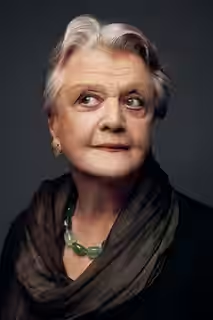
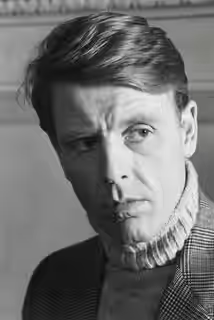
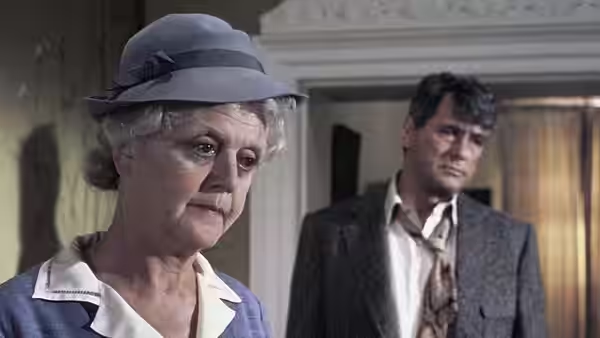
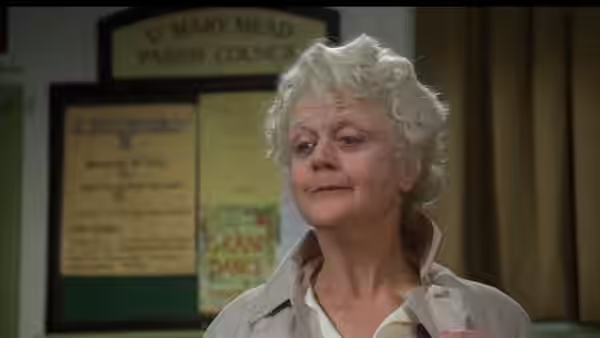
Angela Lansbury plays Miss Marple as brisk and pleased with herself, which is closer to the books than the fluttering version. The opening, in which a black-and-white thriller breaks down in the village hall and she names its killer for the audience, is the best use of her. Then the script sprains her ankle and she spends most of the film at home, sending Edward Fox’s Inspector Craddock up the hill to do the legwork. Fox is dry and good, and Wendy Morgan’s Cherry gets the only lines that sound like a person from 1953. Anyone coming to this after Murder, She Wrote will find Lansbury hard to see as anyone but Jessica Fletcher, which is not the film’s fault.
Christopher Challis shoots the village in soft greens and the Hall in warm brown, and the film looks like a Sunday afternoon, which is what it is for. Michael Stringer dresses Gossington Hall as a house that has just changed hands and not settled. Phyllis Dalton puts Taylor in jewels and wide hats and Novak in satin cut too tight, so the clothes tell you who is winning. John Cameron’s score is light and stays in the village. Richard Marden cuts without hurry, which suits the tea and does nothing for the suspense.
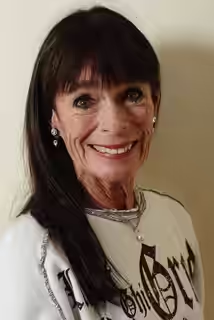
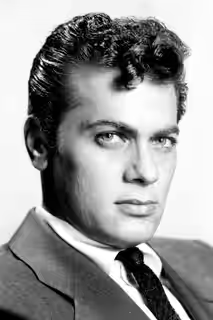
The men have less to do. Hudson, as Marina’s director husband Jason Rudd, is kind and worried, at length. Tony Curtis plays the producer Martin N. Fenn as a loud American with a cigar and gets the laughs he goes for and no others. Geraldine Chaplin, as the secretary Ella Zielinsky, is sour and watchful, the one performance that suggests a life off screen, and the film does not give her enough of it. Charles Gray’s butler, Bates, is there to open doors.
The murder, when it comes, is of Heather Babcock (Maureen Bennett), a local woman who drinks a cocktail plainly meant for someone else. The question of who and why is Christie’s, and it holds. Hamilton stages the investigation as interviews in armchairs, and the detail that unlocks it is shown so squarely that the film seems worried we will miss it. Set against Murder on the Orient Express, where Sidney Lumet kept a dozen stars in a corridor and made you feel the train, this is slack. It runs 105 minutes and feels longer in the middle, when the stars are off screen.
The few reviews so far disagree, and we are in the middle. There is a comfortable afternoon here, a party scene worth the ticket, and a mystery that would not keep a bright twelve-year-old guessing. Watch it on a wet Sunday with someone who remembers who Rock Hudson was. If they do not, the joke will need explaining, and the joke is the best thing in the film.