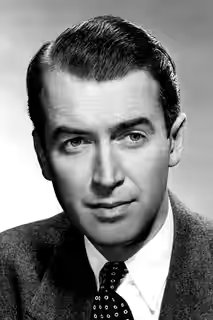
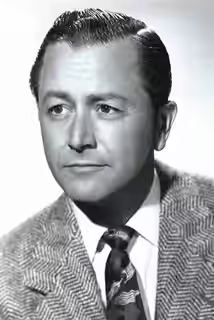
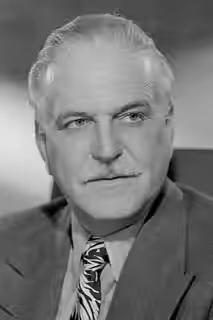
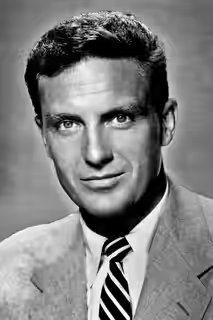
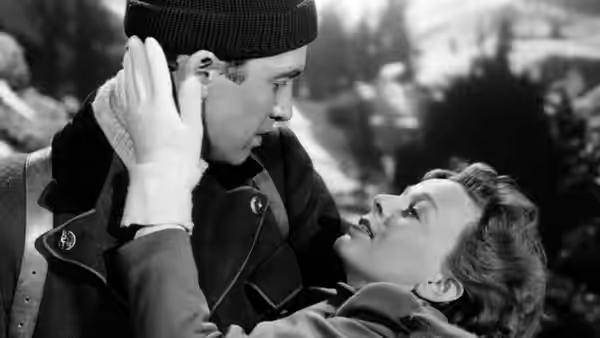
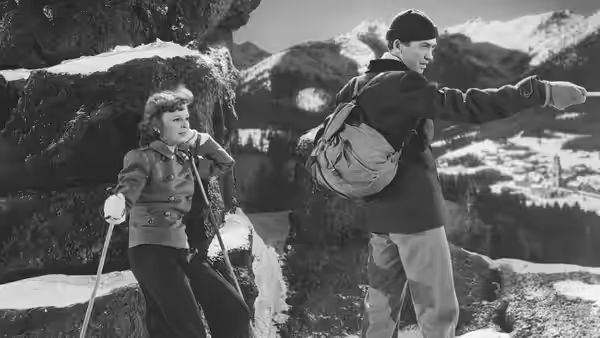
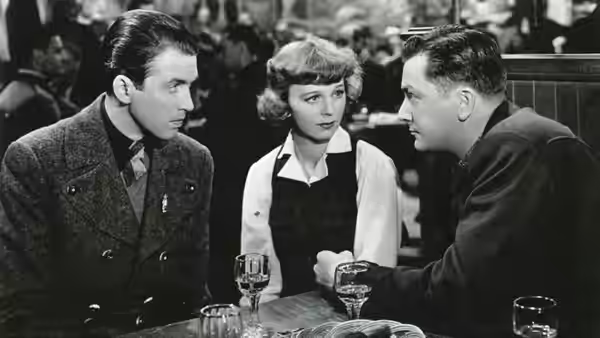
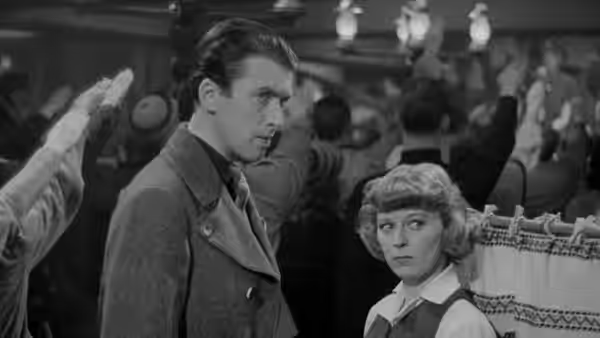
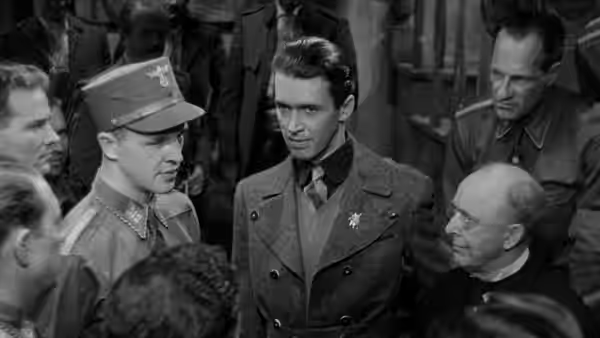
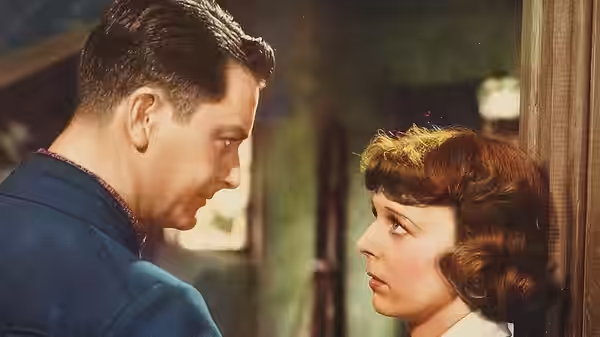
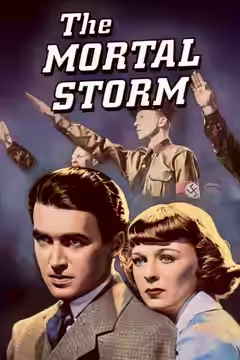
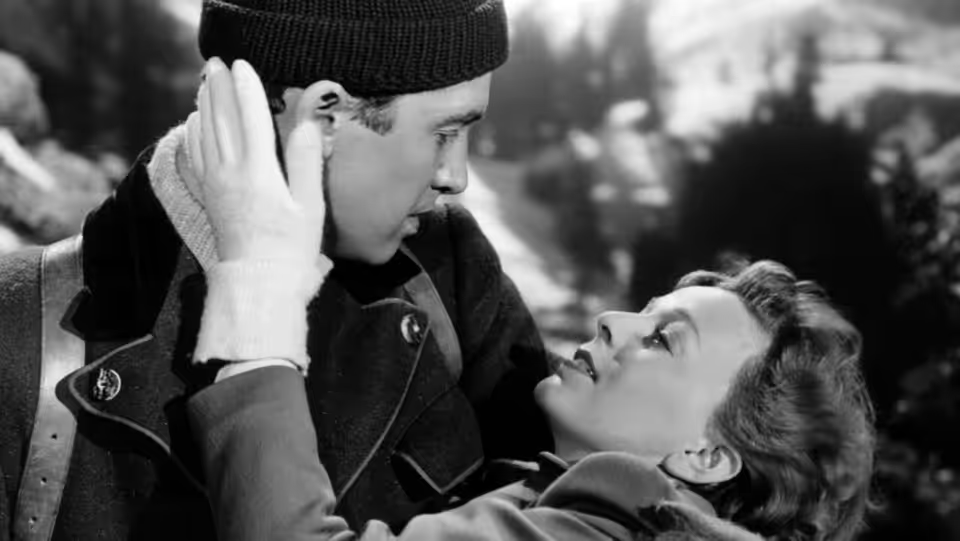
Martin Breitner (James Stewart) leans over Freya Roth (Margaret Sullavan) in the snow
Film review

The Mortal Storm

1940 · Directed by Frank Borzage · 1h 40m

In a sentenceJames Stewart and Margaret Sullavan make a persuasive case for leaving decent people alone

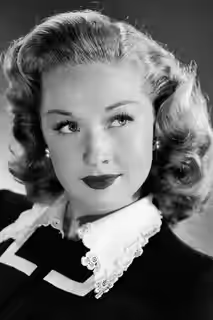
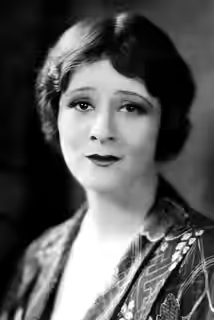
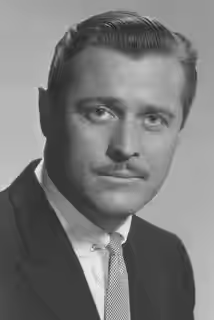
Freya Roth (Margaret Sullavan) and Martin Breitner (James Stewart) are at the centre of a romance threatened by Nazi ideology and the loss of freedom of expression. Fritz Marberg (Robert Young), Professor Victor Roth (Frank Morgan) and Mrs. Roth (Irene Rich) belong to the same circle of lives caught in the political upheaval. As the pressure to conform grows, love and personal loyalties become entangled with the question of what can still be said openly. Private relationships offer no simple escape from the demands of the surrounding society.

Fi1m review

Frank Borzage’s anti-Nazi melodrama is worth seeing for Margaret Sullavan and James Stewart, whose tenderness gives its politics force. The plotting is less persuasive, and the sentimentality sometimes softens what ought to disturb.

Frank Borzage’s The Mortal Storm is a moving anti-Nazi melodrama with a weakness for making its point twice. It puts a love story at the centre of its politics, asking what happens to private attachments when people lose the freedom to speak openly. That is a sound way into a subject that can leave characters stranded behind speeches. We recommend it for the people, especially the lovers, while wishing the screenplay would trust them to carry more of the weight.

Margaret Sullavan, as Freya Roth, gives that approach its strongest justification. Her restraint keeps the solemnity from becoming stiff, while James Stewart gives Martin Breitner a sincerity we can accept without a supporting lecture. We were moved by their tenderness towards one another, because it gives the threatened freedoms a recognisable human cost. Neither performance needs much assistance in making us care, and the film is better whenever it allows us to attend to them without additional prompting.

The screenplay by Hans Rameau, George Froeschel and Claudine West is less persuasive in arranging the pressures around them. Its condemnation of Nazism is clear, but the plotting can feel too carefully organised to produce the required response. Agreement with a film’s politics does not remove the need to believe its situations. The disappearance of freedom of expression is chilling enough on its own; the writing’s insistence occasionally makes us conscious of being instructed. That costs the drama some of the unease its subject should generate.

The photography, credited to Leonard Smith, William H. Daniels and Lloyd Knechtel, gives the mountain scenery an inviting spaciousness. Those landscapes make the loss of freedom feel especially cruel, while the interiors keep the political pressures close to the people affected by them. The visual beauty matters because it gives us a sense of a life that might have been left undisturbed. Yet the attractive surfaces sometimes leave the ugliness of the ideology feeling a little too safely contained.

Elmo Veron’s editing gives the relationships room to register within the film’s 100 minutes. The movement between romance and political drama is largely convincing, even when an individual development feels forced. The music credited to Bronislau Kaper and Eugene Zador is less helpful when it presses an emotion the actors have already made clear. A quieter approach would sometimes have served the performances better. These are not fatal faults, but the accumulated encouragement can make a painful story feel too comfortable to watch.

As political melodrama, Frank Borzage’s film gets the essential connection right: what happens in public changes what people can say to each other in private. The sentimentality limits the film’s harshness, and anyone wanting a searching account of Nazi power will find the treatment softened. Still, the romance earns its place, and the seriousness behind it survives the passages that labour to make sure we recognise it. See it for Margaret Sullavan and James Stewart, with some patience for the instruction surrounding them.
Critical consensus AI synthesised

67
Positive
3
Mixed
2
Negative
1

The reviews lean positive on The Mortal Storm, with praise centred on its emotional force and the connection between its love story and its anti-Nazi theme. Slant Magazine finds Borzage’s romanticism moving, while the Los Angeles Times admires the chilling depiction of freedom of expression disappearing. Performances are another strength: Variety praises the cast alongside the mountain scenery and interiors, and Radio Times singles out Margaret Sullavan and James Stewart.

The spread is wide, however, with disagreement over how effectively the film confronts Nazism. The Los Angeles Times finds it uncompromising despite weaknesses in plotting and casting; Radio Times considers its portrayal softened and its drama prone to sentimentality. Time Out offers the sharpest dissent, finding the treatment of the Nazi peril slightly embarrassing. The available New York Times material establishes its tragic anti-Nazi framing but provides too little evidence to clarify its judgement.

Slant Magazine
14 November 2004 · ★★★★/4 · Jaime N. Christley
100

The critic sees Borzage’s romanticism as a moving contribution to Hollywood’s anti-fascist crusade. The film’s final sequence earns particular praise for weaving nostalgia, hope, and layered images and sounds into a complex conclusion.

Read the full review →
Variety
31 December 1939 · Variety Staff
75*

The review presents the film as effective entertainment and a forceful indictment of Nazi ideology. It praises the performances and the mountain scenery and interiors.

Read the full review →
Los Angeles Times
14 September 1988 · KEVIN THOMAS
70*

Thomas finds the film notably uncompromising and its anti-Nazi theme chilling, despite weaknesses in the plot and casting. He particularly praises how the story links the political theme to its love story and depicts freedom of expression disappearing quickly.

Read the full review →
The New York Times
21 June 1940
65*

The headline presents the film as a deeply tragic anti-Nazi picture. The article text is inaccessible, so its verdict and any specific praise or complaint cannot be determined.

Read the full review →
Radio Times
★★★ · Tony Sloman
60

Sloman finds the drama moving and tragic, despite its softened portrayal of Nazism and tendency toward sentimentality. He especially praises Margaret Sullavan and James Stewart, whose performances he considers exquisite.

Read the full review →
Time Out
· TM
30*

The review is negative about the film’s attempt to address the Nazi peril. It singles out that treatment as slightly embarrassing.

Read the full review →

Straight answers AI written, from our review

Is The Mortal Storm worth watching?
The Mortal Storm is worth watching for Margaret Sullavan and James Stewart’s tender performances, and we score it 76 out of 100. We recommend it to anyone drawn to romantic political drama, with a reservation: the plotting feels forced at times, and the sentimentality softens the disturbing consequences of lost freedoms.
How long is The Mortal Storm, and what is it rated?
The Mortal Storm runs 1h 40m. It is a drama film.
Where can I watch The Mortal Storm in Chile?
The Mortal Storm is not on any streaming or rental service in Chile at the moment. It is available in 1 other country; change your country at the top of the page to see where. Availability is checked daily.
How does The Mortal Storm compare to The White Ribbon?
The Mortal Storm is warmer and more sentimental than The White Ribbon, making romance its way into the pressures of conformity. We favour The White Ribbon for a harsher, more unsettling examination of obedience and cruelty, despite its repetitive severity; The Mortal Storm suits those who want an affecting love story, though its political instruction can feel laboured.
Is The Mortal Storm based on a true story or a book?
The Mortal Storm is adapted from a novel by Phyllis Bottome, rather than presented as a true story. Knowing the book is not necessary to follow its central concern: a romance threatened by Nazi ideology and the loss of freedom to speak openly.
What should I watch after The Mortal Storm?
After The Mortal Storm, try The White Ribbon (2009, Fi1m 86): A colder, harsher examination of obedience, cruelty and their respectable disguises. Then Phoenix (2014, Fi1m 68): Another romance in which Nazism makes trust both necessary and difficult.

Cast

If you liked this, try…

  1. The Shop Around the Corner (1940) · not on Fi1m yetJames Stewart and Margaret Sullavan find warmth amid more manageable misunderstandings.

  2. A Special Day (1977) · not on Fi1m yetPrivate affection offers brief shelter from the public rituals of fascism.

  3. The Cranes Are Flying (1957) · not on Fi1m yetWar presses on a love story told through faces and restless images.

  4. The White Ribbon (2009, Fi1m 86)A colder, harsher examination of obedience, cruelty and their respectable disguises.

  5. Phoenix (2014, Fi1m 68)Another romance in which Nazism makes trust both necessary and difficult.