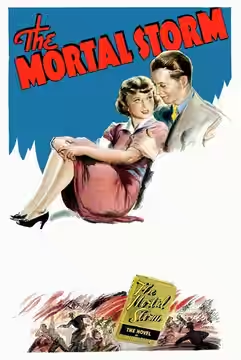
Frank Borzage’s anti-Nazi melodrama is worth seeing for Margaret Sullavan and James Stewart, whose tenderness gives its politics force. The plotting is less persuasive, and the sentimentality sometimes softens what ought to disturb.
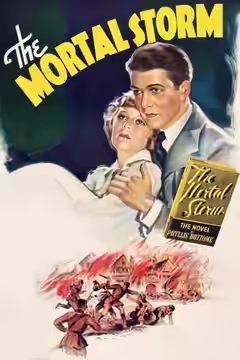
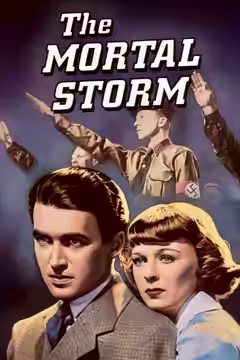
Frank Borzage’s The Mortal Storm is a moving anti-Nazi melodrama with a weakness for making its point twice. It puts a love story at the centre of its politics, asking what happens to private attachments when people lose the freedom to speak openly. That is a sound way into a subject that can leave characters stranded behind speeches. We recommend it for the people, especially the lovers, while wishing the screenplay would trust them to carry more of the weight.
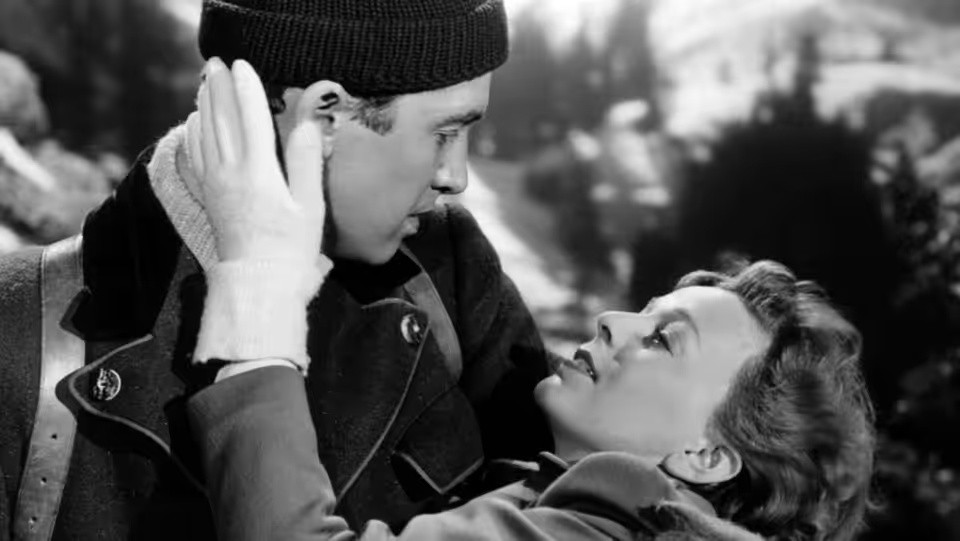
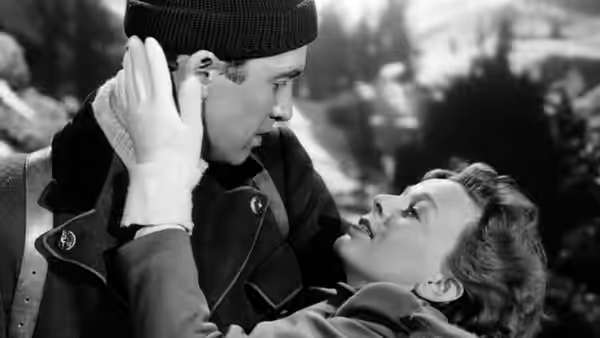
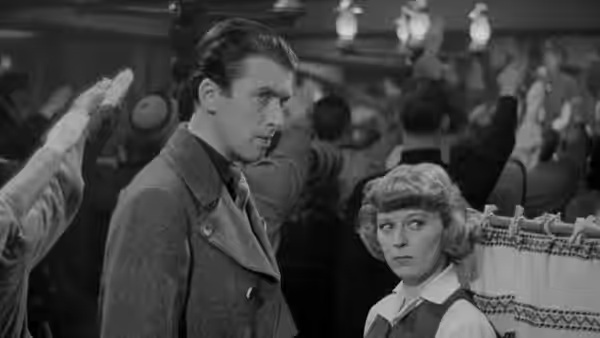
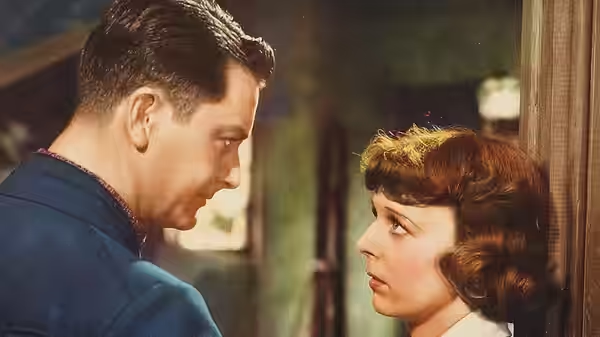
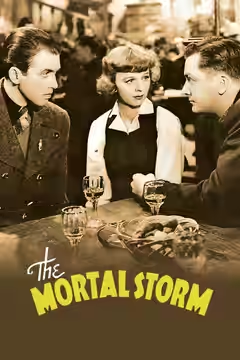
Margaret Sullavan, as Freya Roth, gives that approach its strongest justification. Her restraint keeps the solemnity from becoming stiff, while James Stewart gives Martin Breitner a sincerity we can accept without a supporting lecture. We were moved by their tenderness towards one another, because it gives the threatened freedoms a recognisable human cost. Neither performance needs much assistance in making us care, and the film is better whenever it allows us to attend to them without additional prompting.
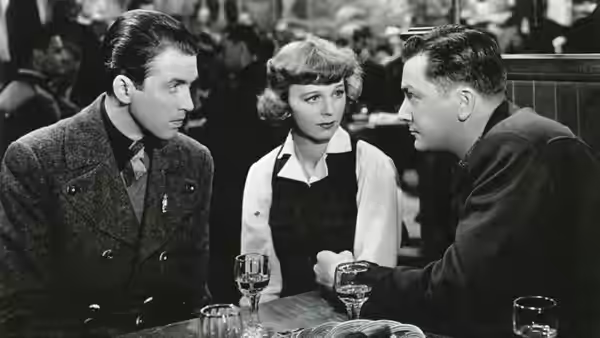
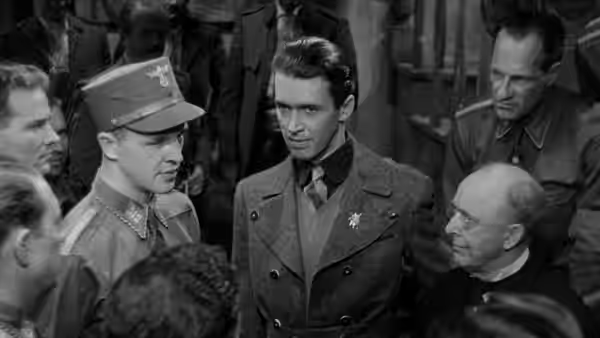
The screenplay by Hans Rameau, George Froeschel and Claudine West is less persuasive in arranging the pressures around them. Its condemnation of Nazism is clear, but the plotting can feel too carefully organised to produce the required response. Agreement with a film’s politics does not remove the need to believe its situations. The disappearance of freedom of expression is chilling enough on its own; the writing’s insistence occasionally makes us conscious of being instructed. That costs the drama some of the unease its subject should generate.
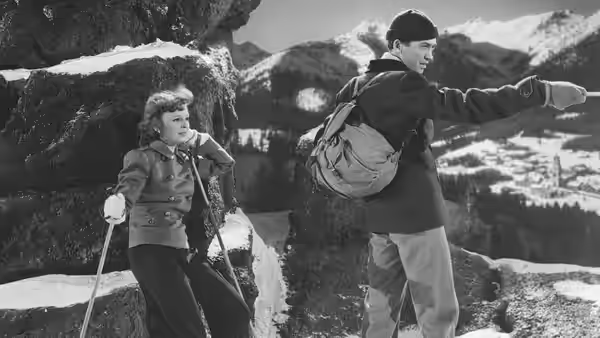
The photography, credited to Leonard Smith, William H. Daniels and Lloyd Knechtel, gives the mountain scenery an inviting spaciousness. Those landscapes make the loss of freedom feel especially cruel, while the interiors keep the political pressures close to the people affected by them. The visual beauty matters because it gives us a sense of a life that might have been left undisturbed. Yet the attractive surfaces sometimes leave the ugliness of the ideology feeling a little too safely contained.
Elmo Veron’s editing gives the relationships room to register within the film’s 100 minutes. The movement between romance and political drama is largely convincing, even when an individual development feels forced. The music credited to Bronislau Kaper and Eugene Zador is less helpful when it presses an emotion the actors have already made clear. A quieter approach would sometimes have served the performances better. These are not fatal faults, but the accumulated encouragement can make a painful story feel too comfortable to watch.
As political melodrama, Frank Borzage’s film gets the essential connection right: what happens in public changes what people can say to each other in private. The sentimentality limits the film’s harshness, and anyone wanting a searching account of Nazi power will find the treatment softened. Still, the romance earns its place, and the seriousness behind it survives the passages that labour to make sure we recognise it. See it for Margaret Sullavan and James Stewart, with some patience for the instruction surrounding them.