Michael Haneke’s drama is punishing, precise and worth the discomfort for Isabelle Huppert’s fiercely controlled performance. Walter is less convincing as a character, but Erika’s vulnerability keeps the film from becoming merely an exercise in cruelty.
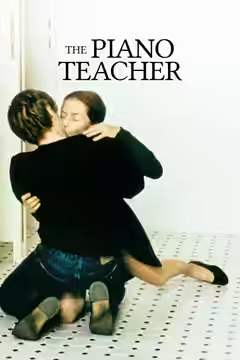
The Piano Teacher is a difficult film to recommend casually, but we recommend it. Michael Haneke’s adaptation of Elfriede Jelinek’s novel takes sexual shame and the need for control seriously enough to deny us an easy explanation for either. That can feel oppressive over 131 minutes, particularly when his insistence on discomfort starts to look like a habit. Isabelle Huppert gives us a reason to stay: Erika Kohut remains someone we want to understand, even when understanding her offers little relief.
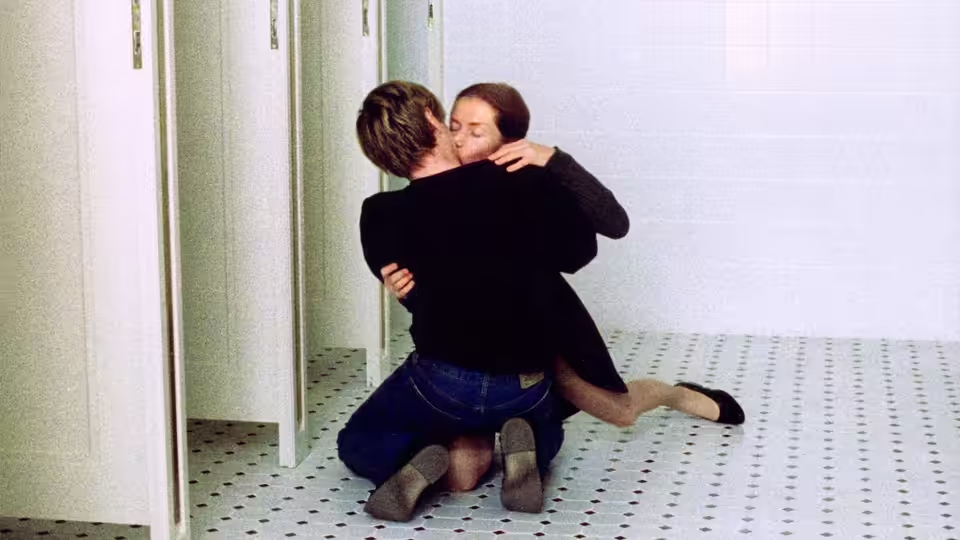
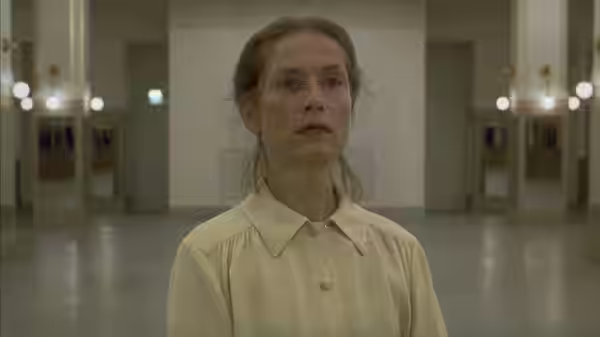
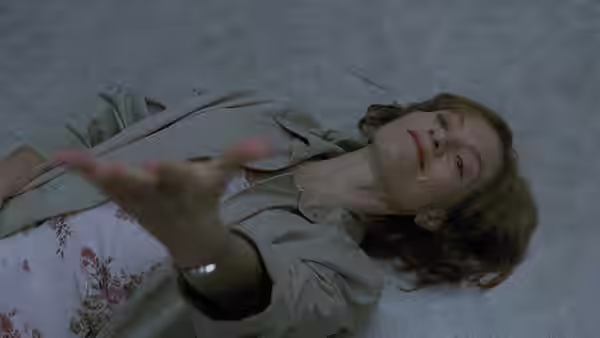
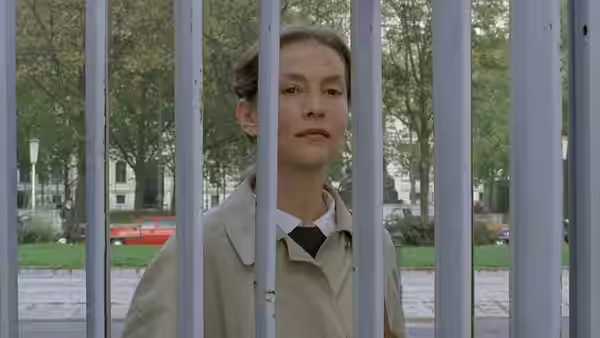
Huppert makes Erika’s self-command physically uncomfortable to watch. Her expression is so guarded that the smallest suggestion of vulnerability demands attention; we cannot settle for reading her as simply cold. We were unsettled by how exposed she seemed while barely changing her face. The performance gives us the awkward experience of noticing someone’s distress when they are trying hard to conceal it. Huppert never asks us to excuse Erika, but she makes it difficult to dismiss her as a collection of disturbing sexual fantasies.
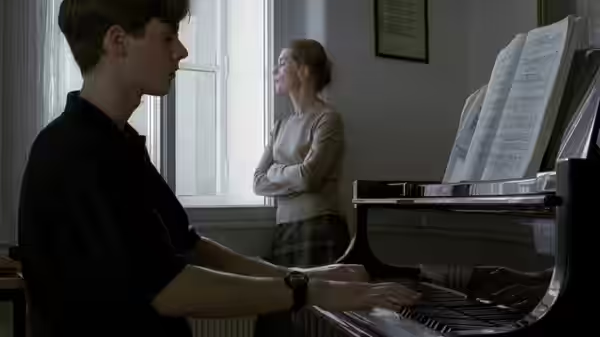
Annie Girardot brings a comparable honesty to Erika’s Mother, and the two performances keep our attention on the people involved rather than the provocation. Benoît Magimel has a less rewarding task as Walter Klemmer. Haneke’s screenplay gives Walter too little independent weight, so that our interest in him depends heavily on Erika. We need a clearer sense of the man for the relationship to be as persuasive as her private distress. Magimel cannot quite supply what the writing withholds.
Christian Berger’s cinematography is restrained enough to let that guarded face hold our attention without making an occasion of every close look. Editors Monika Willi and Nadine Muse favour a similarly unobtrusive approach; the discomfort does not need conspicuous cutting to keep it alive. We value that plainness, especially with material so easily dressed up as something daring. Haneke leaves the performances to do much of the disturbing, and Huppert is more than capable of it.
Christoph Kanter’s production design also works through discretion, keeping our attention on the performers. Francis Haines is credited for music, though it is the discomfort between the actors that makes the stronger impression. The contributions around Huppert are effective largely because they do not compete with her for our attention. That restraint suits a drama which asks us to watch a woman trying to manage desires she cannot comfortably accommodate. It also means there is little distraction when Haneke’s sternness becomes wearing.
A more reassuring psychological drama might give us a neat cause for Erika’s behaviour and let us leave feeling informed. Haneke’s refusal to do that is worth defending, even when the provocations become repetitive. We keep watching because Huppert makes Erika’s pain matter without turning it into a plea for sympathy. That is enough to make this harsh, demanding film worth the effort. Give it your full attention, but do not choose it for comfort.