Spielberg’s account of the Washington Post and the Pentagon Papers is brisk, handsome and acted by people who know exactly what they are doing. It is also so sure of its own virtue that it never once lets us doubt how things will turn out.
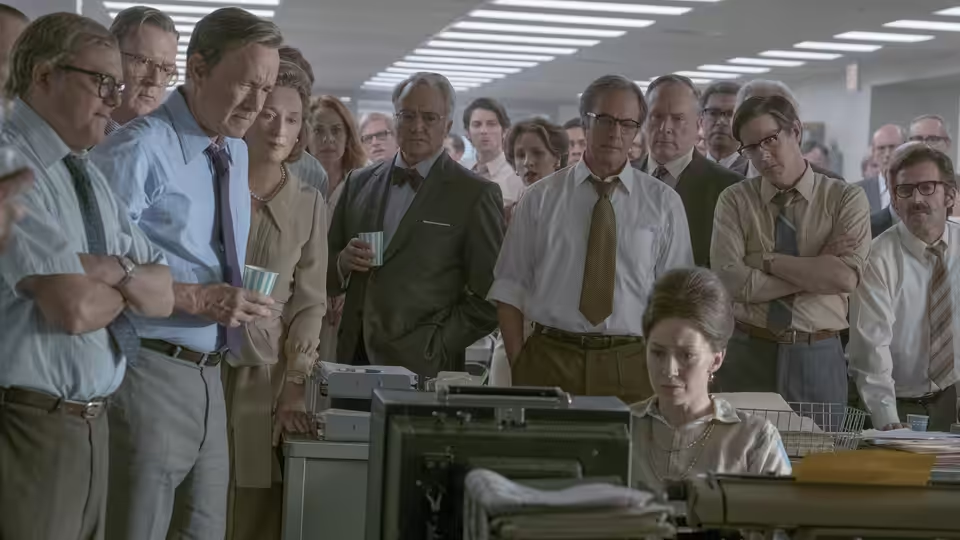
In 1971 the New York Times began printing a secret Pentagon history of the Vietnam War, and the Nixon administration went to court to stop it. Steven Spielberg’s film is about the paper that picked up the story, and the woman who owned it. Kay Graham (Meryl Streep) has run the Washington Post since her husband died and is taking the company public, which means bankers, which means caution. Her editor, Ben Bradlee (Tom Hanks), wants the papers before anyone else. The film runs 116 minutes and is in a hurry for all of them.
It is a good film, made by people who know where the pieces go, and we enjoyed most of it. What it is not is suspenseful, and we think it wants to be. Liz Hannah and Josh Singer’s script has the shape of a thriller, with a source to be found and lawyers on the telephone at midnight, but everyone who matters announces which side they are on within a minute of arriving, and the film never lets us think the right side might lose. Most critics have found that rousing. We found it comfortable.
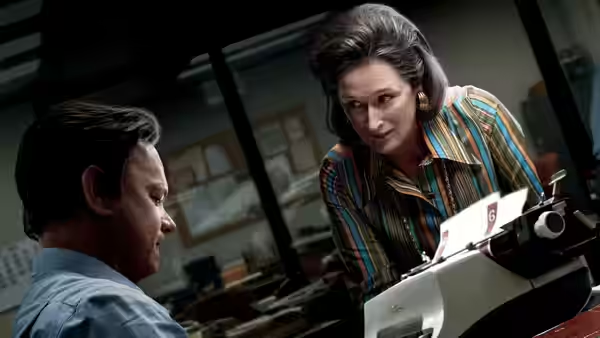
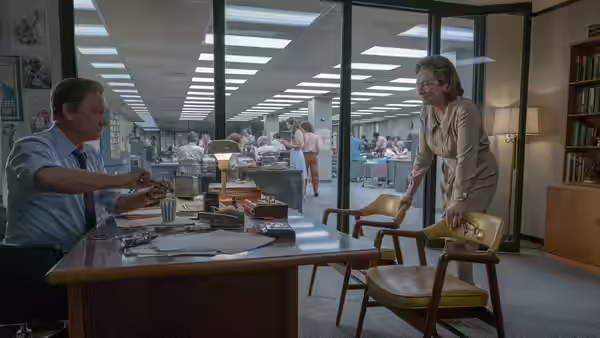
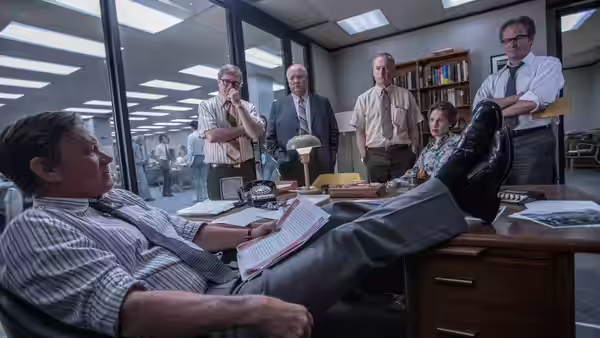
The craft is the reason to go. Janusz Kamiński lights the newsroom with white daylight hard enough to bleach the desks. Rick Carter has built a Post with low ceilings and too many typewriters, and, underneath it, a composing room of lead type. The sequence in which the story is set, plated and run, the presses starting and the editors upstairs feeling the building shake through their shoes, moved us more than anything anybody says in the film. Nobody speaks during it. Michael Kahn and Sarah Broshar cut it to the rhythm of the machines, and John Williams, who elsewhere pushes harder than the scenes need, lets the presses be the score.
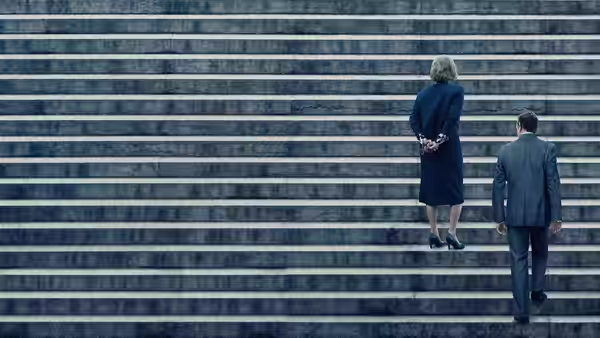
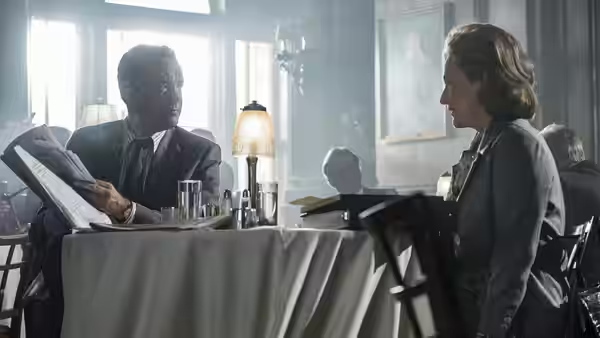
Streep is doing something careful. Ann Roth dresses her in caftans and gold, and for the first hour she apologises with her shoulders: at the board meeting where Arthur Parsons (Bradley Whitford) explains her own company to her, at a dinner where the women get up and leave the men to talk. The scene in which she decides, on a telephone with Fritz Beebe (Tracy Letts) and a lawyer arguing at either elbow, is played small, one word said several times until she believes it. It is the best acting in the film. Hanks plays Bradlee as a growl in a striped shirt.
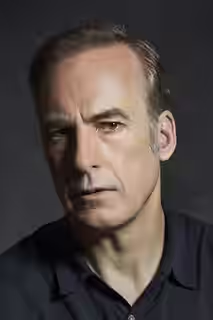
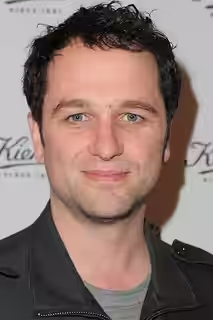
Bob Odenkirk is the surprise. Ben Bagdikian goes looking for the leak from pay phones, and Odenkirk plays him as a rumpled, worried man who is the only person in the film doing any reporting. His scenes with Matthew Rhys’s Daniel Ellsberg, a motel room and a great many boxes, are the closest the film gets to the grubbiness of the job. Bruce Greenwood gets one strong scene as Robert McNamara, telling Kay on a lawn what Nixon will do to her. Carrie Coon, David Cross and Jesse Plemons fill the newsroom.
Spielberg cannot resist saying it twice. Sarah Paulson, as Tony Bradlee, is handed a speech explaining to Ben why what Kay is doing is brave, minutes after we have watched Kay do it. Nixon appears only as a back seen through a White House window with his own tapes on the soundtrack, and each time the film gets cheaper. There is a final scene that exists to point at another, better-known film about the same newspaper. We were nodding along, and then we were irritated with ourselves for nodding.
Against Spielberg’s Lincoln (2012) and Bridge of Spies (2015), this one is thinner, because those had arguments in them and people we liked disagreed. Here everyone we like agrees, and the people who do not are bankers. Against Alan J. Pakula’s All the President’s Men (1976), which it keeps glancing at, it is brighter, faster and much less frightened.
It is a 12A, the sort of film you can put on with a teenager and have a decent conversation afterwards. Watch it for Streep on the telephone and Odenkirk in the phone box. The Post was in real doubt about how this would end; the film never is.