Miklós Jancsó’s war drama builds considerable tension through a camera that keeps moving. Its severity can keep the people at a distance, but the sustained unease makes it worth the effort.
Miklós Jancsó’s The Red and the White is a tense, demanding war film, worth the effort if conventional excitement is not the attraction. There is little stirring spectacle to make its concern with life and death easier to take. The sustained pressure is the reason to watch, though the severity can become tiring. This is concentrated work, running 90 minutes.
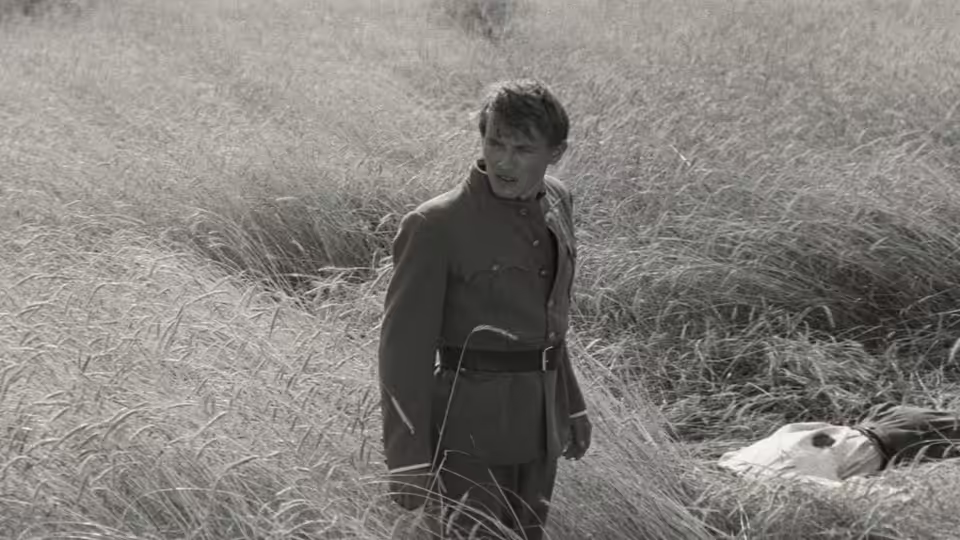
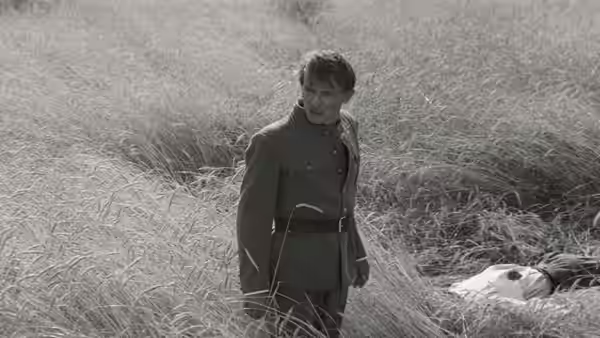
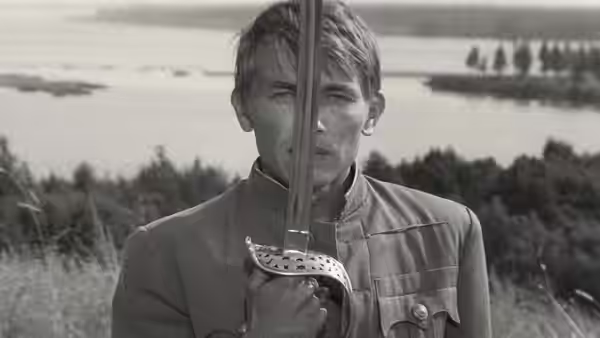
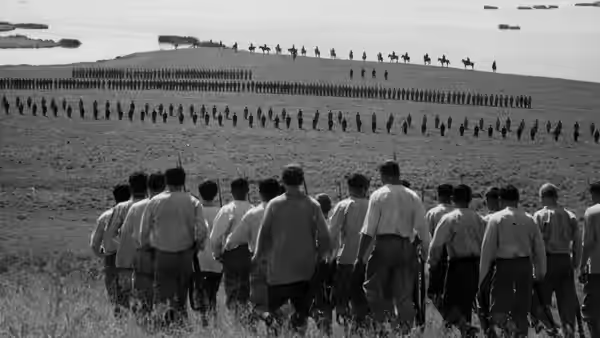
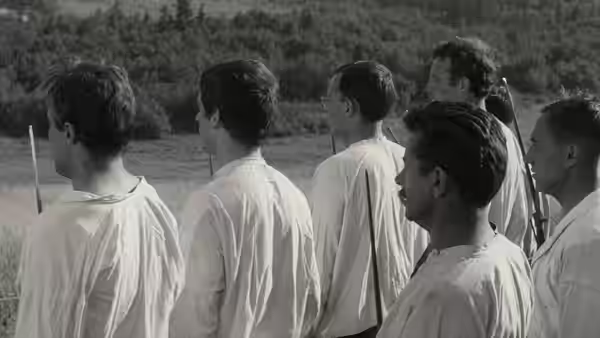
Tamás Somló’s cinematography provides the strongest reason to watch closely. Continuous camera movement shifts the composition within a shot, giving the eye new work without the release of a cut. We felt uneasy watching those sustained movements, because there was no settled view in which to feel comfortable. The tension depends on our continuing to look, and on the image continuing to change. That requires patience, but it also rewards attention to what happens across the frame.
Zoltán Farkas is the editor, and the distinction between editing and movement matters here. Much of what cutting would ordinarily do is accomplished inside the shot, as the camera redirects our attention. The film benefits from that continuity: tension has time to accumulate instead of being repeatedly announced. It also creates a difficulty, since a method this insistent eventually becomes something we anticipate, and our awareness of the technique can interrupt our involvement.
Boris Chebotaryov, Ferenc Kopp and Anatoli Burdo share the production design credit, and this is a film that makes us attend to space. With the camera continually moving, the surroundings have to hold our attention alongside the people. The approach works when it makes us examine the whole frame for something that might matter. At other times we become too conscious of how the image is organised, and start studying the arrangement when we would rather be caught up in the drama.
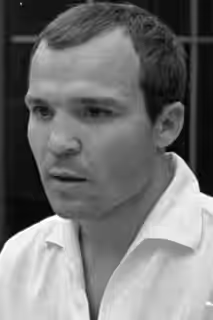
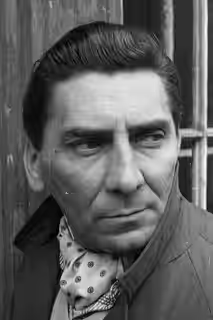
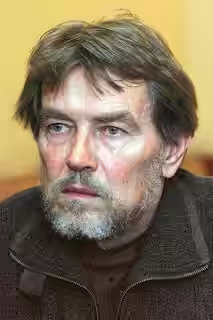
József Madaras plays the Hungarian Commander, Sergey Nikonenko the Cossack Officer and Nikita Mikhalkov the White Officer. Even the character names insist on military position, which is a useful warning against expecting an intimate account of a single soldier. Andras (Tibor Molnár) and Laszlo (András Kozák) have personal names, but our attention is still drawn towards how the film manages tension. That leaves less room for the pleasure of following an individual performance, and it is a limitation worth acknowledging.
In a war drama, refusing to provide much stirring spectacle is a defensible choice. We do not need a rousing passage simply because there are officers in the cast, and the lack of easy release contributes directly to the unease. The difficulty comes when the restraint makes successive stretches feel emotionally similar. The camera’s persistent movement usually prevents that sameness from becoming dull, but the film gives us few chances to feel anything except apprehension.
That is the caveat to a firm recommendation for anyone drawn to severe war films. We think the tension is substantial enough to justify the demands being made, even when the people seem frustratingly remote. Its coldness need not be a fault, though we would understand finding it an obstacle. Choose it on an evening when you can give it your full attention.