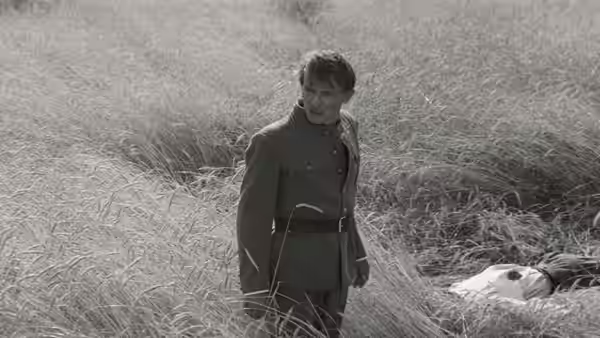
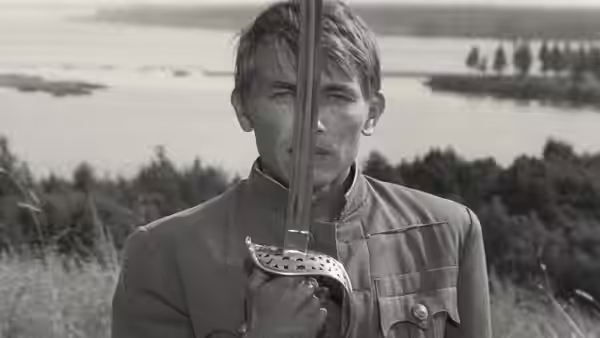
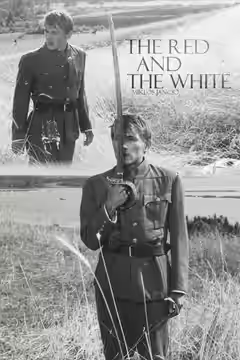
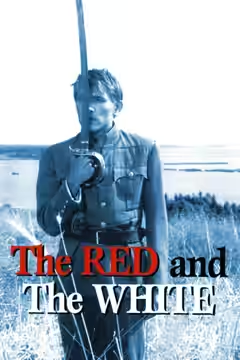
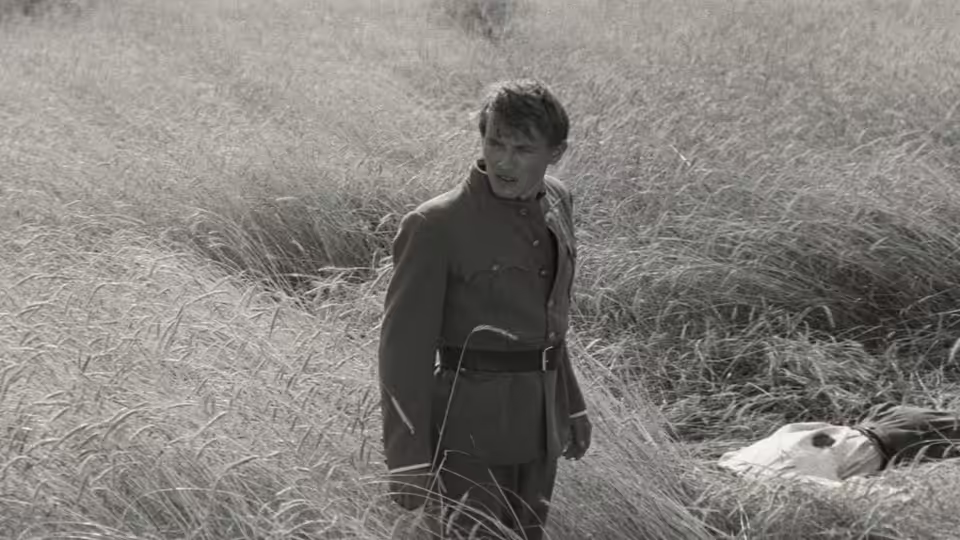
A uniformed soldier stands in tall grass beside a body lying on the ground
Film review

The Red and the White

1967 · Directed by Miklós Jancsó · 1h 30m

In a sentenceNinety minutes of war, and the camera seems determined that nobody should sit comfortably

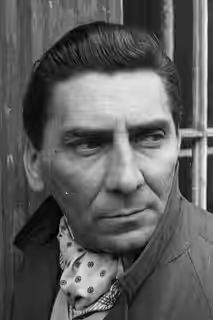
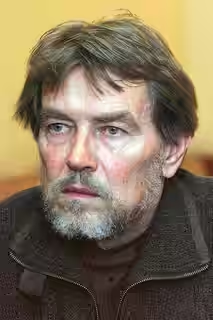
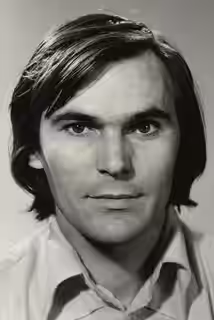
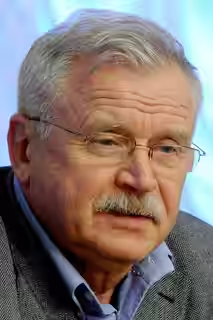
The Red and the White brings together a Hungarian Commander (József Madaras), Andras (Tibor Molnár) and Laszlo (András Kozák). Its military figures also include Captain Chelpanov (Anatoli Yabbarov), a Cossack Officer (Sergey Nikonenko) and a White Officer (Nikita Mikhalkov), while Tatyana Konyukhova plays Yelizaveta the Matron and Krystyna Mikołajewska plays Olga. Miklós Jancsó’s 90-minute war drama concentrates on life and death, using continuous camera movement and changes within the frame to sustain tension. It offers little of the spectacle associated with battlefield adventure.

Fi1m review

Miklós Jancsó’s war drama builds considerable tension through a camera that keeps moving. Its severity can keep the people at a distance, but the sustained unease makes it worth the effort.

Miklós Jancsó’s The Red and the White is a tense, demanding war film, worth the effort if conventional excitement is not the attraction. There is little stirring spectacle to make its concern with life and death easier to take. The sustained pressure is the reason to watch, though the severity can become tiring. This is concentrated work, running 90 minutes.

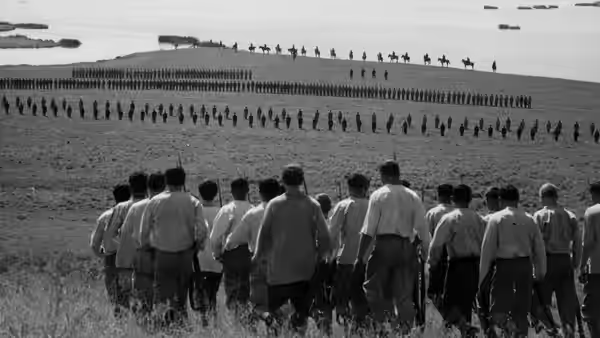
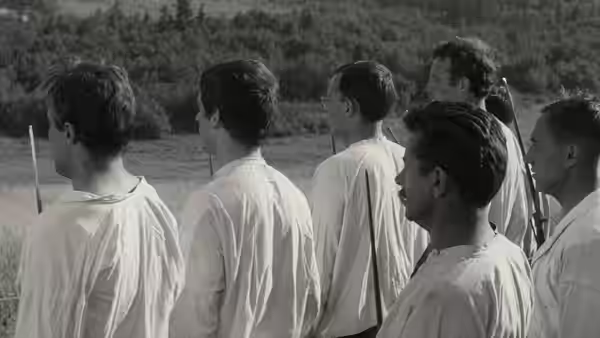
Tamás Somló’s cinematography provides the strongest reason to watch closely. Continuous camera movement shifts the composition within a shot, giving the eye new work without the release of a cut. We felt uneasy watching those sustained movements, because there was no settled view in which to feel comfortable. The tension depends on our continuing to look, and on the image continuing to change. That requires patience, but it also rewards attention to what happens across the frame.

Zoltán Farkas is the editor, and the distinction between editing and movement matters here. Much of what cutting would ordinarily do is accomplished inside the shot, as the camera redirects our attention. The film benefits from that continuity: tension has time to accumulate instead of being repeatedly announced. It also creates a difficulty, since a method this insistent eventually becomes something we anticipate, and our awareness of the technique can interrupt our involvement.

Boris Chebotaryov, Ferenc Kopp and Anatoli Burdo share the production design credit, and this is a film that makes us attend to space. With the camera continually moving, the surroundings have to hold our attention alongside the people. The approach works when it makes us examine the whole frame for something that might matter. At other times we become too conscious of how the image is organised, and start studying the arrangement when we would rather be caught up in the drama.

József Madaras plays the Hungarian Commander, Sergey Nikonenko the Cossack Officer and Nikita Mikhalkov the White Officer. Even the character names insist on military position, which is a useful warning against expecting an intimate account of a single soldier. Andras (Tibor Molnár) and Laszlo (András Kozák) have personal names, but our attention is still drawn towards how the film manages tension. That leaves less room for the pleasure of following an individual performance, and it is a limitation worth acknowledging.

In a war drama, refusing to provide much stirring spectacle is a defensible choice. We do not need a rousing passage simply because there are officers in the cast, and the lack of easy release contributes directly to the unease. The difficulty comes when the restraint makes successive stretches feel emotionally similar. The camera’s persistent movement usually prevents that sameness from becoming dull, but the film gives us few chances to feel anything except apprehension.

That is the caveat to a firm recommendation for anyone drawn to severe war films. We think the tension is substantial enough to justify the demands being made, even when the people seem frustratingly remote. Its coldness need not be a fault, though we would understand finding it an obstacle. Choose it on an evening when you can give it your full attention.
Critical consensus AI synthesised

1 of 6
Positive
1
Mixed
0
Negative
0
Variety
31 December 1966 · Variety Staff
70*

The review presents the film as a stark, tense meditation on life and death, with little interest in stirring spectacle. It particularly praises the camera’s continuous movement and internal cutting for building tension.

Read the full review →

Straight answers AI written, from our review

Is The Red and the White worth watching?
The Red and the White is worth watching if we want sustained tension rather than battlefield excitement, and we score it 78 out of 100. The continuously moving camera makes its 90 minutes deeply uneasy, though the severe approach can leave the people feeling remote. We recommend it for an evening when concentrated attention feels welcome rather than a chore.
How long is The Red and the White, and what is it rated?
The Red and the White runs 1h 30m. It is a war and drama film.
Where can I watch The Red and the White in Italy?
The Red and the White is streaming on Amazon Prime Video in Italy, and it is also available to rent from Amazon Prime Video from €1.90. Availability is checked daily; the links above go straight to each service.
How violent or frightening is The Red and the White, and is it suitable for children?
The Red and the White has no listed UK or US certificate, but we would not recommend it for children given its sustained apprehension and concern with life and death. Its unsettling effect comes from persistent camera movement and the lack of emotional release, rather than stirring battlefield spectacle. We recommend caution for viewers who find prolonged tension difficult.
How does The Red and the White compare to The Ascent?
The Red and the White is the stronger choice for close attention to camera movement, while we favour The Ascent for painfully immediate moral drama. Jancsó sustains unease through shifting compositions, sometimes keeping the people at a distance; Shepitko follows two partisans into an interrogation room and concentrates on conscience. Neither offers a restful evening.
What should I watch after The Red and the White?
After The Red and the White, try The Ascent (1977, Fi1m 88): Another severe war film that makes moral pressure feel painfully immediate. Then The Battle of Algiers (1966, Fi1m 93): For political conflict made tense through space, movement and competing claims; and Beau Travail (1999, Fi1m 86): Military discipline and carefully arranged bodies, with desire disturbing the apparent order.

Cast

If you liked this, try…

  1. The Ascent (1977, Fi1m 88)Another severe war film that makes moral pressure feel painfully immediate.

  2. Fires on the Plain (1959) · not on Fi1m yetA harsher, more bodily account of war, equally resistant to consolation.

  3. The Battle of Algiers (1966, Fi1m 93)For political conflict made tense through space, movement and competing claims.

  4. Beau Travail (1999, Fi1m 86)Military discipline and carefully arranged bodies, with desire disturbing the apparent order.

  5. Son of Saul (2015, Fi1m 87)For a closer, more claustrophobic camera and another demanding encounter with violence.