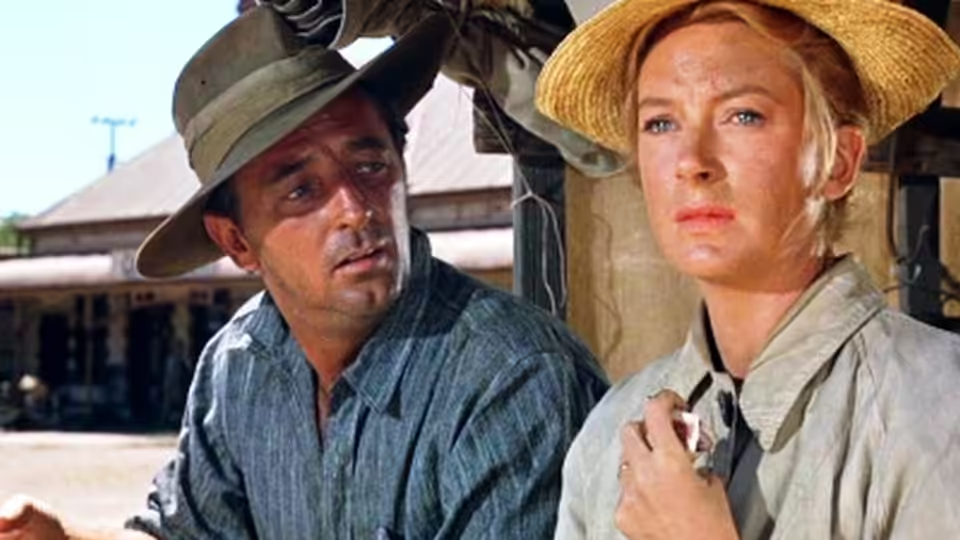
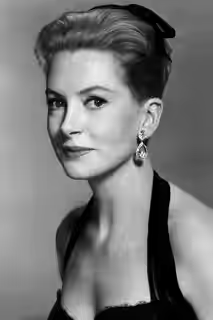
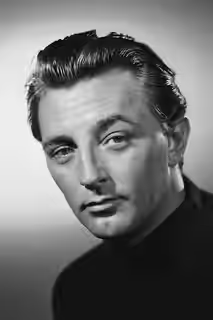
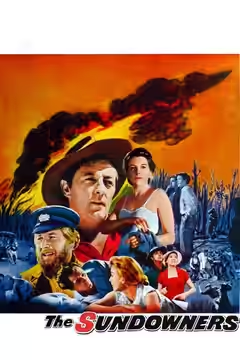
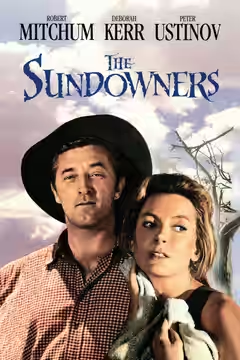
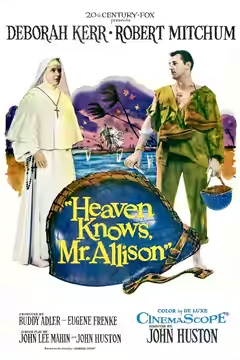
Fred Zinnemann takes Robert Mitchum and Deborah Kerr into the Australian outback and gives them one argument to have for 133 minutes: keep moving or settle down. It is warm, well acted and too long, and the acting wins.
Fred Zinnemann took a crew to Australia and made a film in which not much happens except a marriage. Paddy Carmody wants to keep moving. His wife Ida wants to stop. Isobel Lennart’s screenplay, from Jon Cleary’s novel, gives 133 minutes to that one disagreement and does not settle it cheaply. It is a good film, easy to like and slightly too long, worth your evening if you can sit with people who talk over a campfire rather than shoot across one.
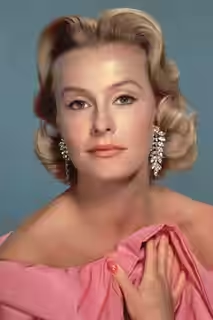
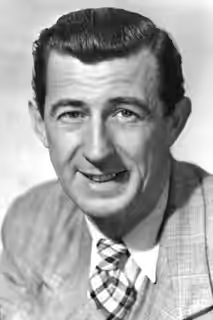
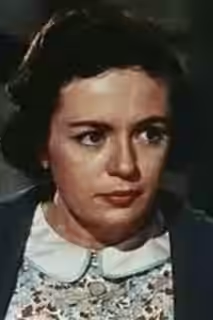
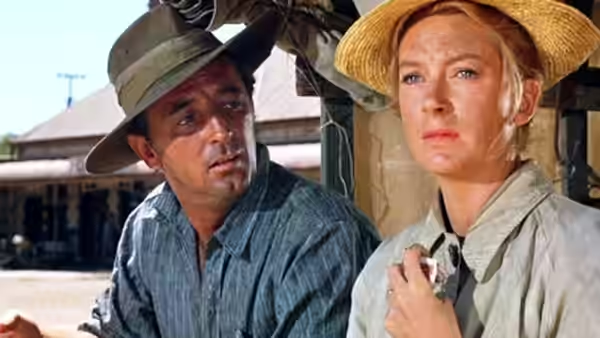
Mitchum plays Paddy with a looseness that looks like ease with a whole continent. He drinks, he bets, he sings, and he says no to the farm by asking what is for tea. He and Kerr have the shorthand of a couple twenty years married: she knows the subject has been changed and files it. A train passes the wagon and Ida looks up at a woman in a compartment window, powdered and hatted, who looks back. Kerr puts a hand to her own hair and does nothing else. We had not expected to be moved by this film, and we were, and it was that hand.
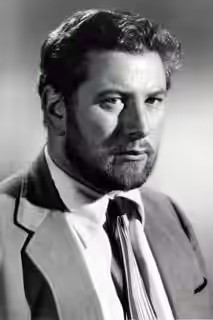
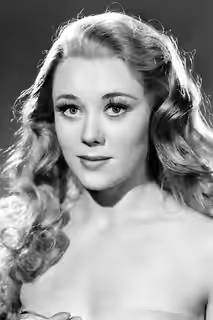
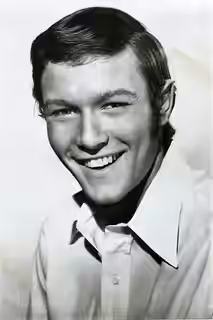
Peter Ustinov’s Rupert Venneker is the comic engine, an Englishman who was once a ship’s officer and has decided not to be anything since. He signs on as a drover, rides badly, and talks about the sea. Ustinov lets Venneker be fond of the Carmodys and a little frightened of what fondness might commit him to. Glynis Johns, as the hotel-keeper Mrs Firth, arrives once the drive is done and sets about him with the directness of a woman who has run a bar for years. Their scenes are the funniest in the film, and they are about the same thing: whether a man built around leaving can be talked into staying.
Jack Hildyard shot it on location, and it is dust-coloured for long stretches, red earth and grey-green scrub under a sky with too much room in it. He keeps the camera low so the sheep fill the bottom of the frame like slow water. The bushfire is the one sequence built for a big screen: smoke first, then a line of flame along the ridge, then men and dogs working the mob through it. We held our breath, faintly annoyed with ourselves, because the film had spent an hour saying it was not that kind of film. Dimitri Tiomkin’s score is brass and bounding strings, and it is too much; it hums the main theme under conversations that wanted silence. Elizabeth Haffenden gives Ida faded cottons and one good dress, and the dress says more about what she has given up than the dialogue does.
The length is the fault. Jack Harris cuts at the film’s own walking pace, which suits the drive and lets the shearing shed run on well past the point where we understood how the men were paid. The second half takes a turn we will not describe, except to say the film takes its time getting there and then hurries the consequence. Twenty minutes could go and it would be the same film.
Against Zinnemann’s own record it is baggy. High Noon has not a wasted minute. From Here to Eternity kept a dozen people in the air and dropped none. What he buys with the time here is faces: Mitchum listening, Kerr deciding not to say something, Ustinov working out whether he has just been insulted.
See it at home on an evening with nothing after it, and set the volume so that Tiomkin is a rumour rather than a companion. Then argue about the farm. By the end we were not sure whose side we were on, which Paddy would count as a win.