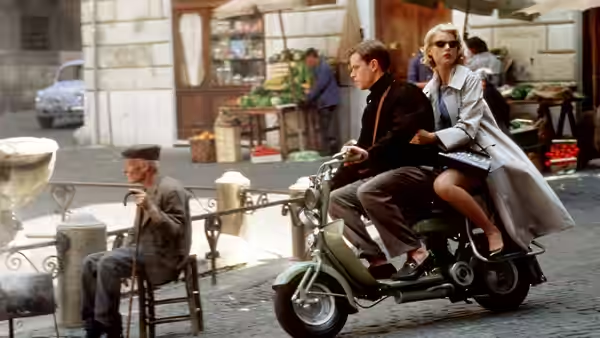
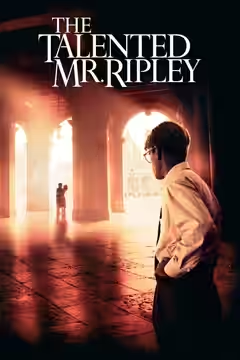
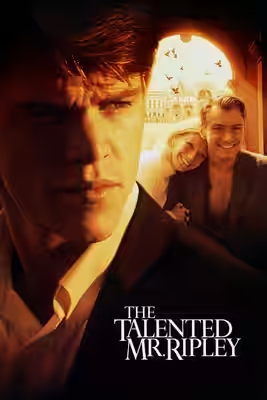
Tom Ripley (Matt Damon) watches a couple embrace in a sunlit hall
Film review

The Talented Mr. Ripley

1999 · Directed by Anthony Minghella · 2h 20m · KMRB 19

In a sentenceAn Italian holiday where the most alarming sight is Matt Damon trying to fit in

In late-1950s Italy, Tom Ripley (Matt Damon) longs for the life that Dickie Greenleaf (Jude Law) takes for granted. Money, class and desire complicate his efforts to belong, while his fascination with another man’s identity becomes increasingly dangerous. Gwyneth Paltrow plays Marge Sherwood, with Cate Blanchett as Meredith Logue and Philip Seymour Hoffman as Freddie Miles in the expatriate circle around them. Anthony Minghella adapts Patricia Highsmith’s novel into a crime drama about an outsider trying to become someone else, and the people caught up in his ambitions.

Plays from YouTube when you press play; nothing loads from them until then.

Fi1m review

Anthony Minghella makes class envy painfully intimate, with Matt Damon giving Tom Ripley a neediness that is hard to watch. The plotting becomes over-elaborate, but this is a persuasive, unsettling thriller with an unusually good ensemble.

Anthony Minghella’s The Talented Mr. Ripley understands how humiliating it can be to want the approval of someone who scarcely needs to think about us. His adaptation of Patricia Highsmith’s novel is an absorbing thriller, driven by the unequal relationship between Matt Damon’s Tom Ripley and Jude Law’s Dickie Greenleaf. Money makes one of them comfortable and the other watchful. Minghella stays close enough to that discomfort to make the elaborate plotting matter, although he eventually asks it to bear too much weight.

Damon’s nervousness is the useful choice here, even when it risks making Tom seem too inexperienced for the story around him. His performance lets us see the effort involved in being agreeable, and the fear of getting it wrong. We felt painfully embarrassed for him beside Law’s Dickie, whose ease makes Tom’s eagerness look more exposed. That reaction matters: Minghella gives us enough of Tom’s longing to recognise it before asking how much of his behaviour we are prepared to excuse.

Law gives Dickie the careless confidence of someone accustomed to being wanted. He makes the attraction comprehensible without making Dickie particularly admirable, a distinction on which much of the film depends. Minghella also makes Tom’s sexual longing legible, so that his envy cannot be reduced to wanting better clothes. Philip Seymour Hoffman’s Freddie Miles is unpleasant company, and his confidence makes Tom’s uncertainty more obvious. The ensemble is strong enough to suggest lives that do not begin when Tom notices them.

John Seale’s cinematography makes the Italian surroundings inviting enough for Tom’s fixation to seem understandable. Minghella gives us time to look at the places these people take for granted, and that patience is largely rewarded. Roy Walker’s production design makes their wealth seem settled and ordinary to them, which helps explain why Tom’s wanting feels so conspicuous. There are moments when the sheer polish softens the unpleasantness, but the scenery never seems irrelevant to what Tom wants.

Walter Murch’s editing is especially effective in the opening credits, which establish Tom’s sense of opportunity without a cumbersome explanation. There is an economy there that the rest of the film could use more often. Gabriel Yared’s score keeps us attentive to Tom’s distress, a useful contribution when the intrigue threatens to make him merely busy. The tension survives some slack pacing because we still want to know what this man can persuade himself to do.

The weakness belongs chiefly to Minghella’s screenplay, which keeps complicating a situation whose emotional terms are already clear. At 140 minutes, the film has room to let us study these people, but the later plotting begins to feel overworked. We start considering how the story is being managed when we should be worrying about the people in it. The performances sustain that worry better than the accumulating intrigue.

The film is less clinical than a psychological thriller about an impostor might be, and that warmth will trouble some viewers. For us, Tom’s neediness makes the attraction of his company more disturbing. Damon’s performance keeps that discomfort alive even when the writing labours. Give it an evening when there is time afterwards to argue about how much sympathy Tom deserves.


Critical consensus AI synthesised

74
Positive
12
Mixed
4
Negative
0

Most critics like it, and the praise clusters in the same places: the Italian settings, the look of the thing, and the cast. Matt Damon’s Ripley is singled out again and again, with Jude Law and Philip Seymour Hoffman close behind. Minghella’s decision to make Tom lonely and pitiable rather than coldly professional is, for the majority, the film’s distinction; the later reviews in particular treat that sympathy as what sets it apart from other versions of Highsmith.

That same sympathy is where the reservations gather. The Los Angeles Times calls it a lack of nerve, and Empire finds the film over-plotted and without a sympathetic core; The New Yorker thinks Damon plays a nervous beginner rather than a sociopath. Pacing complaints recur, either a sagging middle or a lost stride near the end. The spread is fairly wide, from wholehearted to lukewarm, but nobody dislikes it.

The Times
22 April 2022 · ★★★★★ · Ed Potton
100

The critic highlights the film's visual ravishment and moral intrigue as an adaptation of Highsmith, praising the cast's beauty (especially Jude Law) and the Italian locations while noting its corruption and menace.

Read the full review →
The Guardian
27 February 2000 · Philip French
90*

The critic calls the film a seductive triumph and an intelligent, beautifully crafted movie. He praises its immaculate performances, gripping thriller elements in the second half, and the way it evokes the expatriate world of 1950s Italy while exploring class envy and identity.

Read the full review →
Time Out
7 June 2016 · GA
90*

Minghella's imaginative but mostly faithful adaptation is a class act in every sense, elegantly polished with top-notch performances, magnificent camerawork and editing. It is acutely aware of how class, money and sex shape desire and resentment.

Read the full review →
RogerEbert.com
24 December 1999 · Roger Ebert
85*

The critic praises the film as an intelligent thriller that leads viewers to identify with the charming but amoral protagonist. Minghella's adaptation stands out for its strong performances, particularly Matt Damon's, and its exploration of identity and deception.

Read the full review →
Evening Standard
10 April 2012 · Tim Lusher
80*

The critic praises Minghella's integration of jazz into the film's style and story, making it sexy and stylish with an impeccable soundtrack. They highlight the director's achievement in elevating the photogenic cast and material beyond typical jazz film clichés.

Read the full review →
The AV Club
6 February 2013 · Scott Tobias
80*

The piece highlights Matt Damon's signature role as the chameleon-like Tom Ripley in this emotionally driven adaptation. Minghella trades cool detachment for passion and sympathy toward the sociopath, creating a tragic figure amid luxurious Italian settings and strong supporting turns.

Read the full review →

Straight answers AI written, from our review

Is The Talented Mr. Ripley worth watching?
The Talented Mr. Ripley is worth watching for anyone who likes a slow, character-led thriller, and we scored it 80. Matt Damon's needy, watchful Tom Ripley and Jude Law's careless Dickie Greenleaf make the class envy painfully intimate. The plotting grows over-elaborate in the later stretches, so it suits viewers who prefer discomfort to pace.
How long is The Talented Mr. Ripley, and what is it rated?
The Talented Mr. Ripley runs 2h 20m and is rated 19 by the KMRB in South Korea. It is a thriller and crime film.
Where can I watch The Talented Mr. Ripley in South Korea?
The Talented Mr. Ripley is not on any streaming or rental service in South Korea at the moment. It is available in 30 other countries; change your country at the top of the page to see where. Availability is checked daily.
How violent or frightening is The Talented Mr. Ripley, and is it suitable for children?
The Talented Mr. Ripley is a 15 in the UK and an R in the US, and it is not for children. The film is more unsettling than gory, built on tension, sexual longing and the question of how much of Tom's behaviour we are prepared to excuse. Older teenagers who can sit with 140 minutes of slow dread should manage it.
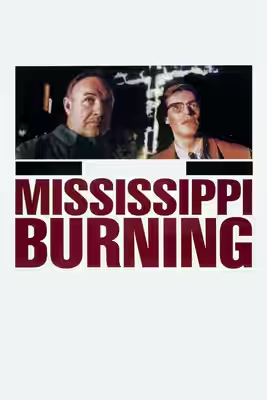
How does The Talented Mr. Ripley compare to Mississippi Burning?
The Talented Mr. Ripley and Mississippi Burning are both tense thrillers with strong lead performances, but they are very different in kind. Minghella's film is an intimate study of one outsider's envy and desire in 1950s Italy; Parker's is a procedural about racist violence and an FBI investigation. Ripley is the more coherent and the more disturbing of the two, while Mississippi Burning has the stronger surface tension but a narrower view of its own subject.
Is The Talented Mr. Ripley based on a true story or a book?
The Talented Mr. Ripley is based on Patricia Highsmith's novel of the same name, not on a true story. Anthony Minghella adapts it as a crime drama about an outsider trying to become someone else, and knowing the book is not necessary to follow or enjoy the film. Tom Ripley, Dickie Greenleaf and the expatriate circle around them are Highsmith's inventions.
What should I watch after The Talented Mr. Ripley?
After The Talented Mr. Ripley, try Purple Noon (1960, Fi1m 82): Another encounter with Ripley, colder in manner and just as absorbed by money. Then The Servant (1963, Fi1m 89): For the uneasy pleasure of watching class confidence begin to fail; and Burning (2018, Fi1m 72): Desire and class resentment make another young man’s fascination difficult to shake.

Cast

Awards

Academy Awards, 2000

Nominated
Best Costume Design
Nominated
Best Original Score
Nominated
Best Production Design
Nominated
Best Supporting Actor
Nominated
Best Writing, Adapted Screenplay

If you liked this, try…

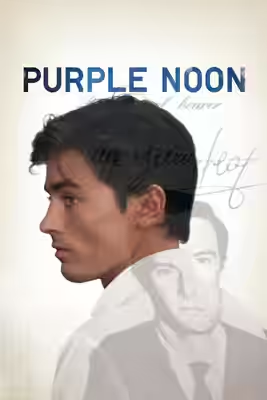
  1. Purple Noon (1960, Fi1m 82)Another encounter with Ripley, colder in manner and just as absorbed by money.

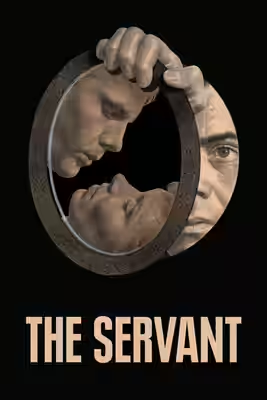
  2. The Servant (1963, Fi1m 89)For the uneasy pleasure of watching class confidence begin to fail.

  3. La Cérémonie (1995) · not reviewed yetDomestic routines grow troubling as resentment gathers inside a comfortable household.

  4. Burning (2018, Fi1m 72)Desire and class resentment make another young man’s fascination difficult to shake.

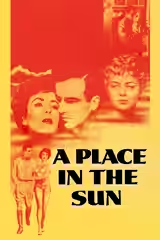
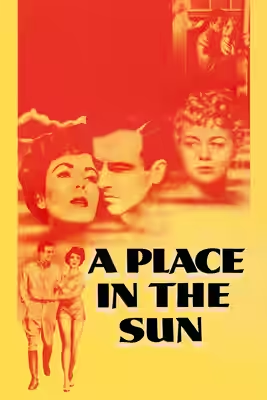
  5. A Place in the Sun (1951, Fi1m 81)Another ambitious outsider discovers how much he wants a wealthy person’s life.

Free account

Know what to watch tonight

Two lists that know where things are streaming, collections you can share, your own score beside ours, and Discover that remembers what you have seen.

  • Want to see, sorted by what is streaming now
  • Seen, with your score out of ten
  • No adverts, ever