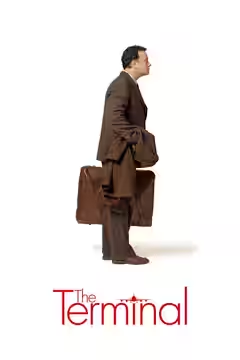
Steven Spielberg builds a whole airport and puts Tom Hanks in it, and for an hour the film is light on its feet and more touching than we expected. Then it reaches for a romance it cannot land and a sweetness it cannot stop.
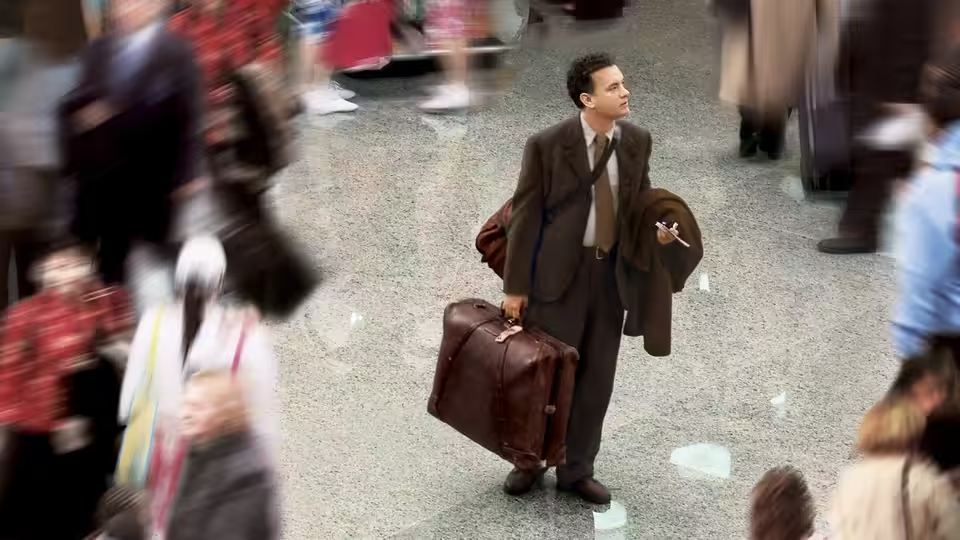
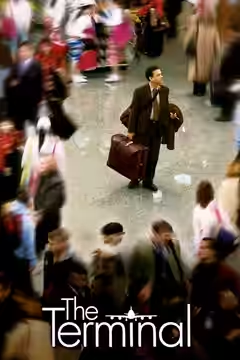
Steven Spielberg has built an airport and locked Tom Hanks inside it. Viktor Navorski lands at JFK from Krakozhia, a country that stops existing while he is over the Atlantic, and Frank Dixon, who runs the terminal, leaves him in the international lounge until he goes away. He does not go away. The Terminal is a small, warm comedy about a man who makes a home in a place designed for passing through, and for its first hour it is better than we had any right to expect. The second hour spends much of that goodwill.
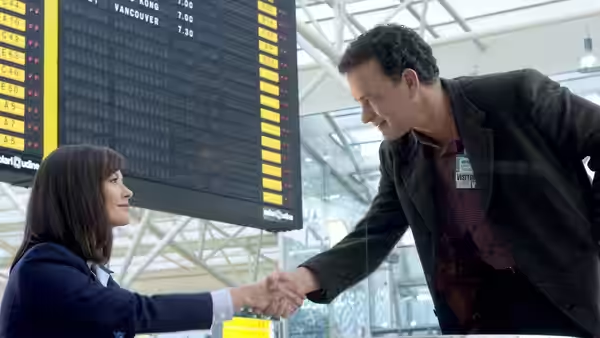
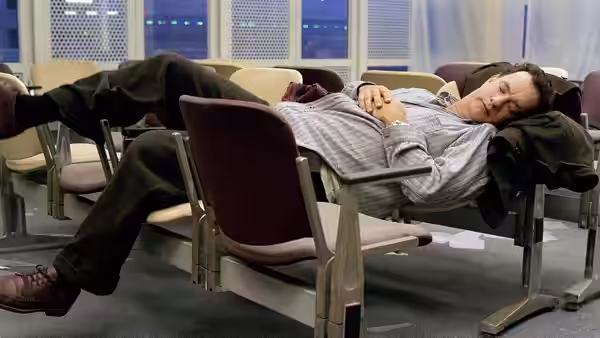
The building is the star, and Alex McDowell has built it whole: escalators, departure boards, a food court, shops with real names on the front. Janusz Kamiński lights it as if the whole place had a skylight, pale and even, with Viktor small in the wide frame and always visible. Hanks plays him with a shuffle, a beard, a heavy coat he will not take off and an accent that is thick, cheerful and never mocked. He works out that returned trolleys pay a quarter each, sleeps behind the builders’ plastic at Gate 67, and learns English from a guidebook in two languages.
The scene that got at us comes early. Viktor stands at a shop window watching the news from Krakozhia on a bank of televisions, tanks and a burning flag and a reporter he cannot understand, with the sound off. Everyone else in the frame walks past. Hanks does almost nothing with his face and it is the best acting in the film; our throats tightened, and we were slightly annoyed with ourselves, because we knew which lever had been pulled. John Williams pulls it too, with a clarinet theme for Viktor that is warm and a little too keen to help.
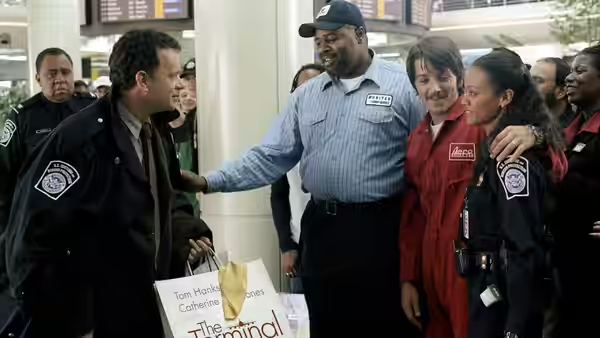
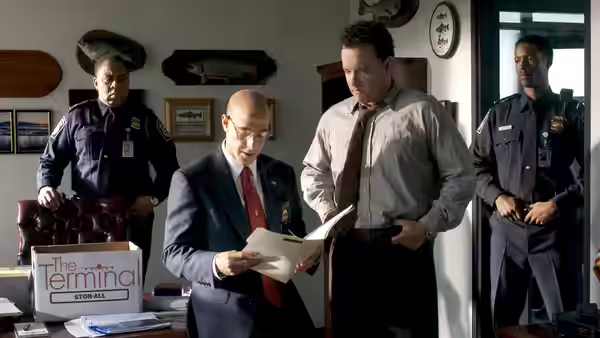
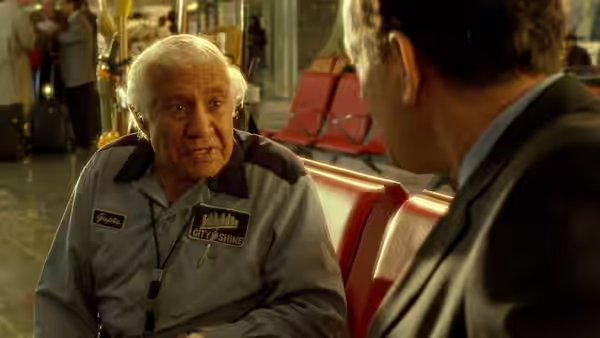
Stanley Tucci is the other reason to watch. Dixon is up for promotion and wants a problem filed, and Tucci plays him tight and tidy, growing pettier as the problem declines to be filed. The script by Sacha Gervasi and Jeff Nathanson, from a story by Andrew Niccol and Gervasi, gives him one good speech about a man who is nobody’s responsibility and then makes him small and spiteful so the ending has someone to beat. Chi McBride’s Mulroy, Diego Luna’s Enrique and Kumar Pallana’s Gupta make a decent terminal family. Enrique’s courtship of the immigration officer Torres (Zoe Saldaña), conducted through Viktor as go-between, has more romance in it than the romance.
Catherine Zeta-Jones has been handed a flight attendant who reads history between flights and carries a pager for a married man. Amelia exists so that Viktor can be kind to her, and every scene between them slows the film to a walk, with Williams laying strings under dialogue that cannot carry them. We felt it go cold and found ourselves reading the departure boards over her shoulder. Christine Wada and Mary Zophres keep Viktor in the same brown coat for months, so that the day he changes it lands harder than the script around it.
Michael Kahn cuts the first hour as a run of small problems solved, a sandwich, a bed, a bath in the gents, and the rhythm is close to silent comedy. The second hour has four subplots to settle and he settles them one after another, each with its own swell, so the film seems to end several times.
Spielberg had made Catch Me If You Can (2002) two years earlier, another Hanks film about a man living by his wits, and that one kept its nerve to the end. Here he has built an airport and cannot bear for it to be unkind for long. The harder story, a man with no country and no rights inside a building made of rules, is visible in every frame, and the film keeps looking away from it.
See it for Hanks, Tucci and the building. Watch it at home, where the last twenty minutes can be taken as a well-meant hug rather than a demand. It carries a 12A and there is nothing in it a child could not watch, which is also the problem.