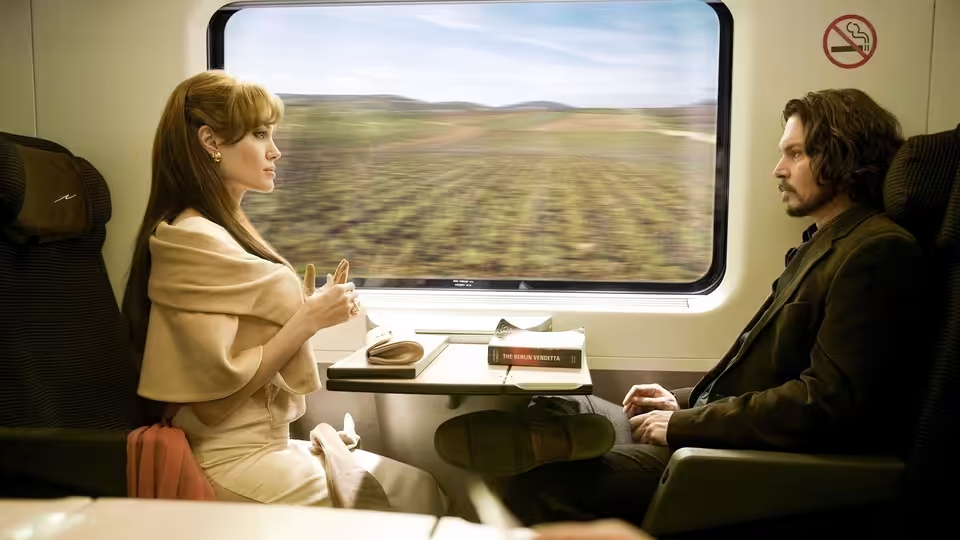
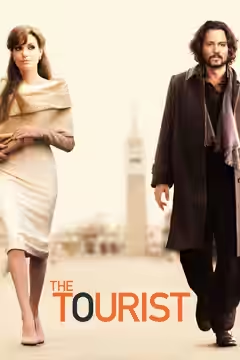
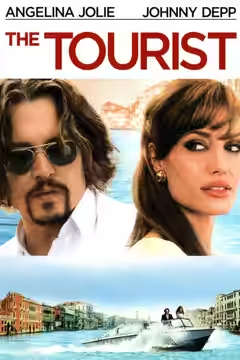
Florian Henckel von Donnersmarck’s caper puts Johnny Depp and Angelina Jolie in Venice and cannot think of anything for them to do there. It is handsomely lit, decently supported and dull, and its two stars never once seem to be in the same film.
Florian Henckel von Donnersmarck’s follow-up to The Lives of Others (2006) is a caper in the old manner, and what it wants is plain from the first ten minutes: a glamorous woman, a bewildered man, a European city and a spy plot that is really an excuse for the three of them. Frank Tupelo (Johnny Depp) is the tourist. Elise Clifton-Ward (Angelina Jolie) is the woman he meets. Inspector John Acheson (Paul Bettany) is the policeman, and Reginald Shaw (Steven Berkoff) is the other sort of trouble. The pieces are all there. The film then spends 103 minutes not connecting them, and it is dull in a way that expensive films seldom manage.
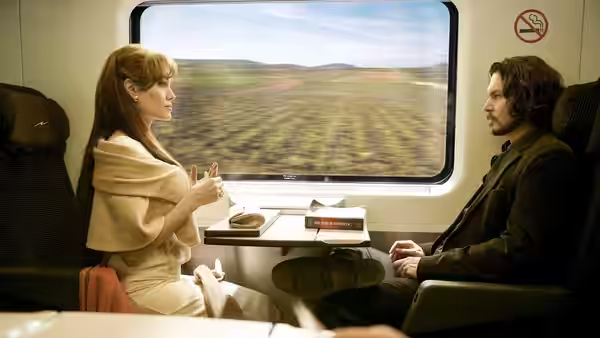
The complaint most critics have made is about the leads, and they are right. Depp plays Frank as a soft, rumpled man who speaks slowly and seems faintly sedated. Jolie plays Elise as a woman who has been told to glide and has decided to do nothing else. Neither performance changes between the first scene and the last. Their early scenes together, which is where a film like this ought to catch, are two people reading lines at each other while John Seale’s camera admires each of them in turn. We kept waiting for one of them to be surprised by the other. It does not happen.
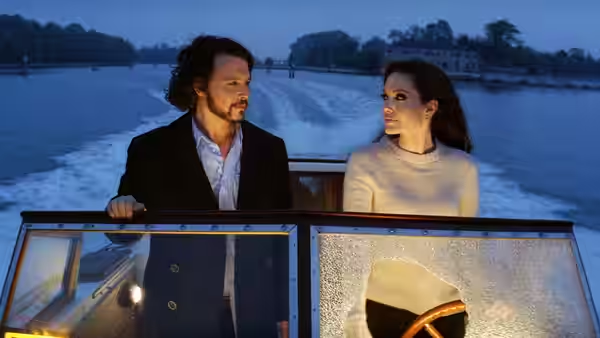
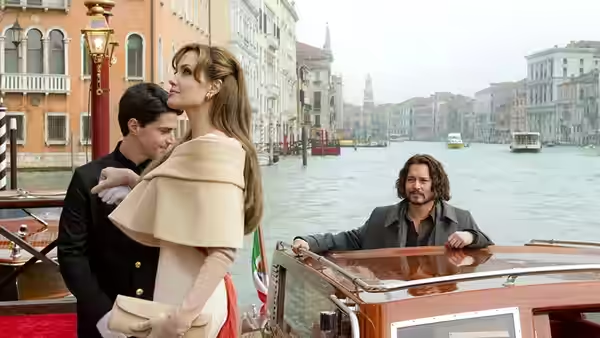
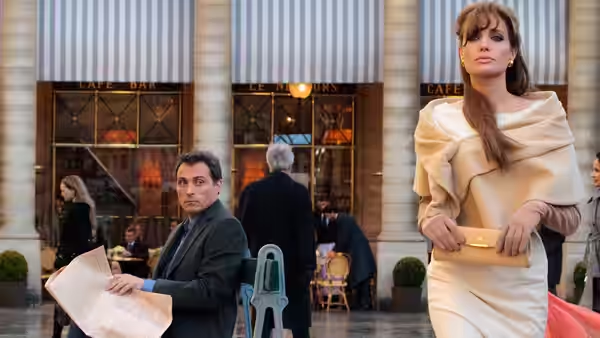
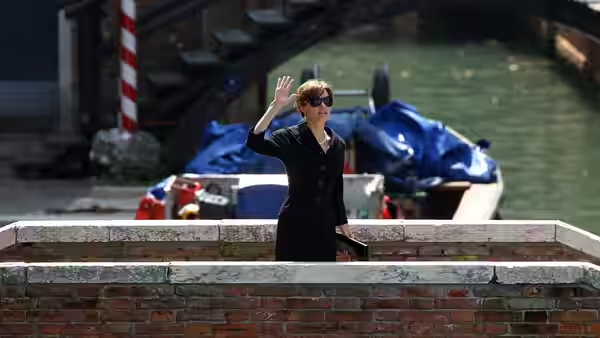
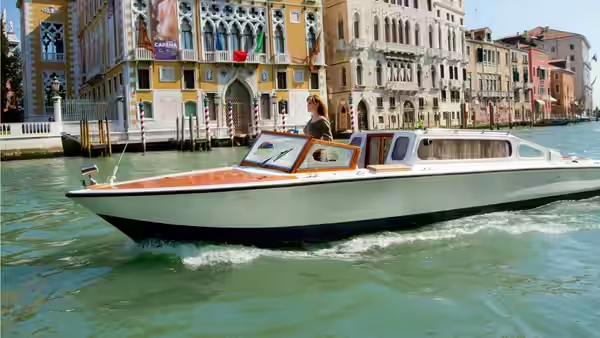
Seale lights Venice in warm amber, canals at dusk, lamps on the water, and Jon Hutman’s interiors are the kind of tall, old rooms that half the audience will be pricing in their heads. Colleen Atwood dresses Jolie in a run of gowns, long gloves and small hats, and it is the costumes, more than the dialogue, that tell us who this woman is supposed to be. All of it is lovely to look at. We were admiring it and bored at the same time, which is an odd state to spend an evening in.
The action is where the boredom turns to something warmer. Patricia Rommel and Joe Hutshing cut the chases cleanly enough that we always knew where everyone was, but von Donnersmarck stages them at the speed of a guided tour, and nobody looks to be in any danger. James Newton Howard’s score skips along underneath, insisting this is all great fun. During the longest of them we were embarrassed, for everybody, because the film plainly thought it was being funny, and we did not laugh, and nor did anyone near us.
The supporting cast knows what kind of film it is in. Bettany’s Acheson is the only person on screen who seems to want something badly, and he plays the wanting as a grievance, which suits him. Timothy Dalton, as his superior Chief Inspector Jones, has little to do and does it with more relish than the stars manage all evening. Berkoff’s Shaw is a man in a good coat issuing threats, and he does it well. Rufus Sewell drifts through as The Englishman, and we found ourselves watching him in the background of shots because he at least seemed to be thinking.
The screenplay is credited to Julian Fellowes, Christopher McQuarrie and von Donnersmarck, which is three writers for a plot that mostly consists of people explaining it to one another. The film saves its twist for the last minutes. We will not describe it, except to say that most viewers will have reached it an hour earlier, and that when it arrives it explains nothing and undoes the little that had been built. The Lives of Others was also a film about watching and being watched, and there the watching changed the watcher. Here nobody is changed by anything, and the spying is set dressing.
If you want Venice at dusk and two famous faces to rest your eyes on, this will pass a Sunday evening without hurting anyone, and the 12A means there is nothing to flinch at. It opened in Britain on 10 December 2010, in time for the holidays, and it has the manners of a Christmas film: handsome, polite and asleep by nine.