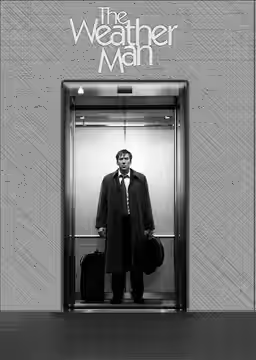
Gore Verbinski’s film about a Chicago weatherman nobody respects is colder and sadder than the trailer promised, and better for it. Cage and Caine make the father-and-son scenes count; the rest is a well-dressed man complaining in the snow.
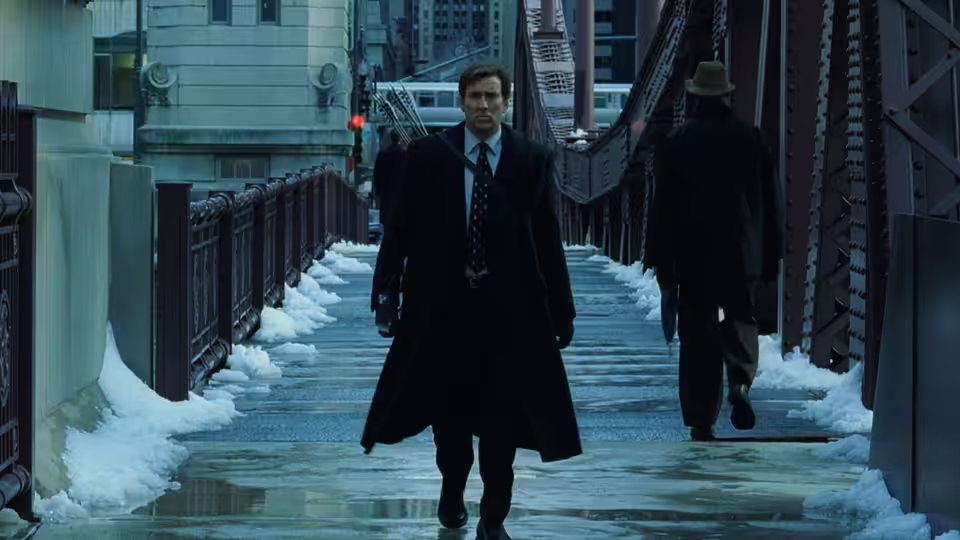
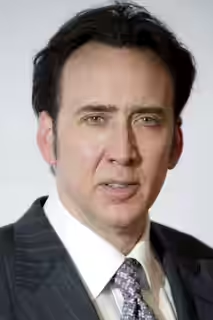
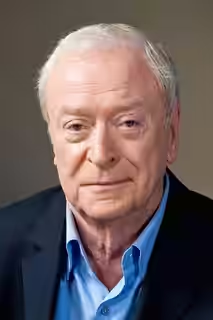
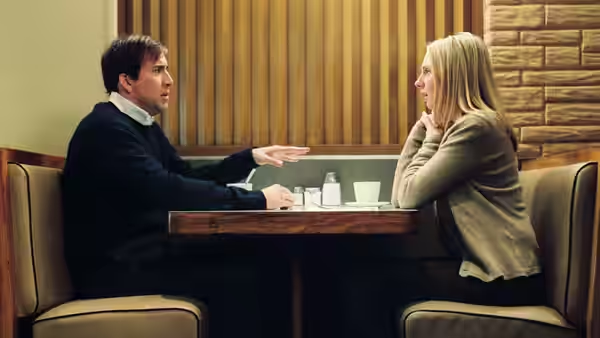
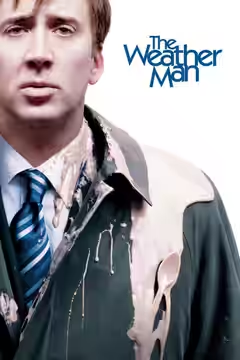
David Spritz (Nicolas Cage) reads the weather on Chicago television for a great deal of money and almost no respect. Strangers throw milkshakes and chicken at him from passing cars. His ex-wife Noreen (Hope Davis) has moved on, his children are unhappy in ways he has not got round to noticing, and his father Robert (Michael Caine), a novelist of real standing, looks at him the way you might look at a mild disappointment you have stopped expecting to improve. Steven Conrad’s script follows him through one winter in which he tries to get the family back and get a job on a national morning programme in New York. Gore Verbinski, better known for the Pirates of the Caribbean films, directs it as if he had been waiting some time to make something small.
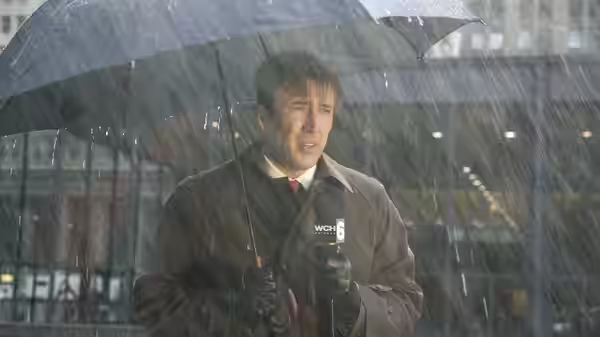
Cage plays David with the volume turned down. He narrates in a flat, careful voice, walks with his shoulders up against the wind, and when something hits him he wipes it off and keeps going. It is a performance about a man who has decided that reacting is beneath him and suspects it is not. We laughed at the first two or three things that struck him, and then felt slightly ashamed of ourselves, which is what the film wants; Conrad is asking us to notice that the people in the cars are not entirely wrong. David is paid to be wrong about the sky and is wrong about everything else for free.
Caine is the reason the film is worth the evening. He plays Robert Spritzel with a light American accent and almost no gestures. He does not raise his voice. He asks his son practical questions, about money, about the children, and waits for the answers with a patience that is harder to bear than contempt would be. The scenes between them, in cars and corridors and a hospital car park, are the best things here. We did not expect to be moved by an old man explaining the rules of adulthood to a son in his forties, and we were, because Caine plays every line as if it costs him something to say it.
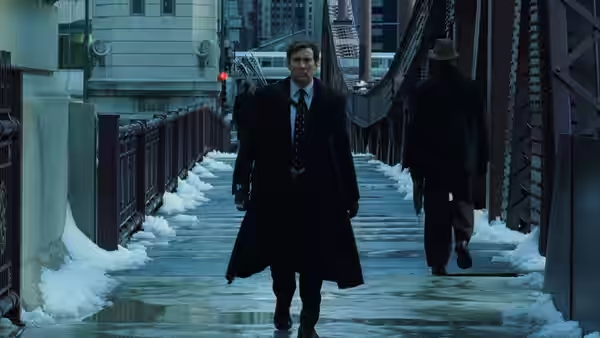
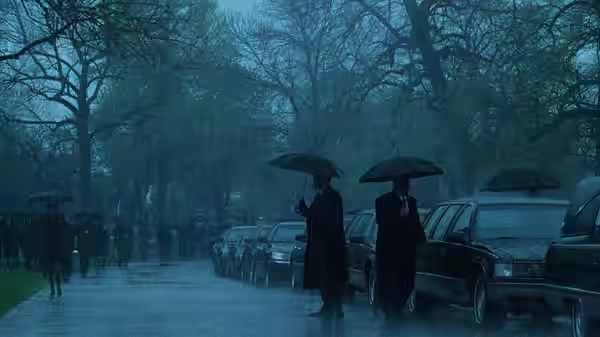
The craft matches the mood. Phedon Papamichael shoots Chicago in the dead of winter, grey sky, grey lake, salt on the roads, and keeps the light flat so that nothing looks worth getting out of bed for. Tom Duffield’s interiors are expensive and underheated. Penny Rose puts David in a long, good coat he almost never takes off, so that he looks like a visitor in his own life. Hans Zimmer, who usually arrives with drums, writes a small repeating piano figure instead, and it suits the film better than anything louder would have. Craig Wood cuts it loosely, which helps the sadness and hurts the pace; at 101 minutes it drifts through the middle and then hurries the last twenty.
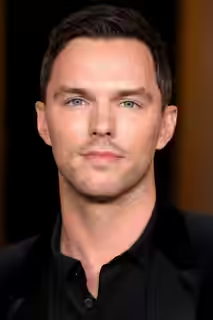
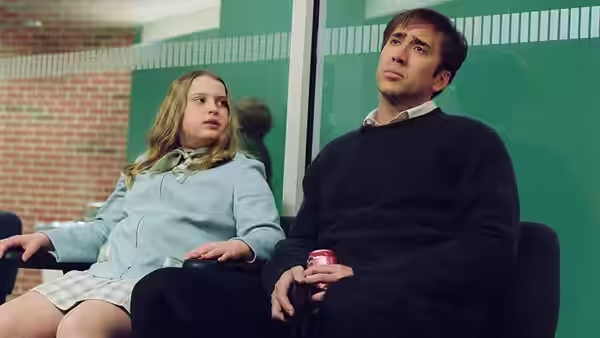
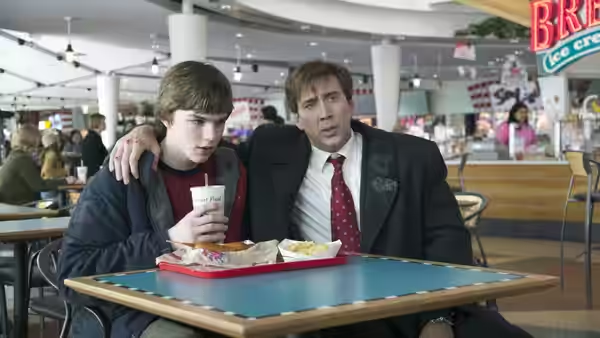
The children are where it goes wrong. Shelly (Gemmenne de la Peña) is a sullen, lonely child who is bullied over her clothes, and Conrad gives her a humiliation that the film repeats until it stops being a cruelty and becomes a gag, which is not an improvement. Mike (Nicholas Hoult) is handed a strand involving his counsellor Don (Gil Bellows) that belongs in a harder film and is dealt with here in a tone we could not read. Davis does what she can with Noreen, who mostly exists to be wanted back; she gives her a tiredness that is more convincing than anything David says to her.
Several critics could not get past the fact that David is paid handsomely to do something easy and would like our sympathy anyway. We think that is the point rather than the problem. The script is about a man who has got everything on offer and found it is not what his father meant by a life, and the film is honest enough not to let him off. Where it stumbles is in deciding how funny any of this should be. The reviews split almost evenly between people who found a dry comedy and people who found a bleak drama with jokes stuck on, and both sides are describing the same scenes.
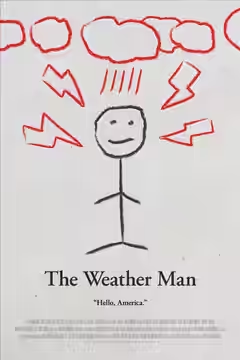
Watch it on a cold evening, which is the only sort it is dressed for. Bring, as the poster said, an umbrella, and do not expect to like David; the film does not, quite, and is better for admitting it.