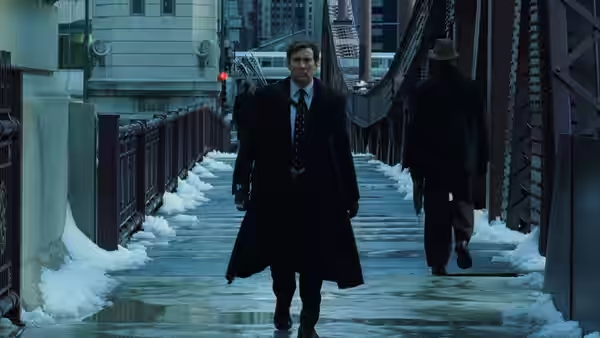
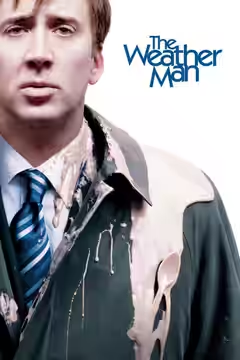
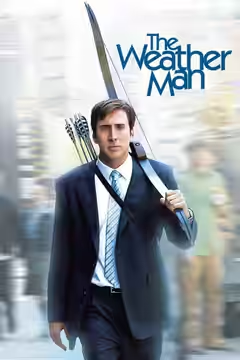
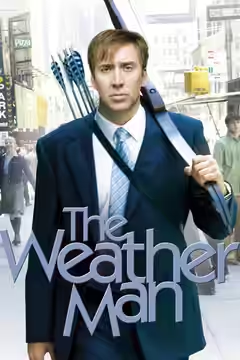
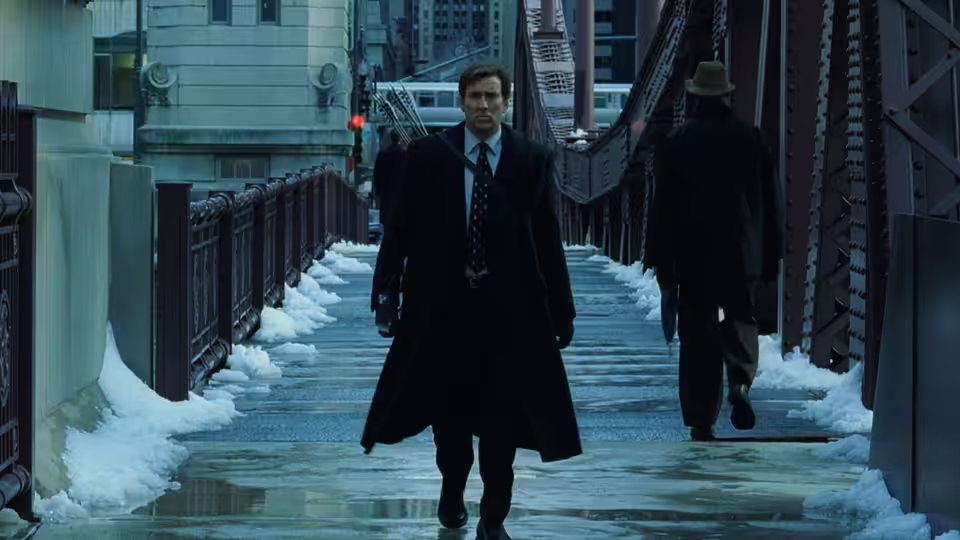
David Spritz (Nicolas Cage) walks across a snow-covered pedestrian bridge in a long coat
Film review

The Weather Man

2005 · Directed by Gore Verbinski · 1h 41m

In a sentenceStrangers throw fast food at Nicolas Cage for a hundred minutes and the film, to its credit, half agrees with them

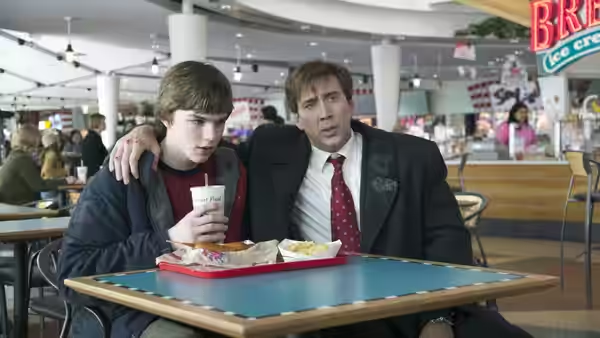
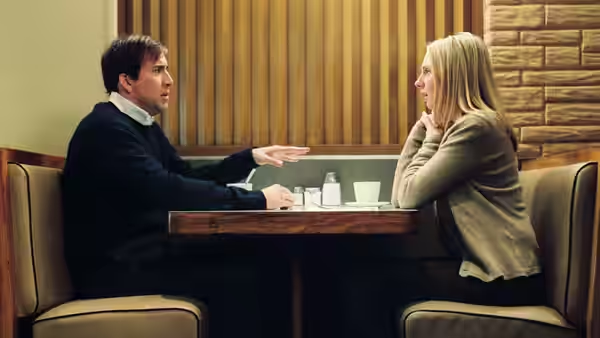
Chicago, deep winter. David Spritz (Nicolas Cage) reads the weather on local television, earns a great deal of money for it, and is pelted with fast food by strangers who recognise him from the screen. His ex-wife Noreen (Hope Davis) has a new man, Russ (Michael Rispoli), and no patience left. His daughter Shelly (Gemmenne de la Peña) is unhappy at school; his son Mike (Nicholas Hoult) has been assigned a counsellor, Don (Gil Bellows). His father Robert Spritzel (Michael Caine), a celebrated novelist, regards him with polite bafflement. David wants two things: the family back under one roof, and a job on a national morning programme in New York. In the meantime he takes up archery, and the wind off the lake keeps blowing.

Plays from YouTube when you press play; nothing loads from them until then.

Fi1m review

Gore Verbinski’s film about a Chicago weatherman nobody respects is colder and sadder than the trailer promised, and better for it. Cage and Caine make the father-and-son scenes count; the rest is a well-dressed man complaining in the snow.

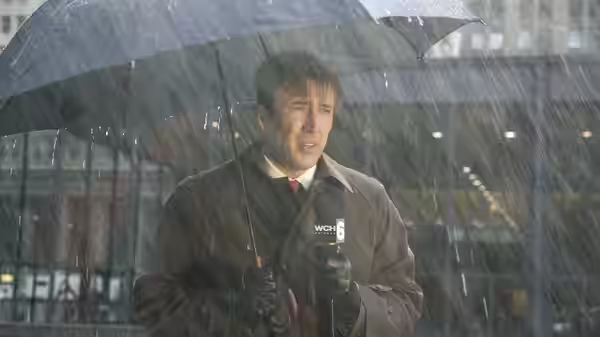
David Spritz (Nicolas Cage) reads the weather on Chicago television for a great deal of money and almost no respect. Strangers throw milkshakes and chicken at him from passing cars. His ex-wife Noreen (Hope Davis) has moved on, his children are unhappy in ways he has not got round to noticing, and his father Robert (Michael Caine), a novelist of real standing, looks at him the way you might look at a mild disappointment you have stopped expecting to improve. Steven Conrad’s script follows him through one winter in which he tries to get the family back and get a job on a national morning programme in New York. Gore Verbinski, better known for the Pirates of the Caribbean films, directs it as if he had been waiting some time to make something small.

Cage plays David with the volume turned down. He narrates in a flat, careful voice, walks with his shoulders up against the wind, and when something hits him he wipes it off and keeps going. It is a performance about a man who has decided that reacting is beneath him and suspects it is not. We laughed at the first two or three things that struck him, and then felt slightly ashamed of ourselves, which is what the film wants; Conrad is asking us to notice that the people in the cars are not entirely wrong. David is paid to be wrong about the sky and is wrong about everything else for free.

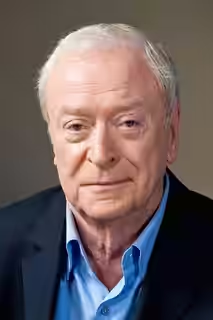
Caine is the reason the film is worth the evening. He plays Robert Spritzel with a light American accent and almost no gestures. He does not raise his voice. He asks his son practical questions, about money, about the children, and waits for the answers with a patience that is harder to bear than contempt would be. The scenes between them, in cars and corridors and a hospital car park, are the best things here. We did not expect to be moved by an old man explaining the rules of adulthood to a son in his forties, and we were, because Caine plays every line as if it costs him something to say it.

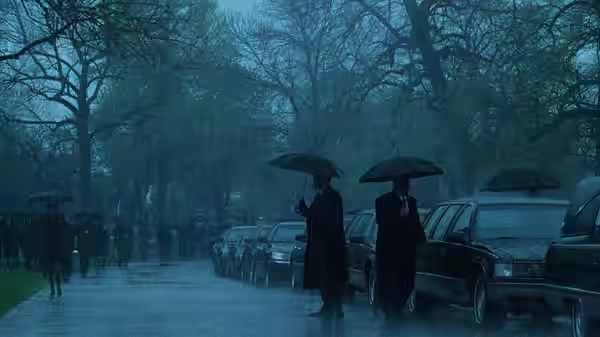
The craft matches the mood. Phedon Papamichael shoots Chicago in the dead of winter, grey sky, grey lake, salt on the roads, and keeps the light flat so that nothing looks worth getting out of bed for. Tom Duffield’s interiors are expensive and underheated. Penny Rose puts David in a long, good coat he almost never takes off, so that he looks like a visitor in his own life. Hans Zimmer, who usually arrives with drums, writes a small repeating piano figure instead, and it suits the film better than anything louder would have. Craig Wood cuts it loosely, which helps the sadness and hurts the pace; at 101 minutes it drifts through the middle and then hurries the last twenty.

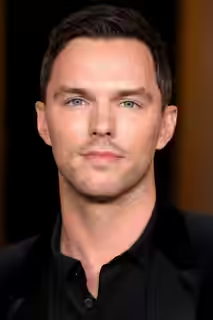
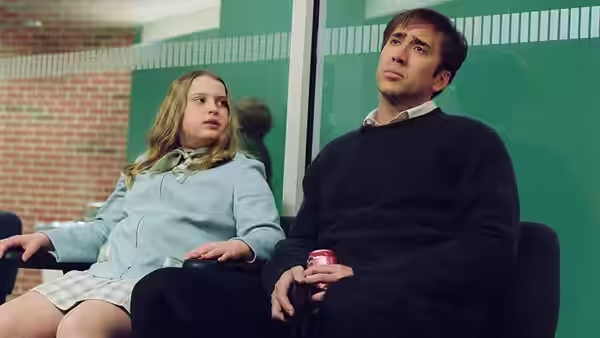
The children are where it goes wrong. Shelly (Gemmenne de la Peña) is a sullen, lonely child who is bullied over her clothes, and Conrad gives her a humiliation that the film repeats until it stops being a cruelty and becomes a gag, which is not an improvement. Mike (Nicholas Hoult) is handed a strand involving his counsellor Don (Gil Bellows) that belongs in a harder film and is dealt with here in a tone we could not read. Davis does what she can with Noreen, who mostly exists to be wanted back; she gives her a tiredness that is more convincing than anything David says to her.

Several critics could not get past the fact that David is paid handsomely to do something easy and would like our sympathy anyway. We think that is the point rather than the problem. The script is about a man who has got everything on offer and found it is not what his father meant by a life, and the film is honest enough not to let him off. Where it stumbles is in deciding how funny any of this should be. The reviews split almost evenly between people who found a dry comedy and people who found a bleak drama with jokes stuck on, and both sides are describing the same scenes.

Watch it on a cold evening, which is the only sort it is dressed for. Bring, as the poster said, an umbrella, and do not expect to like David; the film does not, quite, and is better for admitting it.
Critical consensus AI synthesised

53
Positive
3
Mixed
6
Negative
4

The reviews lean mixed, with as many unconvinced as persuaded. Where critics agree is on the father-son material: the scenes between Nicolas Cage and Michael Caine are named again and again as the film’s strongest element, and Caine’s world-weary father is the performance most often praised, often above Cage’s restrained turn. Most also find a welcome streak of black comedy, and the Los Angeles Times goes further, calling it a sincere, contemplative study of mediocrity and self-doubt.

The reservations cluster around tone and around the hero himself. Several critics find a well-paid television weatherman’s domestic troubles hard to care about, and more than one calls the film bleak and dreary rather than wry. The spread is wide. The Los Angeles Times and The Guardian sit near the top; Variety and Empire sit at the bottom, Empire objecting in particular to running gags about child molestation. Hope Davis draws praise even from Variety’s otherwise hostile notice.

Los Angeles Times
28 October 2005 · Carina Chocano
85*

Chocano finds the film a sincere, wry, and contemplative character study that explores mediocrity and existential doubt. She especially praises the cinematography and the restrained performances by Nicolas Cage and Michael Caine.

Read the full review →
The Guardian
5 March 2006 · Philip French
70*

French finds the film a brisk, modest comedy and an acute study of a father-son relationship. He praises its barbed humor, which keeps occasional sentimentality in check.

Read the full review →
Time Out
27 February 2006 · Trevor Johnston
64*

The accessible page identifies this as a film review, but provides no review text from which to determine the critic’s verdict. It likewise reveals no specific praise or complaint.

Read the full review →
RogerEbert.com
28 October 2005 · ★★½/4 · Roger Ebert
62

Ebert gives the film a mixed assessment of a man struggling with personal failure. The review focuses on the protagonist’s strained family relationships as the film’s central strength and concern.

Read the full review →
Screen Daily
21 October 2005 · Patrick Z McGavin
60*

The critic describes the film as a bittersweet lament and critique of American accomplishment. The standfirst singles out its less toxic take on the emotional wreckage of professional ambition.

Read the full review →
The AV Club
26 October 2005 · Scott Tobias
55*

Tobias finds the film overburdened by its hero’s dysfunction, though it has a welcome streak of black comedy. He singles out the affecting father-son scenes between Nicolas Cage and Michael Caine as its strongest element.

Read the full review →

Straight answers AI written, from our review

Is The Weather Man worth watching?
The Weather Man is worth watching for anyone who wants a cold, sad comedy about a man nobody respects, and we scored it 65. Michael Caine makes the father-and-son scenes count, and Nicolas Cage plays the lead with the volume turned down. The children's storylines are handled clumsily, and the middle drifts; watch it on a cold evening and do not expect to like David.
How long is The Weather Man, and what is it rated?
The Weather Man runs 1h 41m. It is a comedy and drama film.
Where can I watch The Weather Man in Hong Kong?
The Weather Man is not on any streaming or rental service in Hong Kong at the moment. It is available in 30 other countries; change your country at the top of the page to see where. Availability is checked daily.
How violent or frightening is The Weather Man, and is it suitable for children?
The Weather Man is a 15 certificate in the UK and R-rated in the US, and it is not for children. There is no real violence beyond strangers pelting Cage with fast food, and nothing frightening; the certificate reflects adult language and themes, including a strand about a teenage son and his counsellor that the film handles in an uneasy tone. Teenagers would find it slow.
How does The Weather Man compare to About Schmidt?
The Weather Man is the colder and more self-critical of the two, while About Schmidt is the warmer film with the stronger central performance. Both follow a well-off American man discovering too late that nobody needed him. Nicholson gives Schmidt a sadness the film earns; Cage keeps David at a distance, and the Caine scenes are what carry it. Start with About Schmidt.
What should I watch after The Weather Man?
After The Weather Man, try About Schmidt (2002, Fi1m 77): Another well-off American man discovering too late that nobody needed him. Then Toni Erdmann (2016, Fi1m 86): A father, a grown child and a career that has eaten the person; funnier and longer; and Broadcast News (1987, Fi1m 84): Television news from the inside, with people who at least know what they are for.

Cast

If you liked this, try…

  1. About Schmidt (2002, Fi1m 77)Another well-off American man discovering too late that nobody needed him.

  2. Toni Erdmann (2016, Fi1m 86)A father, a grown child and a career that has eaten the person; funnier and longer.

  3. Broadcast News (1987, Fi1m 84)Television news from the inside, with people who at least know what they are for.

  4. The Squid and the Whale (2005, Fi1m 83)A literary father and his wounded sons, shot cheaply and cut without mercy.

  5. Ikiru (1952, Fi1m 92)Kurosawa’s clerk realises his life has been small, and does something about it.