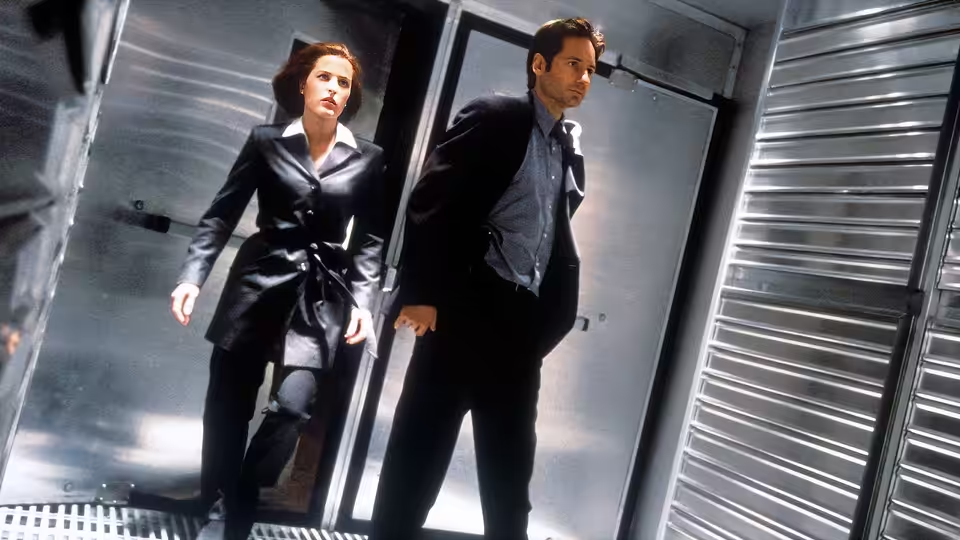
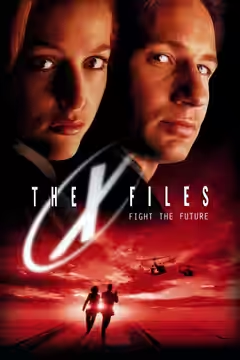
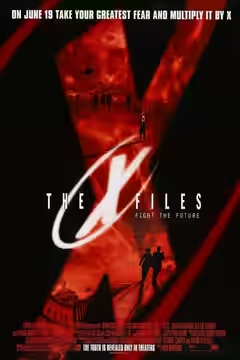
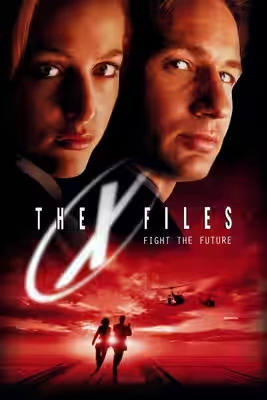
The X-Files makes a decent thriller out of an awkward transition from television. David Duchovny and Gillian Anderson make it worth considering, despite a tangled story and action that too often feels routine.
Rob Bowman’s The X-Files is an entertaining but uneven thriller whose strongest reason for becoming a film remains its leading pair. The move from television makes room for larger set pieces without finding a consistently stronger story to put between them. We can see the attraction of giving these characters more space, and the film occasionally makes good use of it. At 121 minutes, though, it asks for more patience than its mystery earns.
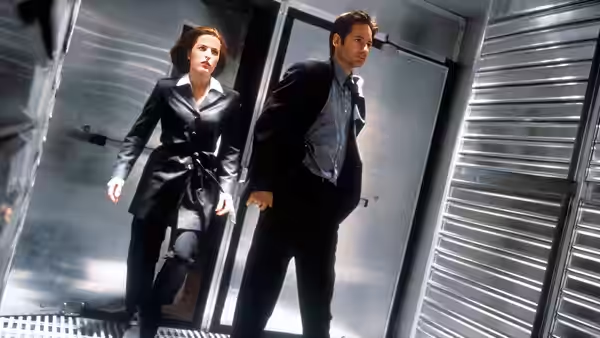
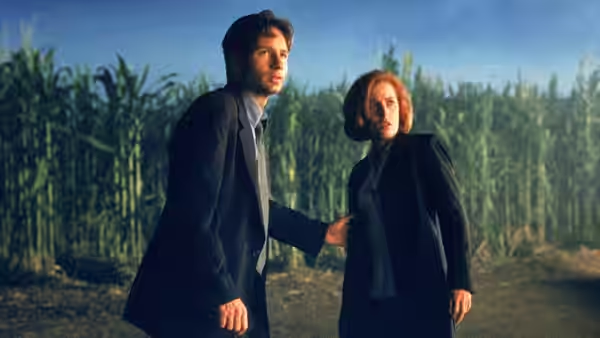
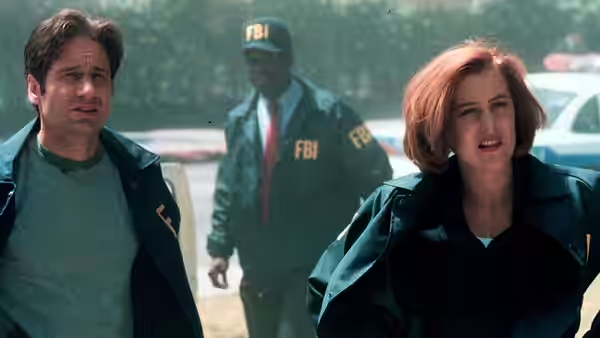
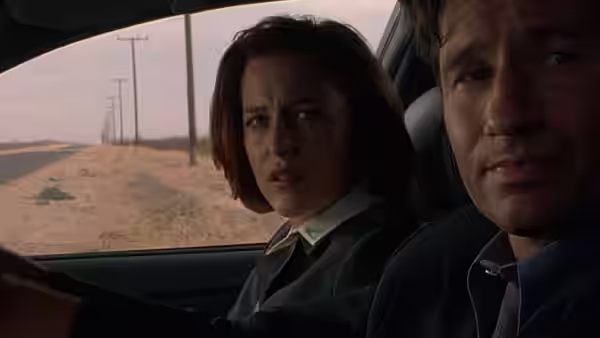
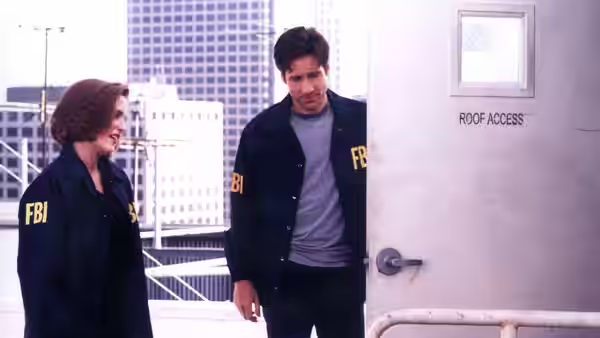
David Duchovny and Gillian Anderson give Fox Mulder and Dana Scully enough mutual attention to keep their relationship interesting when the surrounding plot grows laborious. Their exchanges remain engaging without requiring us to remember every detail of the series. We warmed to them more than we expected to. That comes from the actors’ responsiveness to each other: even when the dialogue has information to deliver, they keep us interested in the person listening.
Chris Carter’s screenplay, from a story by Chris Carter and Frank Spotnitz, is less dependable. There is wit in the dialogue, and the central partnership remains easy to care about as the plotting becomes harder to follow. A complicated mystery should make us eager for the next piece of information; here, keeping track can begin to feel like an obligation. We do not need everything explained, but we need to understand why a new complication matters. Too often, the script moves on before it has persuaded us.
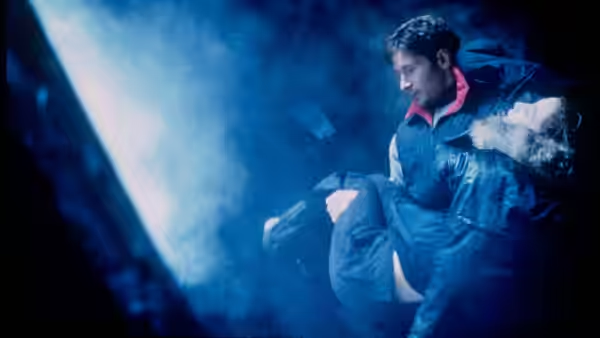
Ward Russell’s cinematography gives the larger-scale passages enough visual interest to justify the move to cinema. The wider sense of space is welcome, and Christopher Nowak’s production design helps the film look substantial, although individual settings do not always make a lasting impression. Rob Bowman can deliver an imposing set piece, but the action within it is often conventional. Once we have registered the size of the undertaking, there is not always much else to enjoy in its staging.
Stephen Mark’s editing keeps individual action passages moving, yet the film as a whole feels longer than it needs to. The difficulty comes when the immediate excitement passes and the story has to get going again. Mark Snow’s music sustains some unease through these stretches, though the writing leaves it with too much work to do. We repeatedly find ourselves waiting for the next exchange between the leads to restore our interest.
The feature-length television adaptation has to give familiar characters something worth leaving their usual format for. This one preserves enough of the series’ identity to make the exercise understandable, and its affection for the central pair is persuasive. But the larger set pieces cannot entirely disguise how often it feels like an extended instalment. A thriller needs to make its next scene feel necessary, and this one sometimes relies too heavily on our willingness to stay with the characters.
It is a reasonable choice for an evening when the attraction is spending more time with Fox Mulder and Dana Scully. Anyone arriving primarily for a tightly organised mystery should lower their expectations. Bring an existing fondness for the pair rather than a demand for brisk answers.