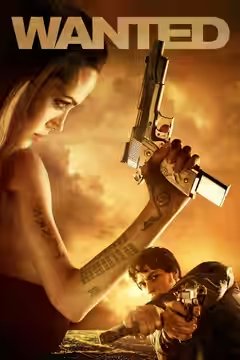
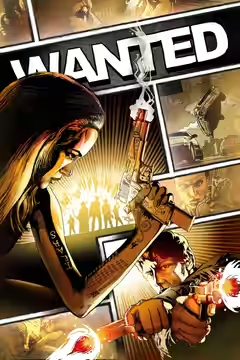
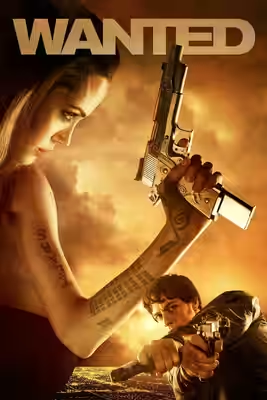
Wanted is an inventive, intermittently exhilarating action film with a tiresome belief that violence improves a life. James McAvoy and Angelina Jolie make it worth considering, provided the gunplay matters more than the story.
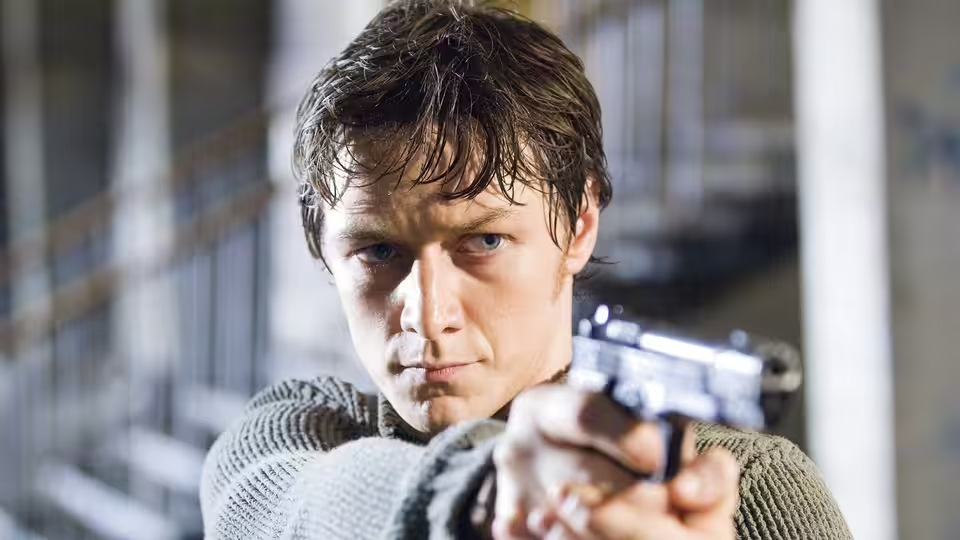
Timur Bekmambetov’s Wanted takes the familiar fantasy of becoming dangerous enough to stop feeling small and gives it an alarming appetite for gunfire. It is inventive and entertaining, though its enthusiasm for settling grievances through violence grows tiresome. The appeal is easy enough to understand: Wesley Gibson’s office frustration becomes a route into an assassin’s life, with James McAvoy providing someone recognisably human beneath the aggression. At 110 minutes, it has room for extravagant action and rather too much insistence that all this amounts to liberation.
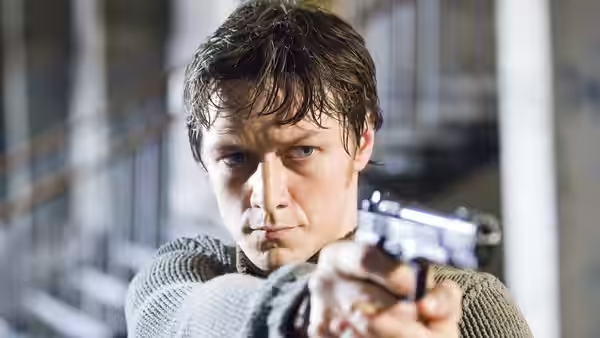
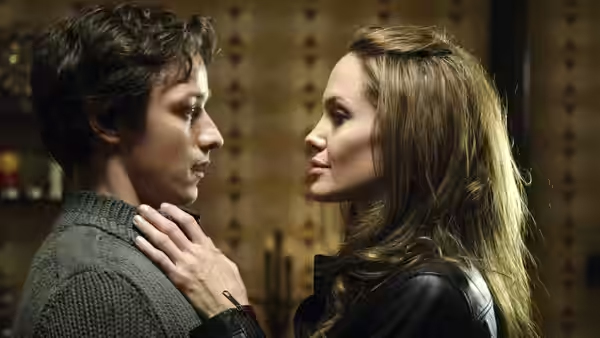
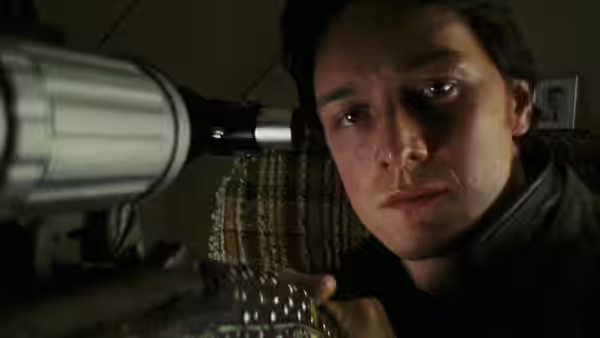
James McAvoy makes the change convincing without making Wesley especially agreeable. The office meltdown gives the film a store of petty anger to draw on, and the performance shows how readily humiliation can become aggression. During the brutal training, we winced; the physical punishment makes his new life look considerably less desirable than the fantasy initially promises. That helps, because the film needs us to believe that Wesley can be hurt if the gunplay is to remain exciting.
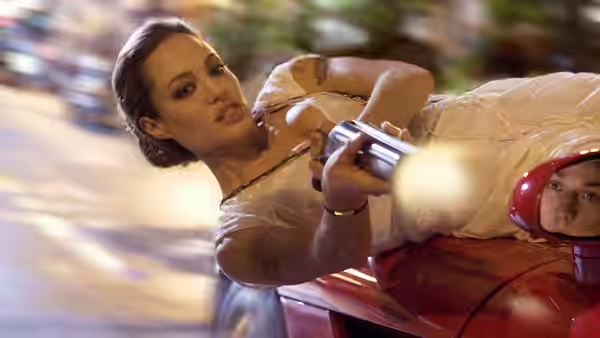
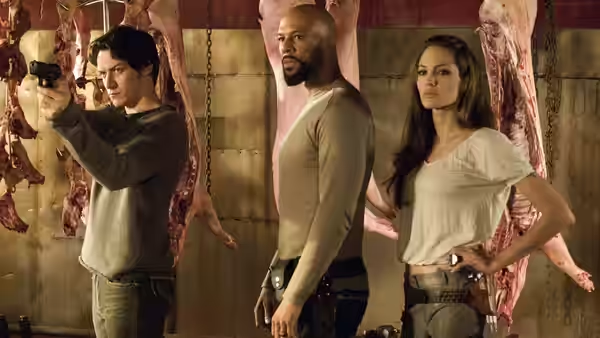
Angelina Jolie supplies a cooler presence as Fox, and her physical authority gives the action a focus that the script sometimes lacks. She looks comfortable with the violence in a way Wesley cannot yet afford to be, which makes them useful company on screen. It is a shame that she is given less attention than Wesley: watching someone who already knows the job can be more interesting than watching the recruit find his confidence. Morgan Freeman, as Sloan, makes the improbable explanations sound as though somebody has checked them.
Mitchell Amundsen’s cinematography and David Brenner’s editing keep the gunplay legible even when the bullets refuse to travel in a straight line. We can follow the movement, and the speed has enough variation for the absurdities to register before the next one arrives. The director understands that an impossible shot still needs to be clearly presented; simply making everything faster would spoil the pleasure. We laughed at the curving bullets, pleased by the elaborate effort spent making a gunshot more complicated.
John Myhre’s production design is less distinctive than the action, with the office and training spaces registering chiefly as places where Wesley is made miserable. The moving bodies and weapons command attention more readily than their surroundings. Danny Elfman’s music supplies the expected force, adding to a soundtrack whose pounding becomes wearing when the film is already working hard enough to excite us. In the action passages, that insistence suits the speed; elsewhere, a little less encouragement would have been welcome.
The screenplay by Michael Brandt, Chris Morgan and Derek Haas is less inventive than the staging. The idea that a miserable man might be special is familiar action-film reassurance, and Wesley’s growing ability to hurt people does not make it any wiser. More damagingly, the reasons offered for the violence are too flimsy to justify the importance placed on them, however persuasively Sloan speaks. Those explanations need to survive a little thought, particularly when the film devotes so much attention to Wesley’s transformation.
The later action cannot quite sustain the surprise of the opening, which is a problem for a film so dependent on escalation. There is still enough imagination in the shooting to make its excess worth considering. The 18 certificate deserves attention: physical punishment is a substantial part of the entertainment. Approach it for the elaborate gunplay, with a high tolerance for the man firing the gun.