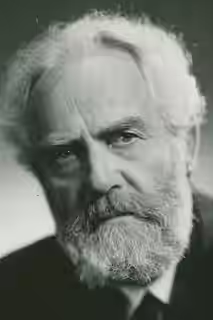
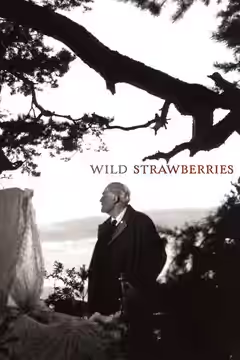
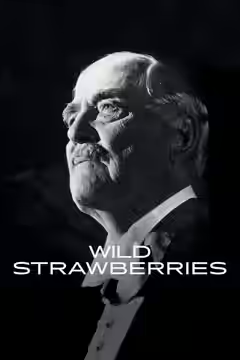
Victor Sjöström makes an isolated professor worth caring about without asking us to excuse him. Ingmar Bergman’s drama is warm, unsettling and occasionally too insistent with its symbolism, but the performance keeps it human.
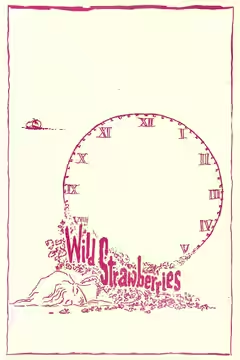
Wild Strawberries is a moving film about a man whose loneliness has something to do with how he has treated other people. Ingmar Bergman allows the professor regret without treating it as sufficient reason to forgive him, and that makes the warmth convincing. We recommend it, with one reservation: some of the symbolism presses a point already clear in the performance. Victor Sjöström gives the film enough awkwardness and vulnerability to keep those heavier passages from taking over.
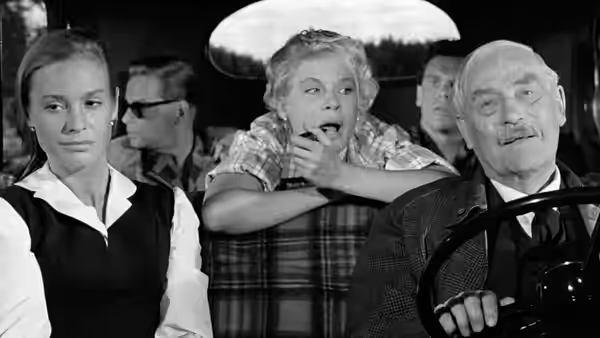
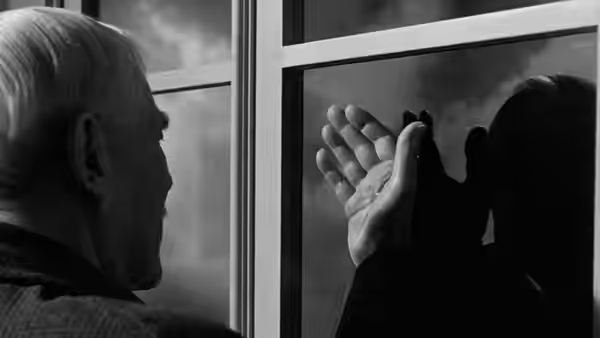
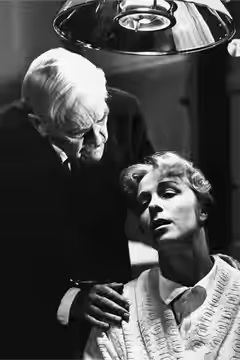
Victor Sjöström makes the professor’s reserve seem habitual. There is no need to strain for a grand explanation of the man when the performance keeps us attentive to the difficulty he has dealing with other people. We found his loneliness more upsetting than we expected, because he never seems entirely innocent of it. The character remains difficult company, and the actor trusts us to stay interested without making him charming whenever our sympathy might ebb.
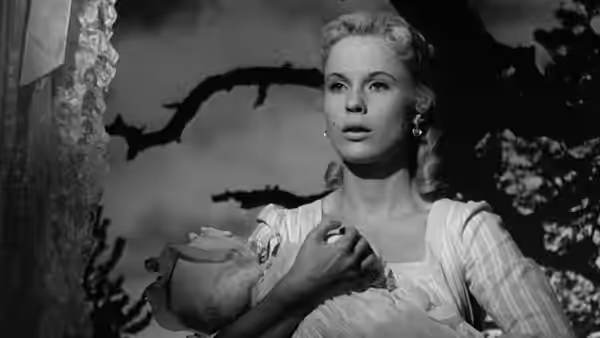
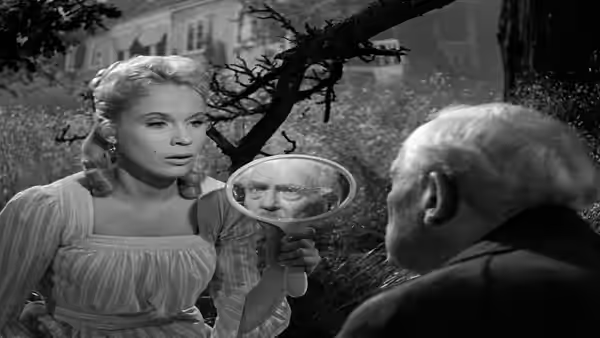
The nightmare frightened us. It makes the professor’s fear immediate enough to interrupt the more comfortable business of watching an elderly man reflect. Gunnar Fischer’s careful compositions matter here: they encourage us to look closely and give the unease time to build. The sequence makes the professor’s distress harder to regard from a safe distance, and its disturbance stays with the gentler material.
Oscar Rosander’s editing gives the film room to move from melancholy towards gaiety without treating the lighter stretches as an interruption. That matters in a drama concerned with age: an unbroken procession of solemn thoughts would soon become oppressive. The music credited to Erik Nordgren and Göte Lovén supports the feeling without insisting that every regret deserves a swell of pity. At 91 minutes, the film gives reflection time without making slowness a virtue in itself.
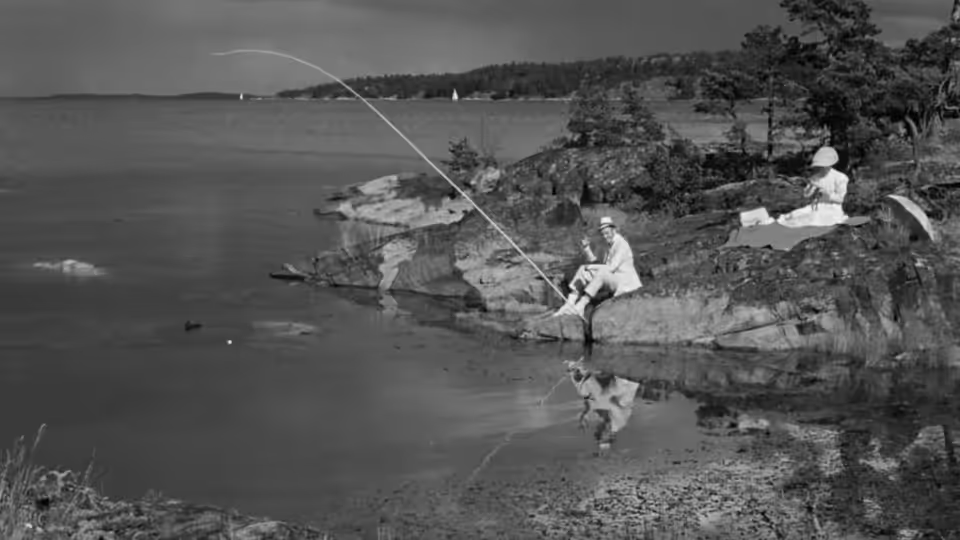
Gittan Gustafsson’s production design is unobtrusive enough to keep our attention on the people. The surroundings leave us free to study the faces, which is where this film does its most persuasive work. Ingmar Bergman’s screenplay is less discreet when it reaches for symbols, and there are passages where interpretation becomes too easy. The difficulty is small but persistent: we would rather be allowed to watch the professor than feel his condition being explained for us.
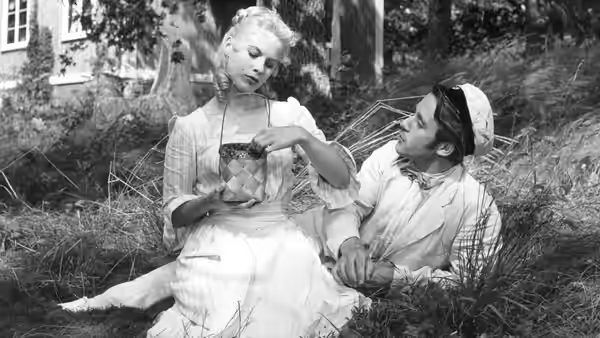
For a reflective drama, it has a welcome interest in the pleasures of being alive. The changes in mood prevent the professor’s regrets from becoming the only things we are permitted to notice, and the lighter passages make his isolation more painful. That is also what makes the occasional heavy emphasis frustrating: the film has already shown how much it can communicate through a performance and a change of mood. Its humour deserves as much attention as its solemnity.
Save it for an evening when quiet attention feels possible. The nightmare makes it an unwise choice if the plan is simply to find something soothing. Give Victor Sjöström the uninterrupted 91 minutes.