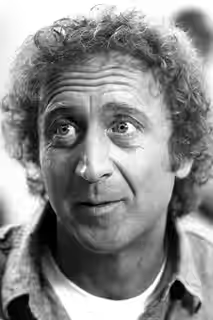
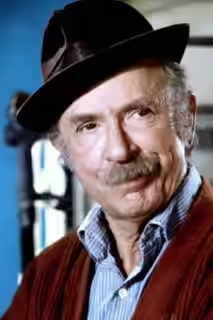
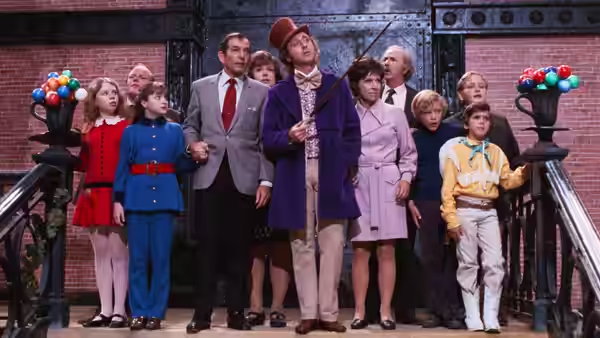
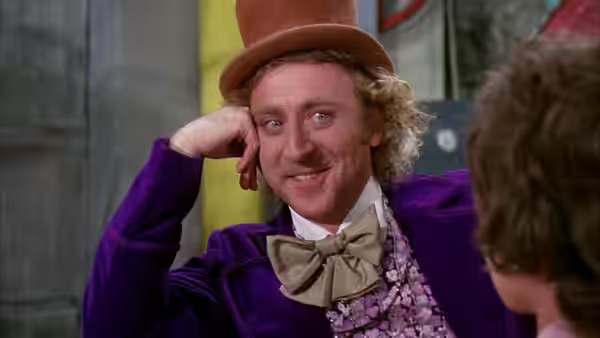
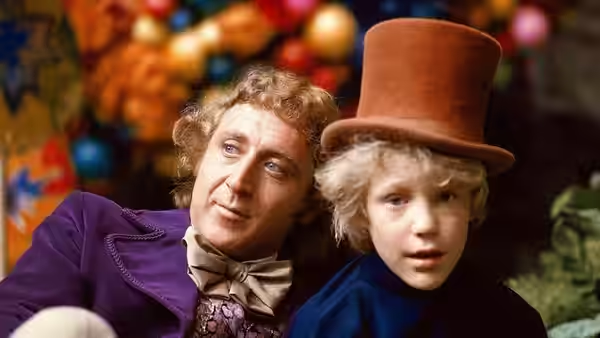
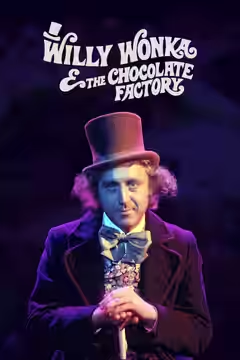
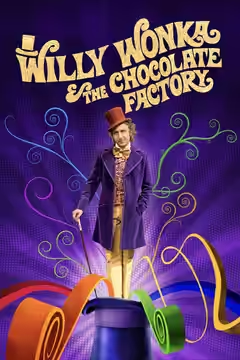
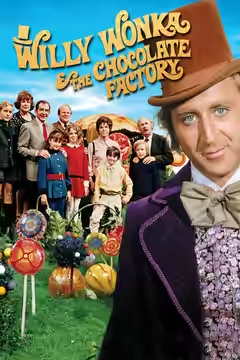
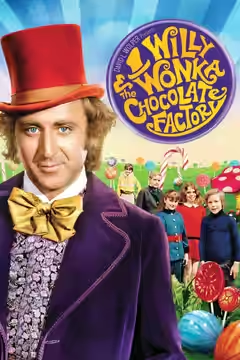
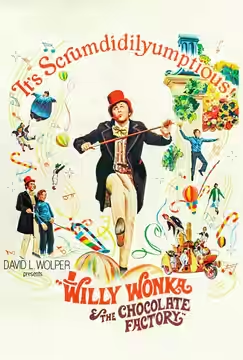
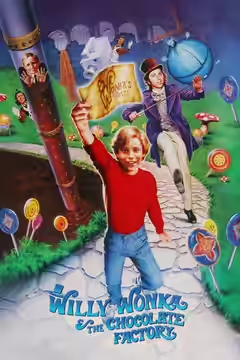
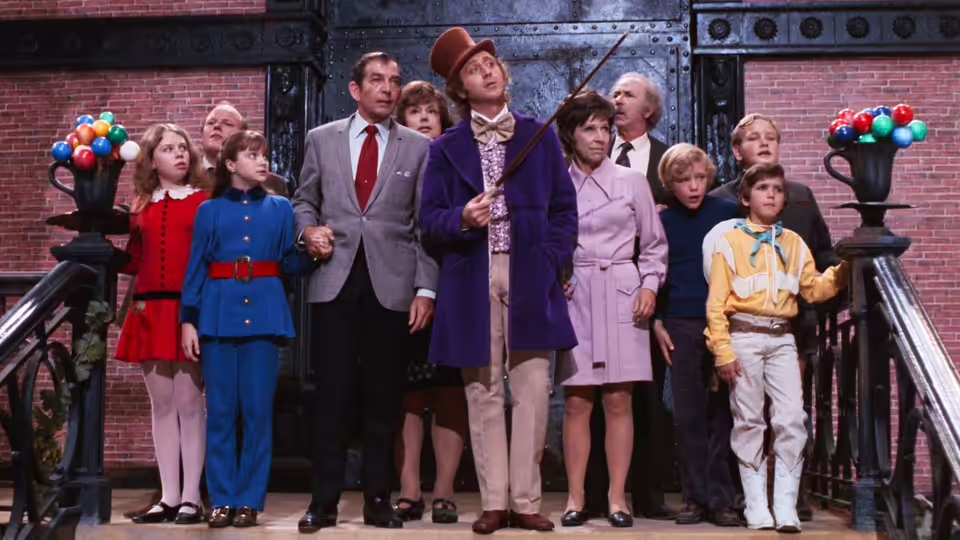
Willy Wonka (Gene Wilder) stands with children and adults on a staircase
Film review

Willy Wonka & the Chocolate Factory

1971 · Directed by Mel Stuart · 1h 40m

In a sentenceGene Wilder makes a chocolate factory invitation sound as though it needs a solicitor

Charlie (Peter Ostrum) lives in poverty with his family, including Grandpa Joe (Jack Albertson) and Mrs. Bucket (Diana Sowle). Chocolate-maker Willy Wonka (Gene Wilder) offers a visit to his factory to the finders of golden tickets, setting off a scramble that grips adults as well as children. Charlie wants a ticket, but can barely afford the chocolate that might contain one. As other people’s appetite for the prize grows, his own chances seem small. The factory promises more chocolate than he can imagine, if he can find a way through its gates.

Plays from YouTube when you press play; nothing loads from them until then.

Fi1m review

Gene Wilder makes this chocolate-factory musical funny, inviting and quietly alarming. We recommend it warmly, with patience for an opening that takes too long and songs that are not all worth the interruption.

Willy Wonka & the Chocolate Factory is a family musical prepared to make its audience a little uncomfortable, and it is all the better for it. Mel Stuart offers chocolate, songs and a poor boy’s chance of happiness, then places Gene Wilder in charge of the hospitality. We recommend it warmly, though the early stretch makes us wait too long for the factory. Once its owner has our attention, even an apparently friendly welcome needs watching.

The opening understands that the golden-ticket hunt would bring out something ridiculous in adults as well as children. Its little scenes of public obsession give the competition a scale that Charlie’s own hopes could not provide, and we laughed at the grown-ups’ inability to behave any better. Roald Dahl’s screenplay is sharpest when it lets those appetites explain themselves. But David Saxon’s editing does not keep the whole build-up moving: the succession of sketches and songs becomes a delay, even when individual pieces are funny.

Peter Ostrum’s Charlie helps by not trying to out-charm the scenery. He makes the boy’s desire for chocolate feel important enough to sustain the story, without asking for our sympathy at every opportunity. Jack Albertson brings Grandpa Joe an eagerness that keeps the scenes of poverty from becoming merely dutiful. Julie Dawn Cole’s Veruca Salt, meanwhile, supplies the sort of bad temper that makes a child’s wish to be taken seriously look much less attractive.

Gene Wilder is the reason the film can turn nasty without simply becoming unpleasant. From his entrance, his Wonka makes courtesy feel suspicious, and we attend to how he says things as much as what he says. We felt uneasy in his company, because the adult conducting this children’s outing never quite seems committed to making them comfortable. That uncertainty is funny, too, and it is a more interesting choice than making the factory owner a reassuring guide who supplies jokes between attractions.

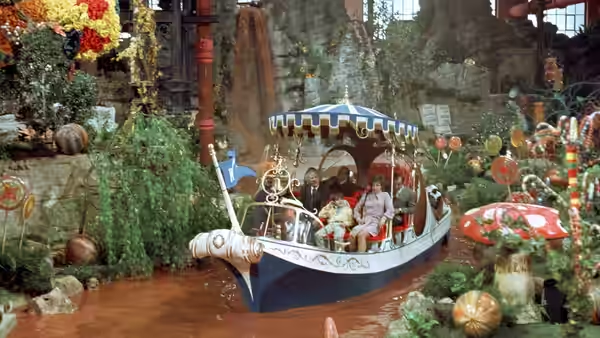
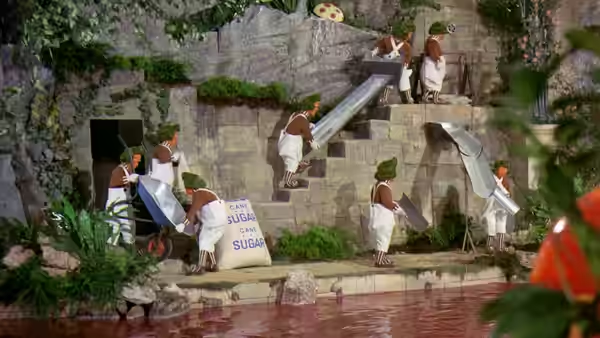
Arthur Ibbetson’s photography makes good use of the colour, though the wider views can look like records of a stage set. The scenery sometimes holds our attention more firmly than the staging. Yet its physical, slightly awkward quality also helps the fantasy; these spaces look as if people could walk around them. The place invites a child’s inspection.

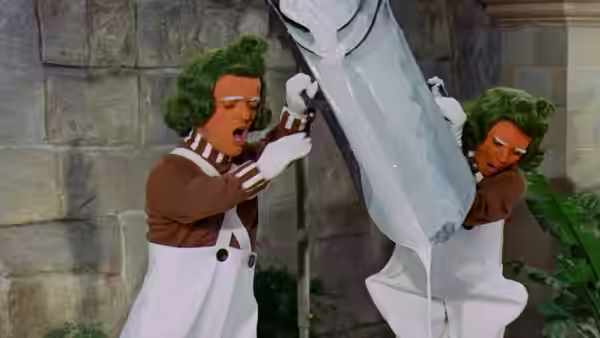
Walter Scharf and Leslie Bricusse’s music is at its most enjoyable when the words turn nasty. Some early numbers hold everything up by spelling out feelings the performances have already made clear. The Oompa-Loompas’ moral songs are more useful: their cheerfulness makes the scolding sound stranger. These are the numbers in which the film’s interest in bad behaviour and its duty to entertain children work well together.

Family musicals can make the adults so dependable that the children scarcely seem to need courage. Here, the factory owner’s manners give children something worth puzzling over after the songs have finished. The U certificate does not promise a soothing 100 minutes. Choose it for children who enjoy being a little unsure of the grown-ups.

Critical consensus AI synthesised

74
Positive
12
Mixed
3
Negative
1

Most critics respond warmly to Willy Wonka & the Chocolate Factory, with praise centred on Gene Wilder’s performance and the unease he brings to the fantasy. The reviews repeatedly single out his balance of whimsy and menace, making Wonka entertaining without making him entirely reassuring. The factory’s edible landscapes, the absurd scenes surrounding the golden-ticket hunt and the darker humour also find admirers, while several critics praise the songs and young cast.

The spread is wide despite the positive majority: pacing, music and the handling of Dahl’s darker streak divide the reviews. Several find the early scenes slow and the songs uneven, even when they enjoy the factory tour. Variety finds Wonka’s cruelty off-putting, whereas many admirers consider that sinister edge essential. The New York Times offers a broader rejection, finding the film tedious and stagy, with little humour and a pedestrian score.

RogerEbert.com
1 January 1971 · Roger Ebert
91*

The critic calls it probably the best film of its sort since The Wizard of Oz: delightful, funny, scary, exciting, and a genuine work of imagination. The reviewer singles out its sure and wonderfully spun fantasy that works on all kinds of minds and does not cut corners like Disney.

Read the full review →
Empire
3 March 2006 · Ian Nathan
80*

The critic praises the film as a glorious realization of Roald Dahl’s morality tale, with Mel Stuart turning it into glowing cinema and Gene Wilder perfectly cast as the avuncular yet eccentric Wonka. Harper Goff’s art direction and the factory’s edible, trippy world are singled out for particular praise, though pacing is noted as slightly off.

Read the full review →
Radio Times
★★★★ · Jeremy Aspinall
80

Gene Wilder brings a pinch of the macabre to the wide-eyed candy-maker in this fabulous 1971 musical adaptation of Roald Dahl's evergreen story, revealing a layer of grimness beneath the confection. It offers wonderful, timeless entertainment with singalong ditties and convincing performances from the young cast and supporting adults.

Read the full review →
Time Out
10 September 2012 · TM
78*

The critic praises the film's true magic touch of fantasy as an adaptation of Roald Dahl's eccentric novella, noting it really takes off once the tour of the chocolate factory begins with its candy-striped landscapes and rivers of chocolate. Wilder gives an impeccably controlled performance as the bizarre owner, making for great fun despite some indifferent songs.

Read the full review →
Variety
31 December 1970 · Variety Staff
69*

The review calls it an okay family musical fantasy featuring Gene Wilder as an eccentric candymaker who makes a boy’s dreams come true. The reviewer singles out the cynical and sadistic tone of Wilder’s character until the end as inhibiting interest, while noting sharp sidebar incidents and dialog.

Read the full review →
The AV Club
13 December 2002 · Tasha Robinson
67*

The critic finds the 1971 adaptation of Roald Dahl's book, financed as a commercial stunt for a candy bar, drags through plodding setup and padding songs before its malevolent and twisted whimsy kicks in. Wilder’s quirky Wonka and the Oompa-Loompas’ moral songs provide the main fun once the factory tour begins, though the stylized strangeness fails to fully capture the book’s spirit.

Read the full review →

Straight answers AI written, from our review

Is Willy Wonka & the Chocolate Factory worth watching?
Willy Wonka & the Chocolate Factory is warmly worth watching for families who enjoy a little unease with their fantasy, and we score it 82/100. Gene Wilder makes Wonka funny and quietly alarming, though the opening takes too long to reach the factory and some songs interrupt feelings the actors have already made clear.
How long is Willy Wonka & the Chocolate Factory, and what is it rated?
Willy Wonka & the Chocolate Factory runs 1h 40m. It is a family and fantasy film.
Where can I watch Willy Wonka & the Chocolate Factory in Iceland?
Willy Wonka & the Chocolate Factory is not on any streaming or rental service in Iceland at the moment. It is available in 31 other countries; change your country at the top of the page to see where. Availability is checked daily.
How does Willy Wonka & the Chocolate Factory compare to The Wizard of Oz?
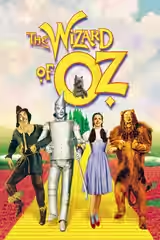
Willy Wonka & the Chocolate Factory belongs beside The Wizard of Oz for its songs, frightening strangers and emphasis on a child’s courage, though we favour Oz for its music. Judy Garland makes the homesickness hurt; Gene Wilder makes a friendly welcome feel suspicious. We recommend both, with Wonka especially suited to children who enjoy puzzling over an unreliable grown-up.
What should I watch after Willy Wonka & the Chocolate Factory?
After Willy Wonka & the Chocolate Factory, try The Wizard of Oz (1939, Fi1m 91): Songs and frightening strangers, with a child whose courage matters more than the scenery. Then Spirited Away (2001, Fi1m 92): Another child enters a place where adult rules are strange and dangerous.

Cast

Awards

Academy Awards, 1972

Nominated
Best Original Song Score

If you liked this, try…

  1. The Wizard of Oz (1939, Fi1m 91)Songs and frightening strangers, with a child whose courage matters more than the scenery.

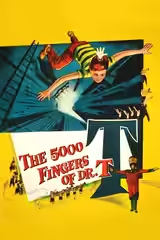
  2. The 5,000 Fingers of Dr. T. (1953) · not on Fi1m yetA stranger musical nightmare, built around a child’s distrust of adult authority.

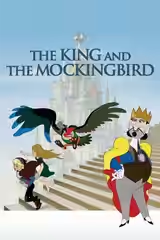
  3. The King and the Mockingbird (1980) · not on Fi1m yetA fairytale kingdom with splendid machinery and a thoroughly unsuitable man in charge.

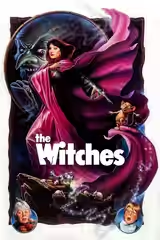
  4. The Witches (1990) · not on Fi1m yetMore Roald Dahl, with grown-ups who make Willy Wonka seem almost suitable for babysitting.

  5. Spirited Away (2001, Fi1m 92)Another child enters a place where adult rules are strange and dangerous.