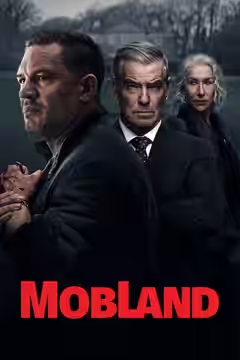
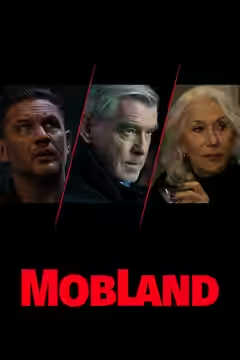
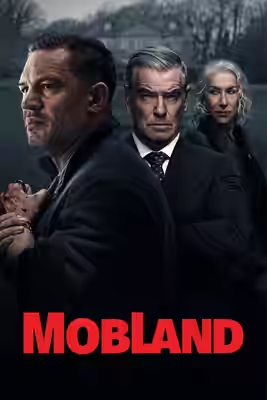
MobLand has an entertaining fixer in Tom Hardy, but the slow start and familiar gangster plotting matter. It is decent company for the genre’s regulars, provided broad performances are part of the attraction.
MobLand is a serviceable gangster drama with one persuasive reason to keep watching: Tom Hardy. Writers Jez Butterworth and Ronan Bennett build it around a fixer whose professional troubles compete with the demands of family life, a sound premise for television. It offers a way to make criminal business feel like work, with obligations that do not end at a convenient hour. The trouble is how much familiar gangster material comes with it, and how slowly the programme sometimes gets through that material.
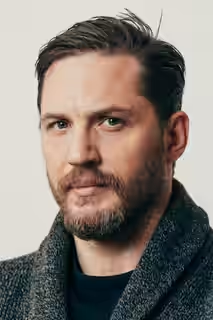
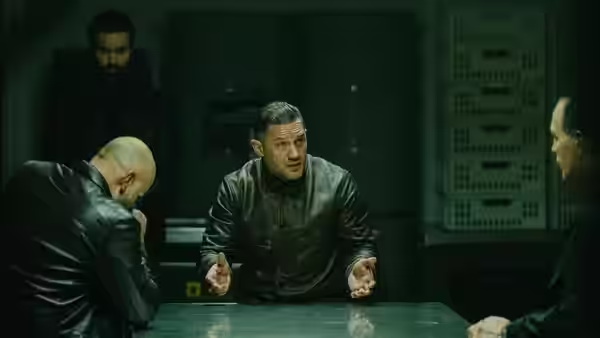
Hardy plays Harry Da Souza with a low, unhurried delivery that gives the threats a welcome trace of irritation. We laughed at his muttered menace, because he makes dealing with gangsters sound like work that ought to come with a proper complaints procedure. His voice gives even routine criminal business a recognisable human temperament, and the humour does not require him to stop being dangerous. That is useful in a series whose plotting often leaves its lead to provide the surprise.
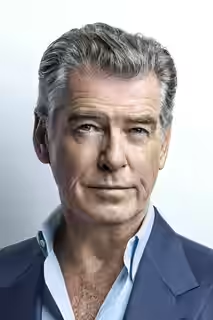
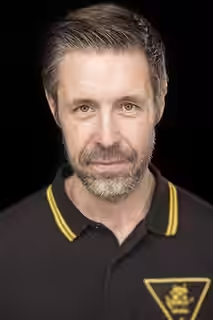
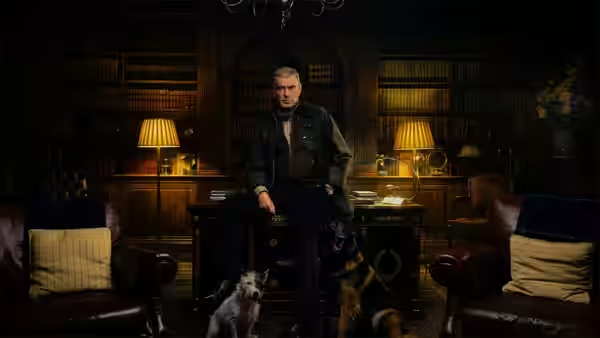
Pierce Brosnan’s Conrad Harrigan and Helen Mirren’s Maeve Harrigan provide a much broader sort of entertainment. Their heavy vocal performances can be amusing, but the accents are distracting, and their threats begin to sound interchangeable. Mirren supplies some welcome mischief; she also makes it harder for the surrounding drama to settle into a believable tone. The casting of Paddy Considine as Kevin Harrigan promises more depth than the supporting writing reliably delivers.
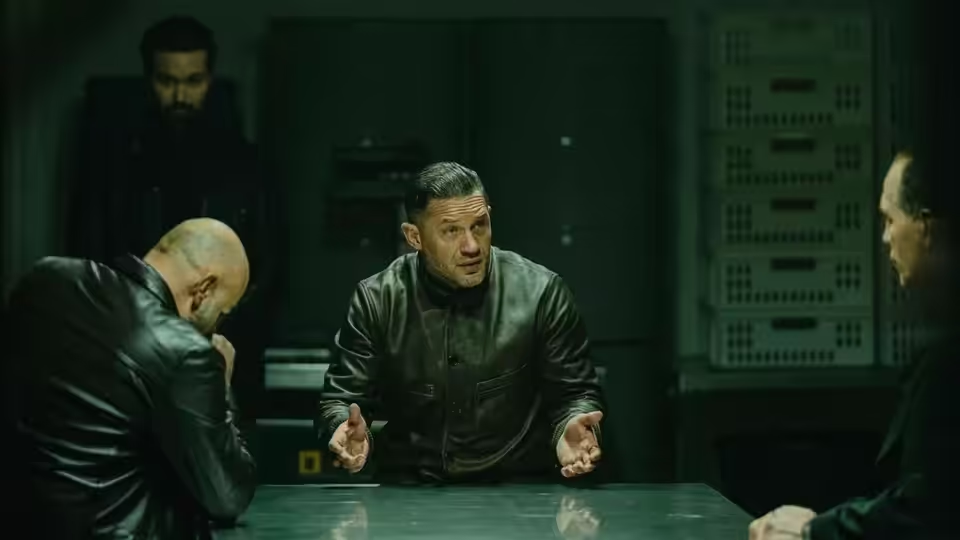
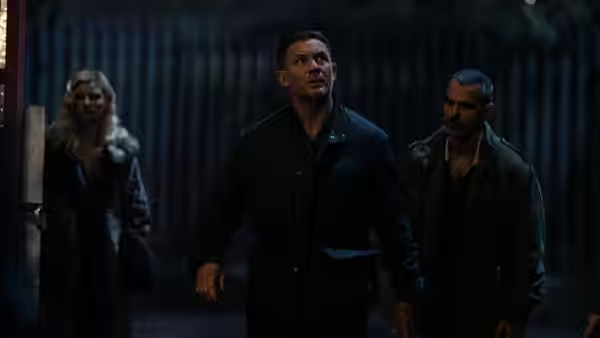
The cinematography is credited to David Katznelson, Si Bell, Baz Irvine and Stephan Pehrsson, and its excessive darkness is a practical irritation. Faces ought to be the attraction here, yet the lighting sometimes makes them an effort to study. Andrew Purcell’s production design contributes to the slickness, though the gangland setting has little that distinguishes it from its television neighbours. A clearer view of the actors would do more for the drama than another layer of gloom.
The editing team includes James Barham and Danny Salas, and the slow opening gives the cast too much work to do between developments. The opening episodes could lose some of that waiting without sacrificing their threats or their humour. Matthew Bellamy and Ilan Eshkeri provide the music, but Hardy’s delivery does more to sustain our attention when the story stalls. Butterworth and Bennett can make the complications entertaining, yet the movement between them is not consistently brisk enough.
Guy Ritchie is among the directors, alongside Anthony Byrne, Daniel Syrkin and Lawrence Gough, and the sharp suits, violence and black humour fit the gangster tradition his name suggests. There is nothing disqualifying about returning to these ingredients. Familiar crime television can be satisfying when the people have particular wants and the scenes keep moving. Here, the reliance on star presence becomes too obvious whenever the pace drops, and the weaker supporting characters give us little else to follow.
The first series has ten episodes, so an appetite for these people matters more than a passing curiosity about the cast. Hardy makes a solid case for spending time with Harry, and the louder performances will suit viewers who enjoy their gangsters exaggerated. We would suggest it to someone already fond of this kind of crime drama, with patience for a slow start and no pressing need for a new approach.